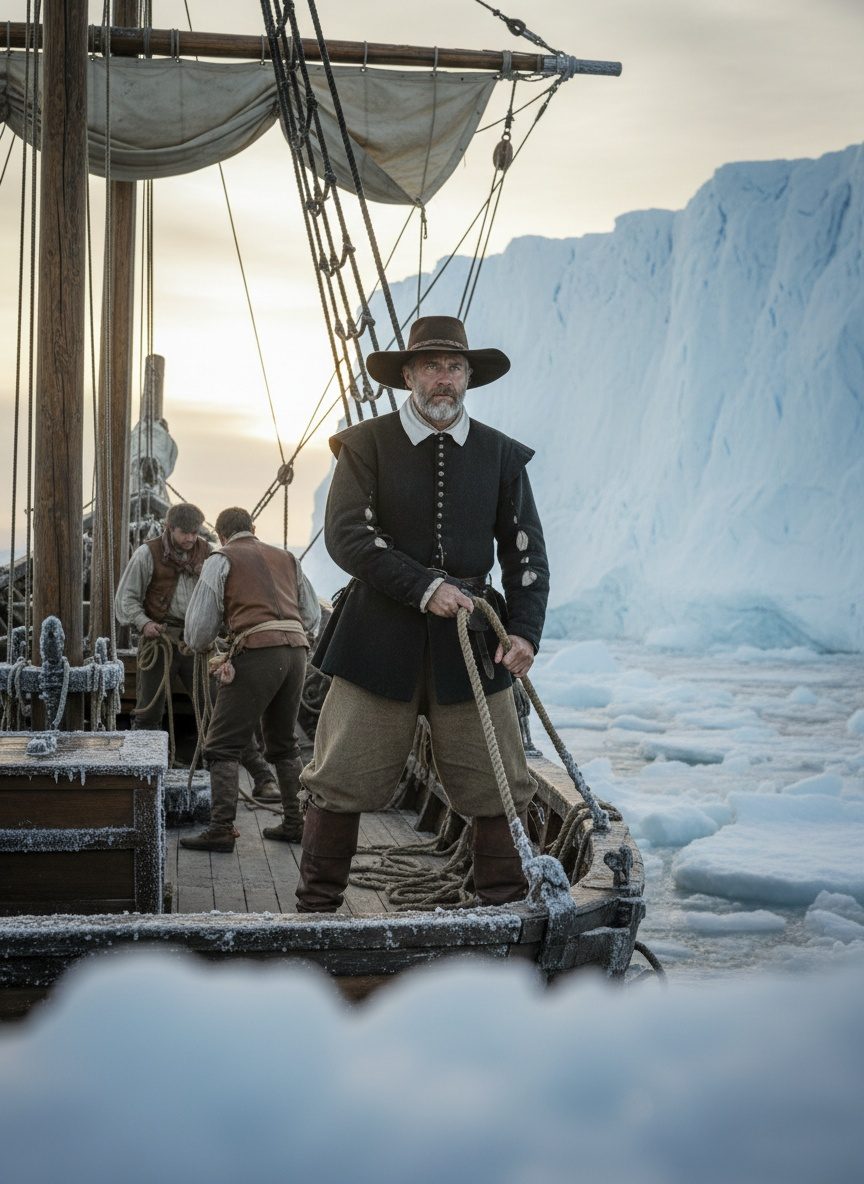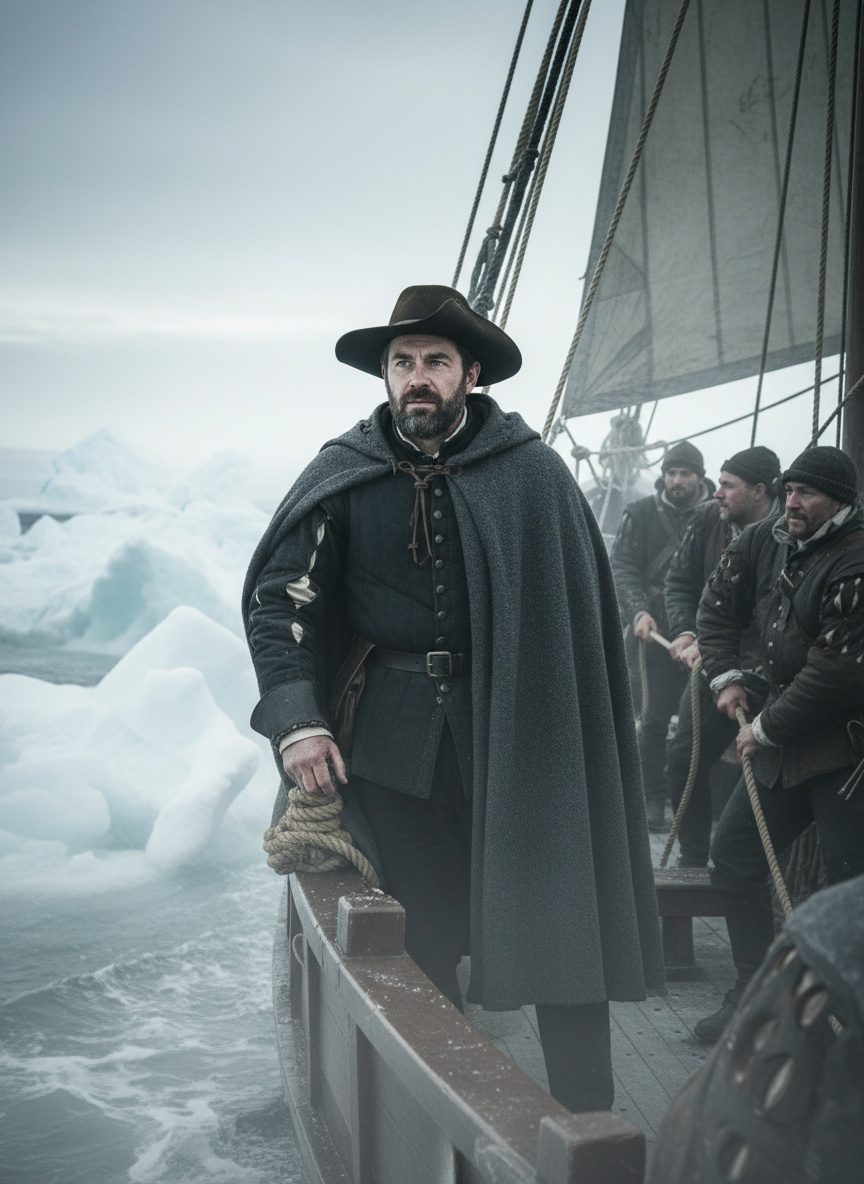
Martin Frobisher embarked on a grand voyage. Yet, what he found was neither fortune nor the fabled route to China.
Into the Unknown
In the summer of 1576, the icy realms of the Arctic were no place for the faint-hearted. For many, those waters at the edge of the known world were a forbidding threshold better left unexplored. Yet, as the icy mist pressed upon them, three small English ships—the Gabriel, the Michael, and a humble pinnace—carved their way into this unmapped labyrinth. Leading this bold venture was Martin Frobisher, a Yorkshireman distinguished more by his audacity than any royal favor or substantial backing.
Frobisher, driven by the relentless quest for the Northwest Passage, sought a maritime route through the Arctic, hastening trade with the riches of the East. It was a bid as ambitious as it was perilous. Despite the ominous uncertainties and dire whispers of failure, Martin Frobisher was not inclined to turn back. He envisioned a future where England would rise to dominate the world's oceans, and this meant embracing the chilling embrace of the ice.
The Lonely Voyage
The initial promise of the mission quickly succumbed to adversity. As they pressed further into Northern waters, the stark reality of such a foreboding expedition became apparent. One of the ships, the Michael, chose the path of caution, turning back to the familiar shores of England. Meanwhile, the pinnace was tragically lost to the merciless sea.
Undeterred by such setbacks, Frobisher managed to hold firm his course. Alone in the fragile wooden belly of the Gabriel, he faced the icy wilderness. The spectacle was one of starkness—endless sheets of ice flowed like ghostly phantoms, blending horizons of sea and sky into a seamless canvas of cold desolation. Each day ushered in new patterns of ice, shifting with the tide, sometimes opening tempting channels that lured him deeper into the Arctic’s icy heart, other times threatening to crush the vessel in their frozen embrace.
A Discovery Beyond the Passage
While the legendary direct path to China eluded him, Frobisher stumbled upon another lure—the shimmer of gold. It was on the barren island he later named Meta Incognita, somewhere within the frosty expanse, that he gathered what he believed to be gold ore, sparking dreams of untold wealth. This unanticipated discovery, however, came cloaked in its own mystery, much like the Arctic itself, promising riches yet remaining tantalizingly out of reach, as ethereal as the passage he sought.
Yet, it was enough to send ripples of excitement back to England, fueling further expeditions. Despite no precious metal being found in the end, the possibility had lit a spark. The English crown and investors were captivated by the allure of both gold and dominion over distant sea routes, drawing them into Frobisher’s orbit and that of the cold, vast North.
The Continuing Obsession
Frobisher's Arctic saga, fraught with ice, dreams, and an intrepid will, did not yield the routes he promised, but it opened England's eyes to the North. His voyages, starting with that determined solo push through icebound waters in 1576, prompted a fever of exploration lasting over three centuries. His journeys were but the beginning, imprinted in the minds of future English mariners who would challenge the Arctic’s icy visage time and time again.
In refusing to turn back, in steering against the clutches of fear and ice, Frobisher directed history itself. He may not have found the riches of Cathay or filled his holds with gold, but he broadened England’s horizons, setting the stage for an empire that looked beyond familiar coasts to distant, fabled possibilities. His story, an unsung legend outside of textbooks, echoes with the haunting allure of the unknown and the enduring human spirit that dares to seek it.