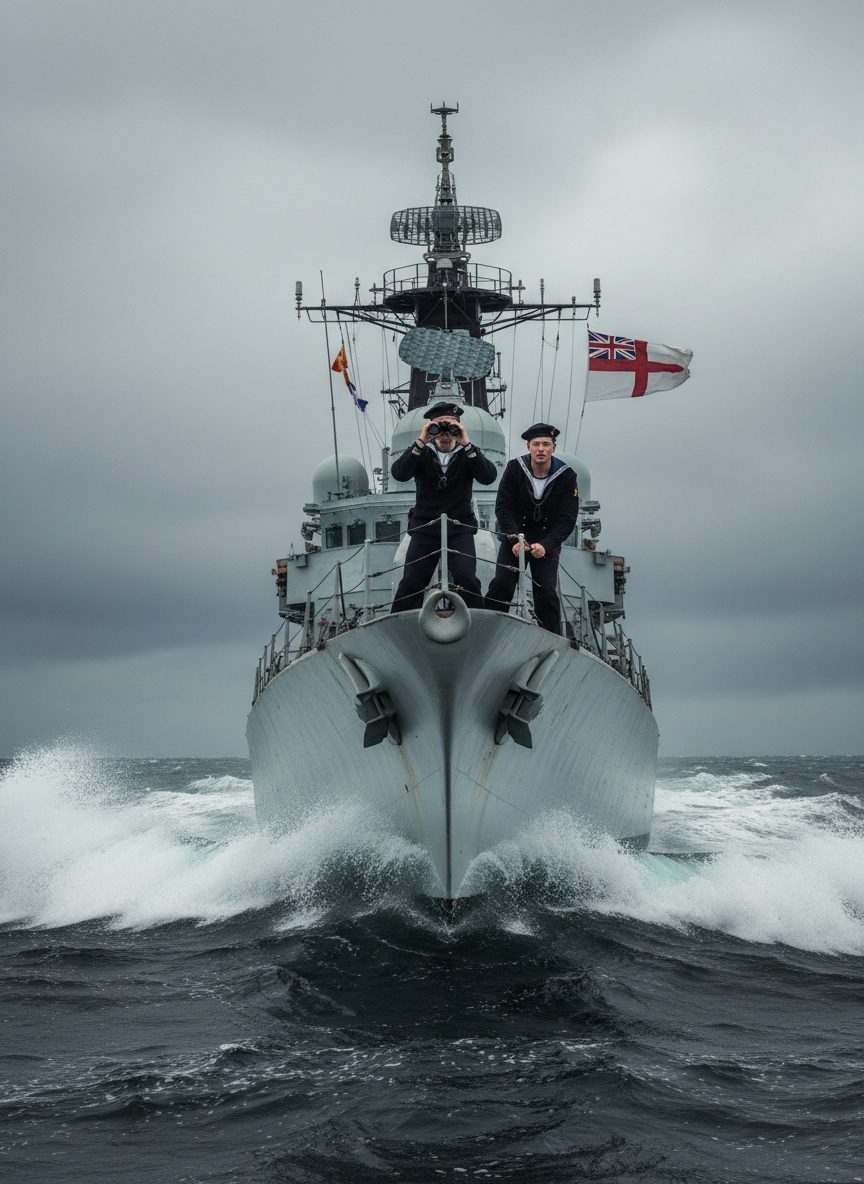
April 1982. The waters of the South Atlantic betrayed no hint of the drama unfolding far below their icy surface.
Half a world away from Britain, the sovereignty of the windswept Falkland Islands would soon be challenged by the ambitions of a distant regime. In a deft yet desperate maneuver, Argentina's ruling military junta staked its political future upon seizing control of the British territory nestled in those frigid waters. The islands, home to a modest population of British citizens, found themselves thrust into the limelight of global attention—a spotlight from which they had long been absent.
Under the oppressive shadow of a declining empire, the iron-willed British Prime Minister, Margaret Thatcher, faced a monumental decision. The delicate balance of power in Cold War-era geopolitics, on a continent largely ignored by Britain since the age of Victoria, was now poised on a knife-edge of potential conflict. Had Argentina miscalculated by presuming an island so distant would remain unprotected, its fate left to hang in the balance? What on paper may have seemed a straightforward campaign for Buenos Aires quickly revealed itself to be a costly and grievous underestimation of the "British resolve."
The belligerence of Argentina's junta did not develop in a vacuum, nor did it work alone. Years of political repression and human rights abuses, domestically euphemized as the "Dirty War," courted international condemnation and domestic unrest. The islands, or as they prefer to call them, the Malvinas, represented a tantalizing boost in credibility to an embattled Argentine regime. Yet, the regimented precision with which they launched their April invasion—termed a "reclamation" by those in Buenos Aires—soon became a haunting calculus of geopolitical misadventure.
Spurred on by the audacity of the Argentine incursion, Thatcher stood resolute. With a determined decree, her government embarked on an enterprise many later viewed as the dying embers of empire—a significant projection of British military might, wrapping itself in the legacy of an era fast fading into history's repose. The 8,000-mile journey southward would not only shape the views of a nation but rekindle the fiery discourse on the lengths one would go to reclaim honor tarnished.
Embarking from the chilly shores of Portsmouth, a gleaming armada of 127 ships carried soldiers, weapons, aircraft, and supplies into inhospitable waters. Crossing the Equator, where the searing sun kissed waves with a luminous brilliance, each vessel—be it a leviathan of steel or a nimble frigate—became emblematic of Britain's steadfast commitment to its overseas territories and people.
Yet this was no simple expression of force. Awaiting them upon their arrival off the coast of the wind-whipped Falklands were not only the adverse elements of the Southern Hemisphere's ferocious winter but a complex patchwork of defensive fortifications laid by a well-entrenched adversary. As bitter gales tore across rocky terrain, no amount of youthful optimism or invincibility could stave off the brutal realities of war’s stark theater.
The losses borne—255 British servicemen—etched their sacrifice onto the landscape of national consciousness, an enduring testament to the costs of colonial legacy. Still, the resolve displayed by those men and women, in this last echoing clamor of colonial zeal, transformed what had been a contentious decision in Westminster into a redemptive saga of honor. For the residents of the Falkland Islands, their renaissance in Britain's arms stood as affirmation that while miles may separate, kinship unto the Empire indeed endures.
Aboard the vessels of that historic fleet, young men folded letters home, perhaps unaware they were scribbling another chapter into the annals of British history. Paint clung to hulls, eroded and worn by salt and time, mirrored in the weary eyes of sailors kept awake by rolling seas and thoughts of loved ones far away.
The conflict, brief yet fierce, enfolded critical innovations that would come to shape modern naval doctrines—sea-harrier jets springboarded, precise and unerring, from aircraft carriers, a new breed of aerial defender. Likewise, the introduction of a 'total exclusion zone' around the islands marked the emergence of juridical waters as a pivotal arena in war, demonstrating the sovereignty of law when met with disorder.
As a venture, retaking the Falklands reasserted a nation's identity while exposing raw the anachronisms of a once towering empire. To Thatcher, the campaign was an affirmation of democratic values, a defiant rebuttal to tyranny—strong echoes about the rule of law and justice tirelessly campaigning against the encroachments of authoritarianism. At its heart, the conflict fluttered over much more than the sovereignty of a patch of contested land; indeed, it became a confrontation over identity—national, ideological, and moral.
While for some, these island territories existed as a footnote to the larger story of empire, in April 1982, they became a litmus test, a proving ground where nerve, nationalism, and nostalgia clashed anew. In triumph, Britain found much—redemption of imperial pride, strategic leverage amid the sprawling theater of Cold War geopolitics, and perhaps most importantly, a reaffirmation that in the web of international relations, valor and resolve might yet count for something profound.
The story of the Falklands War reverberates beyond simple dichotomies of victor and vanquished; it exemplifies the entwined forces of history's long arc—of foundational identity, colonial legacies, and the irrepressible human spirit. In retreading the steps of this conflict, lessons emerge anew, ones we inherit and ponder: about the ties that bind nations and peoples, about the continuity of shared heritage, about the challenging costs of sovereignty, and the ever-enduring dilemmas draped upon the conscience of empire. While names and dates may fade from textbooks, the indelible imprint left by those who sailed—the warriors, the diplomats, and civilians alike—awaits discovery by a world forever eager for stories untold.