London’s vast and intricate Tube network was designed for transportation, not habitation. Yet, in 1940, it became a lifeline, defying the intentions of its creators.
A Hostile Sky
When the German Luftwaffe initiated their intense bombing campaign over London, known as the Blitz, the city faced an existential crisis. The government's initial plans for civilian protection involved dispersal of evacuees, makeshift surface shelters, and reliance on the spartan Anderson shelters in back gardens. Yet, many Londoners felt unprotected from the terror in the sky. Faced with nightly air raids, they required more robust sanctuary. The answer was beneath their feet.
The decision to designate the London Underground as a shelter wasn’t sanctioned by the government at first, despite its seeming suitability. Officials feared overcrowding, unsanitary conditions, and the potential of undermining morale by admitting the severity of the bombing threat. Still, what began as a trickle of individuals seeking respite transformed into a flood of humanity cascading into the subterranean depths.
Into the Depths
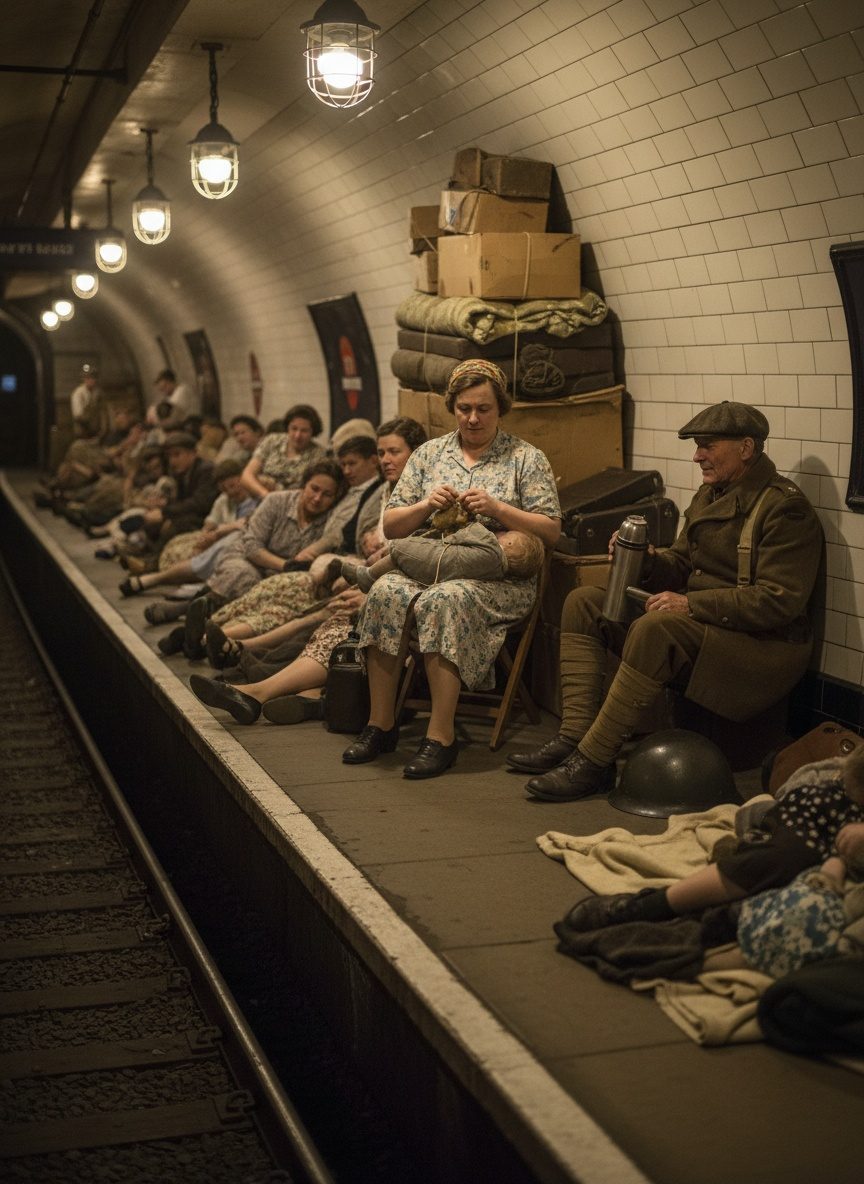
Londoners, armed with blankets and a fierce will to survive, essentially commandeered the Tube. Stations like Aldwych, officially closed since 1994 but operational during the Blitz, became refuges. Each night, station platforms morphed into temporary homes where life adapted in remarkable ways. People staked claims to coveted spots, laying out their makeshift beds on cold concrete floors. Families huddled together, their children often drifting off to sleep amidst the background hum of conversation and the distant thud of warfare above.
Despite the initial hesitance from authorities, the sheer determination of the public altered official policies. The government eventually provided regulations and improvements, albeit slowly. Bunks were installed, canteens opened, and sanitation facilities were expanded. Despite the challenges, an extraordinary sense of community emerged underground. People shared stories, music, and, occasionally, dances, creating a network of camaraderie amid adversity. The Underground wasn’t merely a bunker; it was, in many respects, an impromptu city.
Life Beneath the Surface
As the Underground shelters became more organised, they harbored not just safety, but slices of normal life that defied the chaos above. Makeshift libraries were formed, providing reading material and distraction in equal measure. School lessons were sometimes held by enterprising teachers determined to maintain a semblance of normalcy for children. Stalls sprung up selling hot tea and snacks to sustain the sheltered populace.
The adaptation to Tube life was an improvisation on a massive scale. Musical performances and choir assemblies echoed through the tunnels, lifting spirits and forging solidarity. The sound of a nightly lullaby became a tradition, offering comfort as the bombs screamed down on a battered but undeterred city. These small acts of normality empowered those sheltering in the Underground with a sense of agency amid the uncertainty of war.
Echoes of Defiance
The transformation of the London Underground into a shelter during the Blitz remains a resonant chapter in the history of resilience. It is a tale of how ordinary citizens shaped their own destiny under extraordinary circumstances. The defiance shown by the Londoners who took matters into their own hands not only saved lives but also shifted governmental perspectives, ultimately securing improvements that better served the population.
The stories of community, ingenuity, and survival among the Tube dwellers serve as vivid reminders of human perseverance. In the eerie glow of dim station lights, humanity continued to persevere, unabated by the turmoil above. The ability to find moments of shared hope and strength, even in the depths of war’s shadow, is a testament to the indomitable spirit of those who lived through this period of history.
Today, those tales serve as powerful lessons. They remind us of the capacity for communal care and the drive to find shelter in unity regardless of the circumstances. The Underground shelters were more than just a refuge from bombs; they were a collective assertion of life and vitality, emerging from the depths to light the path through the darkness of war.