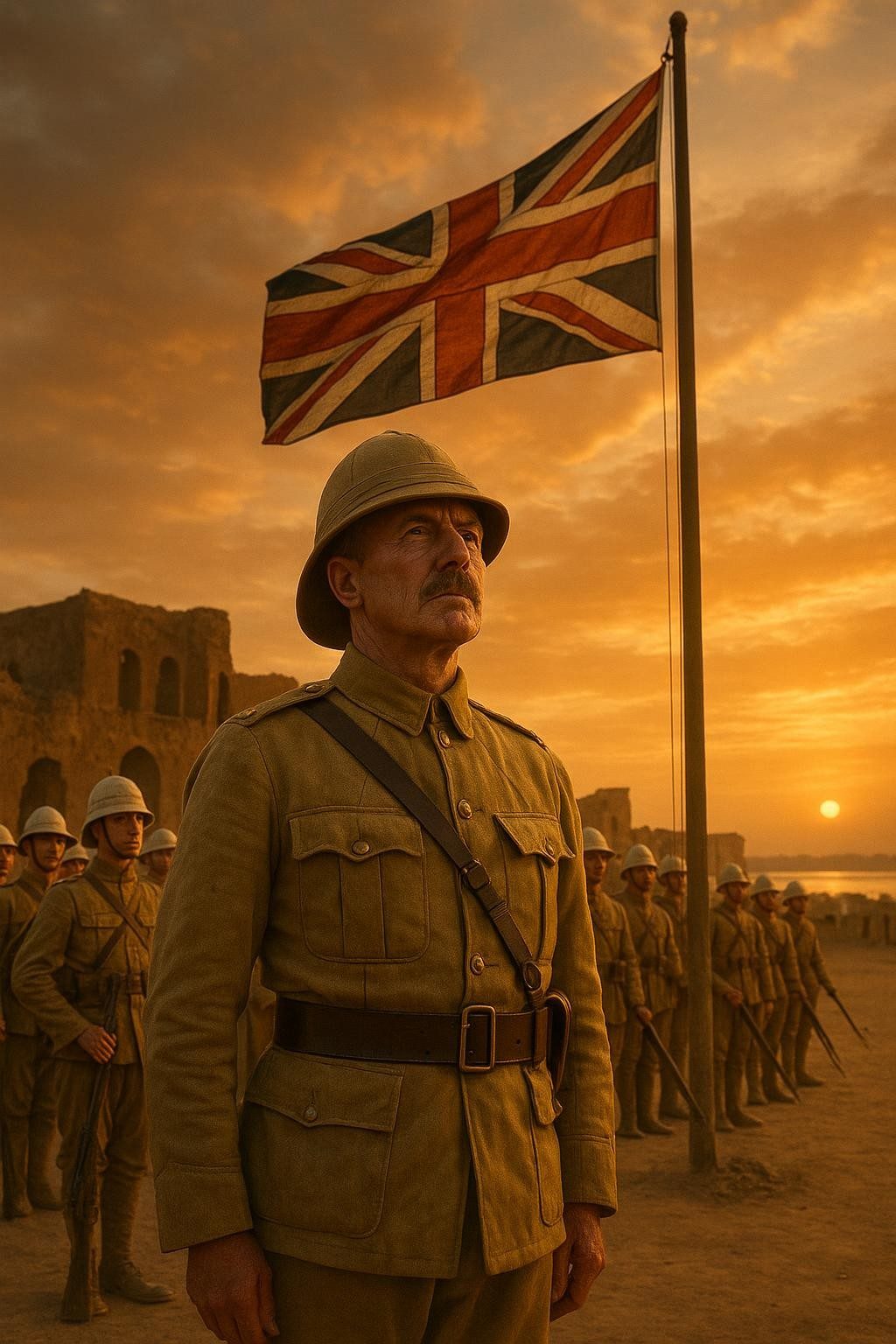
Herbert Kitchener raised the Union Jack over Khartoum in triumphant silence. Yet in that moment of victory, the ghosts of thirteen years past roared louder than ever.
The conquest of Khartoum had been a specter haunting British imperial ambitions since 1885. The Mahdi's forces had overwhelmed the city, leaving the Nile-stained walls a mute testament to valiant resistance and tragic failure. Almost miraculously, the Sudan Campaign of 1898 materialized not merely as a military endeavor but as an epic of exacting vengeance and intricate planning, orchestrated by one man — Kitchener. Standing there in the blistering September sun, he beheld a scene both alien and achingly familiar, where the lingering legacy of General Gordon cast a long, obstinate shadow.
The trek up the Nile was an odyssey that required more than sheer force of arms. It was Kitchener’s meticulous engineering genius that lay at the heart of it. Every aspect of the campaign, from the labyrinthine railway network stitched together across the desert to the gunboats cutting through the riverine frontier, was a testament to meticulous logistics and sheer willpower. Within a backdrop of desolation, the soldiers witnessed the Union Jack rise over the ruins where Gordon fell, their eyes glistening with a mixture of victory and grief for the death that still seemed to echo across the sands.
Khartoum, the word itself carried the weight of a promise unfulfilled for the British Empire. To many, the city had become synonymous with Gordon, the mythic hero who stood defiant at its gates until the bitter end. By sheer necessity, Kitchener had assumed the mantle of avenger, piecing together an exchequer of reconnaissance, alliances, and military might. The vivid contrast between past failure and present triumph was heightened by the palpable dichotomy between the perceived savagery of the Dervish forces and the ordered ranks of riflemen planted firmly on Old World ideals. This was not just a military victory; it was an assertion of moral and imperial justice, however tangled in the complexities of political agendas it might have been.
As the bugler played that fateful day in September, it signified more than just victory; it heralded the end of an era marked by the memories of those who had been left behind in Gordon’s ill-fated stand. Daylight reflected off the raised flag, refracting through the brittle remnants of walls that had borne witness to bloodier times. For the soldiers and Kitchener himself, this moment was both retrospective and visionary, anchored by a sense of destiny fulfilled yet tainted by the loss of so many lives that had inspired their return.
Yet Kitchener was not content with mere symbolism. As plans unfurled beyond the immediate horizon, the question of governance prompted deeper discussions about what the British presence in the Sudan would entail. Would it serve as a catalyst for deeper incursions, a tether for exerting control over a greater dominion, or simply a buffer securing other imperial interests in Africa? Either way, what had been achieved was profound — it was the solidification of a narrative long deferred, a historic reclamation writ large as a credit to the military acumen of an empire at its zenith.
Furthermore, while the drama of battle captured the imagination, the logistical achievements deserve their own legend. The creation of the Sudan Military Railway was an enterprise spectacular enough to inspire awe among allies and adversaries alike. This iron artery enabled not just the movement of men and munitions but portended the metaphorical and literal groundwork for future establishments of imperial presence across Africa. In many respects, the railway symbolized the engine of empire, a conceit rendered in steel and steam rather than merely in diplomacy or gunpowder.
Standing amidst the detritus of Khartoum, Kitchener was already envisioning a future where British authority could guide the tide of regional political change. He had every reason to suspect that Khartoum — once the site of a fraught and tragic confluence of imperial ambition and local resistance — now foreshadowed the potential for a new epoch of governance, though such dreams would soon be entangled in the dense tapestry of 20th-century transformations. The flag over Khartoum wasn't merely the reward of conquering heroes, but a multifaceted symbol of the burdens and responsibilities that victories accrue.
The dusty air of that afternoon soon settled, leaving a scene more tranquil than triumphant. But beneath the seeming serenity remained a deeper narrative: one of power, of retribution, and perhaps of redemption. As Kitchener and his men departed from Khartoum, the sense of closure mingled with anticipation of what was to come. The scene was poignant, final, yet eerily prologue.
As we recall the flag rising over Khartoum, we're invited to reflect on an era replete with lofty ambitions and profound shortcomings. The moment does not merely encapsulate a historical event but challenges us to consider the enduring complexity of imperial narratives. It was an era stirred by motivations both noble and ignoble, where history's writing often obscured the stories left untold by those whose lives crafted, suffered, and endured its unfolding chapters.