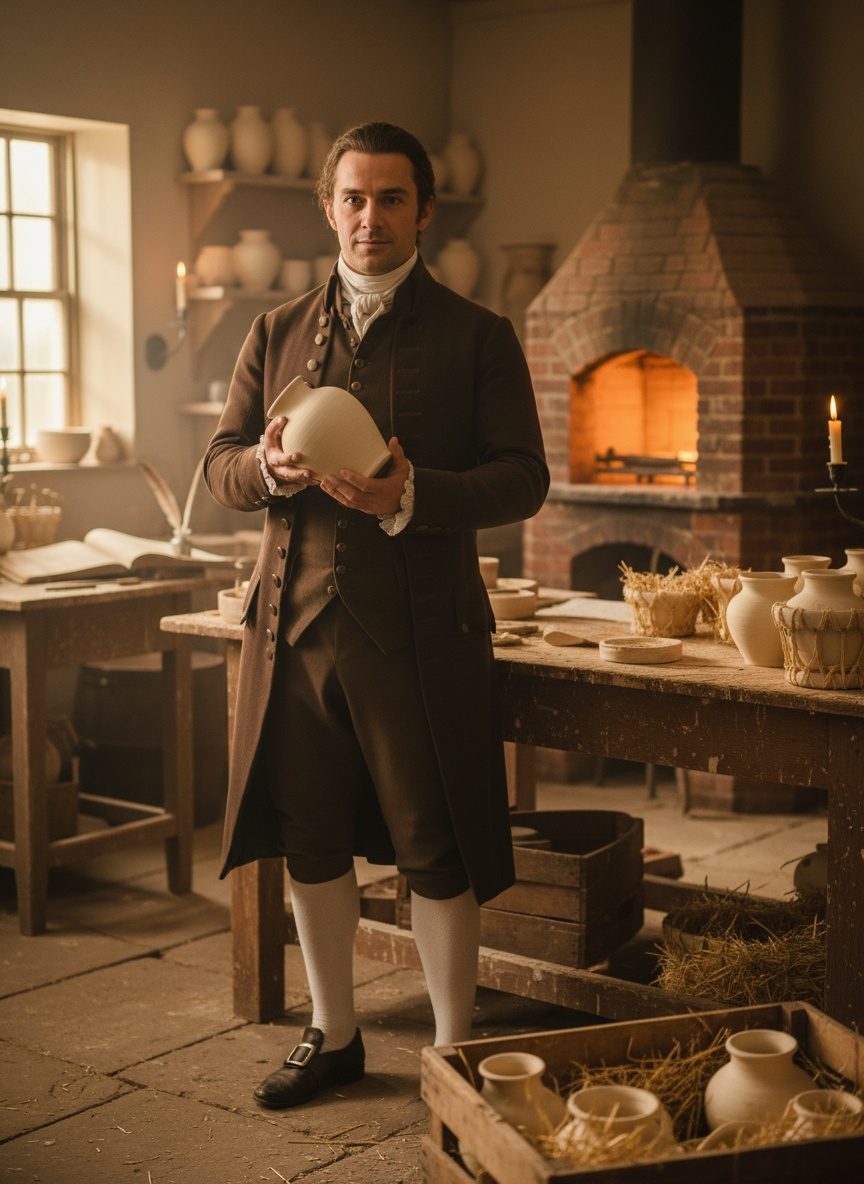
He had one leg and a stubborn refusal to accept limitations. Josiah Wedgwood needed neither more limbs nor more grand institutions to disrupt centuries of French dominance in fine ceramics.
The year was 1765, and the air in Staffordshire buzzed with both innovation and industrial smoke. Wedgwood, the innovative potter from a long line of accomplished craftspeople, was about to change the course of history with a supply of clay and an audacious idea. His work, a refined yet revolutionary cream-coloured earthenware, wasn't merely an attempt to imitate the white ware that had enchanted European royalty for over a century—it was an ambition to surpass it. Little did anyone know, these modest pieces would soon cross the English Channel, securing admiration from the most influential courts in Europe, including the opulent court of Versailles.
Interestingly, it wasn't through conquest or force that Wedgwood began to dismantle French preeminence in ceramics. There were no ships armed with cannonades or colonial declarations involved. Rather, it was a strategically gifted crate sent to none other than Queen Charlotte of England that turned the tides. Wedgwood's cream-coloured ceramics, polished and gleaming with a miraculous glaze, captured her fancy. In her court, the dining room wasn’t merely a place for indulging appetites but a stage for political theatre, and such a distinguished audience required equally distinguished props.
Wedgwood understood the art of presentation, and he had crafted more than just plates and bowls; he had conjured a new form of prestige from the loam of the English countryside. He christened it Queensware—a name that, in itself, was a subtle declaration of its elevated status and royal approval. The endorsement of Queen Charlotte, whose opinions set the standards for all of Europe, acted as a powerful catalyst, sparking unprecedented demand across the continent. In an era where monarchs often dictated trends, this endorsement transformed Wedgwood’s domestic ware into a coveted commodity.
The domino effect was swift and breathtaking. Within months, orders flooded in from every corner of the European elite. Catherine the Great of Russia, known for her formidable intellect and keen eye for contemporary art, commissioned an extravagant 952-piece service. Her order was not merely functional; it was a statement—a silent contest of refinement with her neighboring courts.
The ceramics crafted by French artisans, long held as the definitive mark of sophistication, suddenly faced a rival product that offered both durability and delicacy, a textured warmth absent in the more brittle porcelain. Spread lavishly over opulent dining tables, this cream earthenware captured light with a soft luster, elevating dinners to affairs of resplendent luxury.
While Wedgwood’s innovations mesmerized the upper echelons of society, they also sparked profound changes within the economy and labor dynamics of England. The Staffordshire potteries transformed rapidly, with Wedgwood’s own factory serving as a beacon of modern industrialization. Unlike any kilns seen before, his production line incorporated the division of labor principle: a system that divided the manufacturing process into specialized tasks, increasing efficiency and output. His work prefigured the Industrial Revolution, blending artistry with the rigor of mechanization.
As orders grew, so did Wedgwood’s ambitions. He extended his reach across the Atlantic to the burgeoning American colonies, where his works symbolized both the height of refinement and the promise of access to luxury. Displayed within the homes of burgeoning American gentry, Queensware underscored their aspirations towards sophistication and status akin to European aristocracy.
The legacy of Wedgwood’s achievement was not confined to aesthetics or trade alone but echoed deeply in cultural narratives. By elevating everyday objects into realms of artistic expression, he democratized beauty. His ceramics were not just objects to be admired from a distance, as with paintings or sculpture, but were functional art—accessible, tactile, and intimately part of daily lives.
In a world that often judges success by the power to impose control or command wealth, the tale of Josiah Wedgwood is a striking reminder of another force—clever innovation and understanding of human desires. He transformed simple earth into symbols of elegance, and in doing so, he shifted the axis of luxury. Josiah Wedgwood’s triumph lay not in the fortifications of an empire but in his kiln’s capacity to reshape the essence of what it meant to own something precious. The story of Queensware, born from one man’s dream in Staffordshire, illustrates the potent alchemy of vision, craftsmanship, and a rather revolutionary sense of tradition. As his ceramics conquered courts and transcended borders, they quietly joined the dance of history, emphasizing the enduring allure of ingenuity and beauty.