September 14, 1857. Dust hung in the air like a suffocating shroud.
The Breach at Delhi
The Indian sun bore down, relentless and scorching, as the dawn illuminated the tangle of shattered brick and earth that once constituted the formidable walls of Delhi. This was no ordinary breach but a jagged, perilous invitation into a city that had become the fulcrum of rebellion. Mere months earlier, the Sepoy Mutiny had erupted, sending ripples of unrest through the sprawling belly of the British Empire in India. Revolt had transformed from murmur to deafening roar, and Delhi stood as its proud epicenter.
Amidst this scene, a singular figure stood out—Brigadier John Nicholson. Canonized by many of his men as a near-mythical figure—his name whispered with a blend of reverence and fear—Nicholson epitomized the steadfast resolve of the empire. His very presence seemed to galvanize his forces with a nearly palpable electricity. Known across the North-West Frontier, and even beyond, for his unyielding approach, Nicholson embodied the archetypal Victorian warrior.
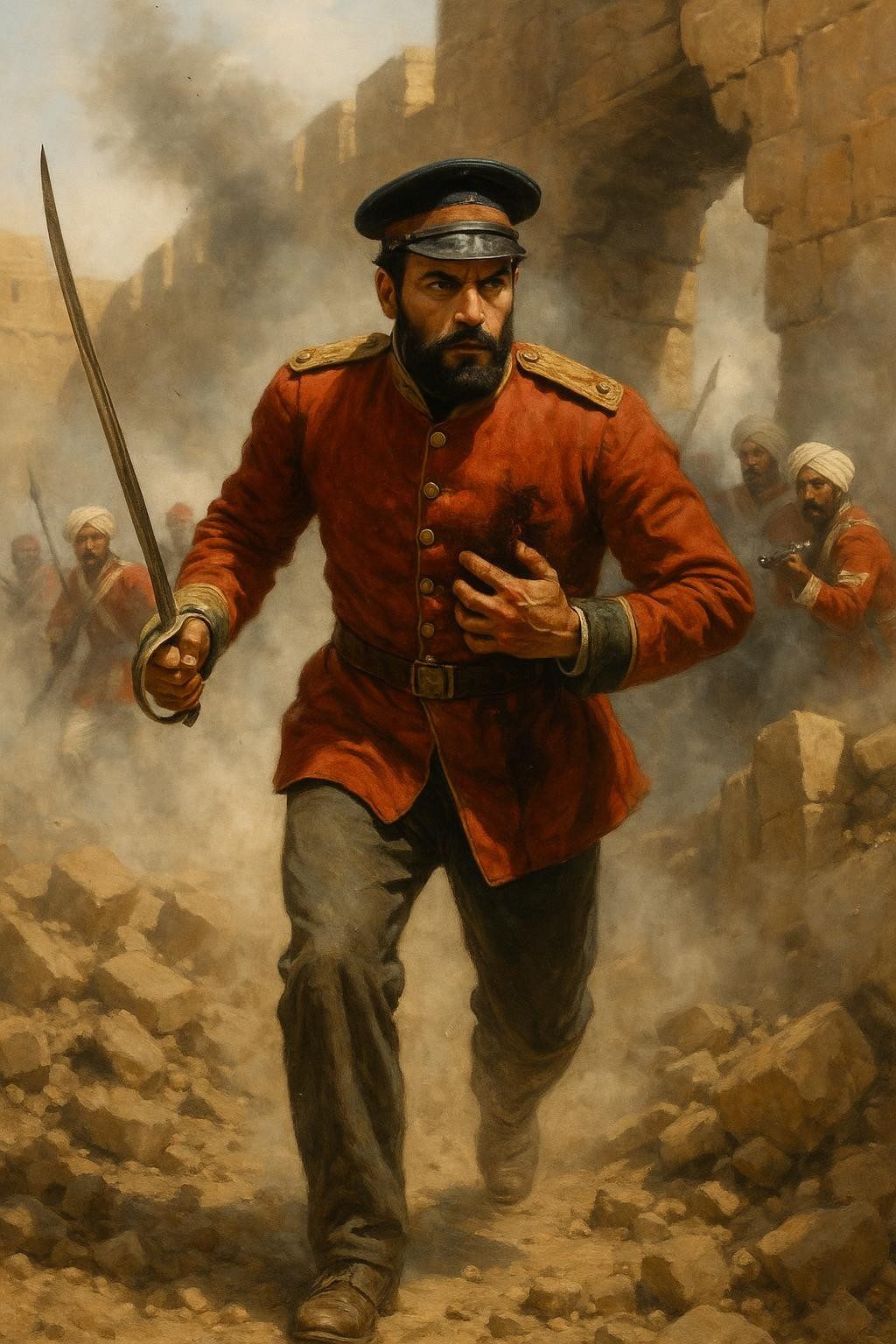
As the first light began to skulk over the battlefield, illuminating the broken ramparts with a cold clarity, Nicholson prepared his assault. Framed against the rising sun, the breach in Kashmir Gate loomed menacingly ahead. Thirty feet of chaotic debris and an unrelenting storm of rifle fire stood between his column and the city’s turbulent heart. Yet, undeterred, Nicholson prepared to lead his men over this threshold himself. His sword drawn, a silent vow etched in his gait—this was a contest he was determined to face with unrelenting valor.
No waiting for orders. No hesitating at danger’s shadow. With that first step, he became more than a military leader; he was the sharp point of a spear thrust into the heart of mutiny.
Through the Raging Barricade
The charge was a fury-shaped form against chaos. Rifle shots echoed like thunderclaps through the tepid morning air, each fired volley a deadly reminder of the defenders’ desperation. The sound wasn't just noise; it was an urgent summons to either side of the conflict—the call to hold one's ground at any cost. The breach resembled a moat of rubble, swallowing conviction, and fear alike.
Among the yard-high refuges of shattered stone, Nicholson pressed forward, each footstep a weighted testament to purpose. There was no retreat. Indeed, the very thought was anathema. The path was littered with the fallen, the wounded—the human cost of reclaiming an empire’s hold. As his column surged, Nicholson's determination painted each movement in broad, bold strokes.
The musket ball that finally found him was both bane and revelation. Finding the space under his ribs, it tore with the violent intent of its dispatchers. As he staggered, it was as though the world paused. His breath—short, brutal, pained—marked both presence and sacrifice. Pulled from the thick of the conflict, he was not—would not be—a diminishing figure consigned to the past. Demanding to be kept abreast of the battle's progress, his resolve seemed as indomitable as ever.
In those moments, Nicholson was not just battling for Delhi; he was battling for posterity, for the lasting grasp of British intent in India, for a chapter to be written not in glorious echo but in cemented legacy. His agony, rather than weakening, fortified his determination as layers of grit compelled his soldiers onward—through the gate, against the fray, the goal ever-present.
Victory and Veneration
As the tangled chess game of war played out over the streets, through alleyways, across rooftops, and sacred spaces within the city, the reports funneled back to Nicholson's dwindling frame in their somber march. For eleven long days, he lay in a doolie under the harsh scrutiny of both injury and expectation. Hour by hour, the world outside constricted to a grainy focus on the struggle around him—a simulacrum of determination shading each browning battlefield map.
When at last word reached the brigadier that Delhi had indeed folded, surrendering under the persistent press of British forces, there was a ripple of quietude. In that moment, conquest was realized, but it was also draped in ambivalence. Here's what was gained—but at what enduring cost? His eye—vital and valiant—upon hearing this, seemed to relax, maybe even content. The city was theirs. With it, so too, albeit briefly, was destiny.
John Nicholson's wound was the breach's horrid echo. The city’s capture held a deeper resonance—an emblem of persistence, audacity, and a singular unwavering will. The hope threaded into the fabric of this conquest transcended the simple recapture of stone and mortar. It was the broad tapestry of empire, stitched not only by ambition but colored with the shades of personal heroism he embodied.
Yet, in the wake of such time, the narrative shifts against the permanence of colonial dominion—not as a validation but as a query begging reflection. This victory, like many, throbs with the complexities of the human condition, the tragedy and triumphs interwoven with strands that both bind and unravel. John Nicholson was, in the end, a man for his time, but our contemplation upon his actions and their ramifications endures, prompting us to ponder personal and imperial aspirations alike.