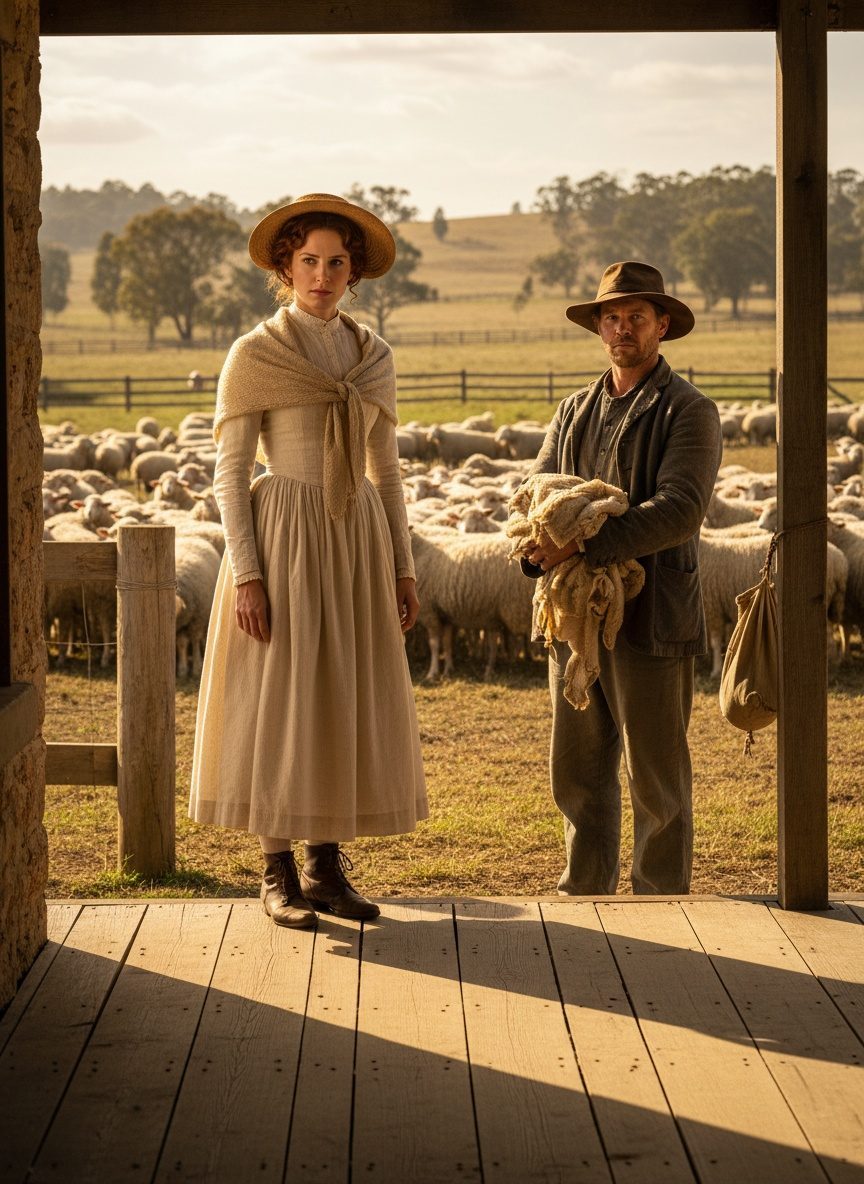
The sun blazed overhead, the air shimmering in the relentless heat, as a clump of earth-bound convicts gingerly took the vine cuttings, their coarse hands dusted with the ochre of New South Wales. Around them, the gum trees whispered secrets to the wind, watching as one of Britain's most controversial officers took a gamble that few believed would pay off. John Macarthur, once a decorated officer now sharing his unlikely fortunes with the condemned, stood by, his reputation hanging in balance as much as the future of viticulture in this fledgling colony.
Parramatta, 1803. To the untrained eye, the odds seemed stacked against success. Vineyards were not typically forged from the sweat of imprisoned men or the dreams of those banished from imperial circles. Yet, Macarthur, with an instinct as sharp as his controversial tongue, saw promise where others saw barren land. The earth here, beneath the antipodean sun, was unlike anything the British had known, but it bore a potential that answered the whispers of discontent growing louder back home in England — the need to affirm the legitimacy of this distant colony through lucrative industries.
Encounters with viticulture were not entirely new to Macarthur. Before his dramatic fall from grace, occasioned by trials befitting more the pages of a scandal-ridden novel than dry dispatches, he had witnessed the art of winemaking in Europe. Now, he found himself in a land rich not only with challenges but also with opportunities. The very air around Parramatta seemed alive, charged with a potential that bled into every vine planted. The irony was not lost on him: here in this penal colony, these convicts, stripped of their freedoms, might just plant the seeds of a future that tasted of the finest vintage.
The convicts, hardened by the grueling labor that came with a life governed by shackles, approached their task with a mix of resignation and determination. These men, who had been plucked from the dregs of British society, carried within them the complex blend of humanity — a lack of options often breeds an innovative spirit. With hands accustomed to the rhythm of the hoe and the sickle, they planted each cutting with an unspoken understanding that these small, wiry shoots were more than just plants; they were symbols of transformation and resilience.
Few present believed that grapes would grow successfully here, let alone flourish. The soil, lighter and sandier compared to the rich loams of France or Italy, held its secrets. But like Macarthur, the land seemed bent on defying expectations. As tentative green sprouts began dotting the horizon, conviction in Macarthur's madness grew. Each vine that took root in the antipodean soil was like a testament to ingenuity rising from adversity. The vines promised a drinkable vintage yet represented something far more intoxicating — they carried the possibility of economic independence and, perhaps, a measure of redemption.
The journey from vine to vintage was fraught with obstacles. New pests nibbled at leaves, unseasonal weather turned the days unpredictable, yet in the narrative of these early vineyards, one constant remained: Macarthur's unwavering belief in the land's potential. The convict laborers, now skilled in the ways of viticulture, became unlikely custodians of a craft they had never imagined mastering. Together, they forged what history would recognize as the roots of Australia's illustrious wine industry.
By the time the first barrels were rolled into makeshift cellars, there was an audible shift in the air of Parramatta. The initial skepticism that had clouded over these convict-powered vineyards began to dissipate. The emerging industry started to gain its foothold, spilling over from individual ambition into colonial pride. Wines more than drinkable began to draw comparisons with those from the Old World, curious lips savoring vintages with an almost reverent appreciation for the harsh lands that birthed them.
As Macarthur continued building his legacy, his personal life transformed. The officer who had once found himself embroiled in court martial intrigue now reshaped his destiny through these vineyards. His influence extended beyond the fields to shape policies and promote the colony's growth. It was a remarkable ascent for a man whose name had been sullied, yet here he was, at the vineyard's vanguard, his visions sharpening the dreams of settlers who began to see Australia's future etched in lines of vines stretching toward the horizon.
This narrative, rich with contradiction, is vital not simply because of its dramatic shifts of fortune, but because it demonstrates a deeper truth about the human spirit. How curiosity and resilience can birth industries from the most unlikely soil, spurred on by people who otherwise might be forgotten footnotes of history. It was a true transformation facilitated by Macarthur's foresight and fiercely executed by those who had little more than their labor to offer.
When historians look back at Australia's enduring love affair with its vineyards, stakes rooted in hope as much as history, they peer past the romance of fine vintages to the sunbaked origins at the hands of society's most maligned. This tale reminds us that real growth is not always seeded within conventional lines — sometimes, it's those existing at the margins who plant the first, enduring roots. In the tasting rooms of today, where discerning lips explore the subtlety of regional wines, echoes of those early convict laborers can still be heard in each decanted drop.