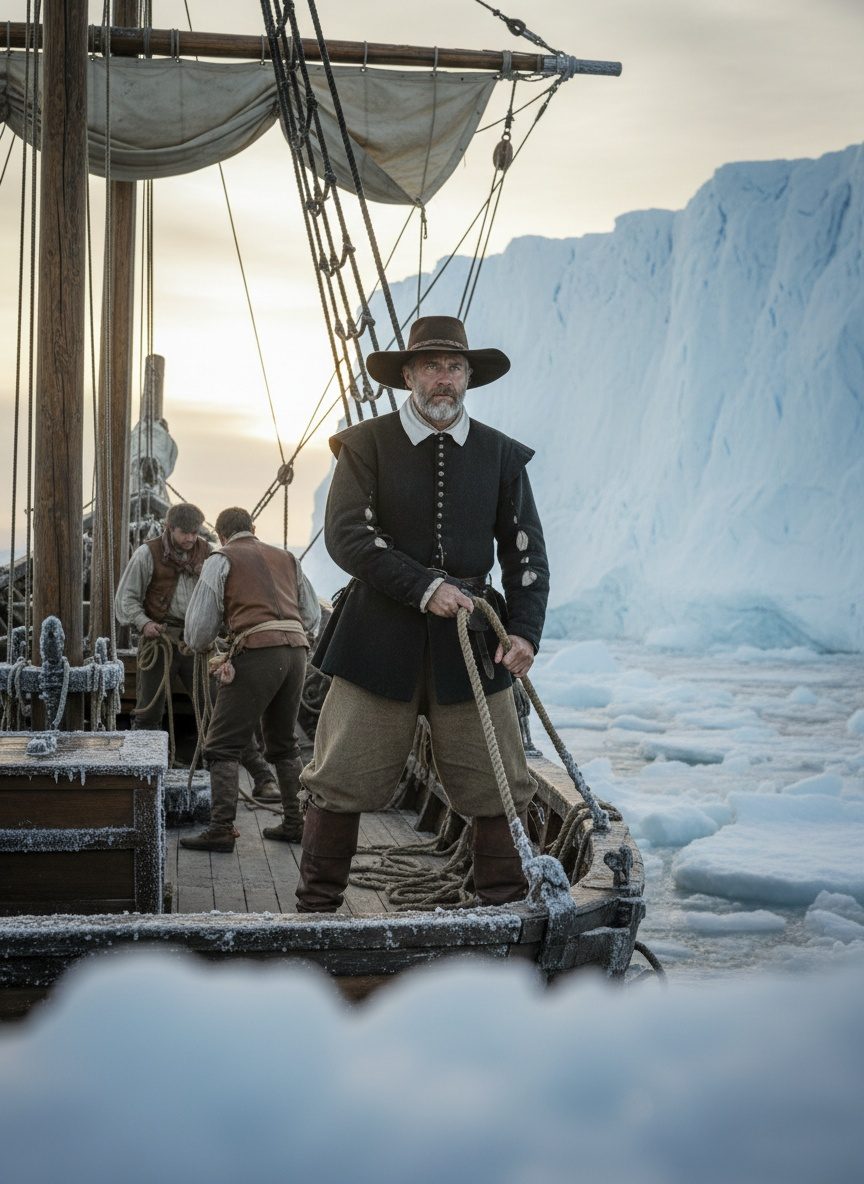
John Hawkins is not a household name. Yet, his choice in a single moment changed the course of English maritime history.
The Rising Tide of Ambition
In the bustling courts of Elizabethan England, John Hawkins emerged as a figure of daring ambition. Not content to remain a mere merchant, he sought profitable ventures across the Atlantic, navigating the tumultuous waters of the nascent English seafaring empire. Hawkins embarked on three major voyages, trading along the West African coast and in the Spanish Indies, often employing questionable methods that would haunt him and the nation for decades.
These ventures brought him wealth and enemies. Particularly, he earned the ire of Spain, whose empire he dared to provoke through unsanctioned trading. His third voyage, the one that culminated in disaster at San Juan de Ulúa, was intended to solidify his fortune and standing. Little did Hawkins know, it was also setting the stage for an episode that would redefine his legacy.
The Trap at San Juan de Ulúa
September 1568 found Hawkins and his six-ship fleet seeking shelter and supplies in San Juan de Ulúa, a port near modern-day Veracruz, Mexico. The need for repairs and provisions was urgent after a challenging journey. The arrival seemed serendipitous until Spanish warships, spearheaded by the viceroy of New Spain himself, closed in. The unexpected encounter turned the haven into a hostile battleground.
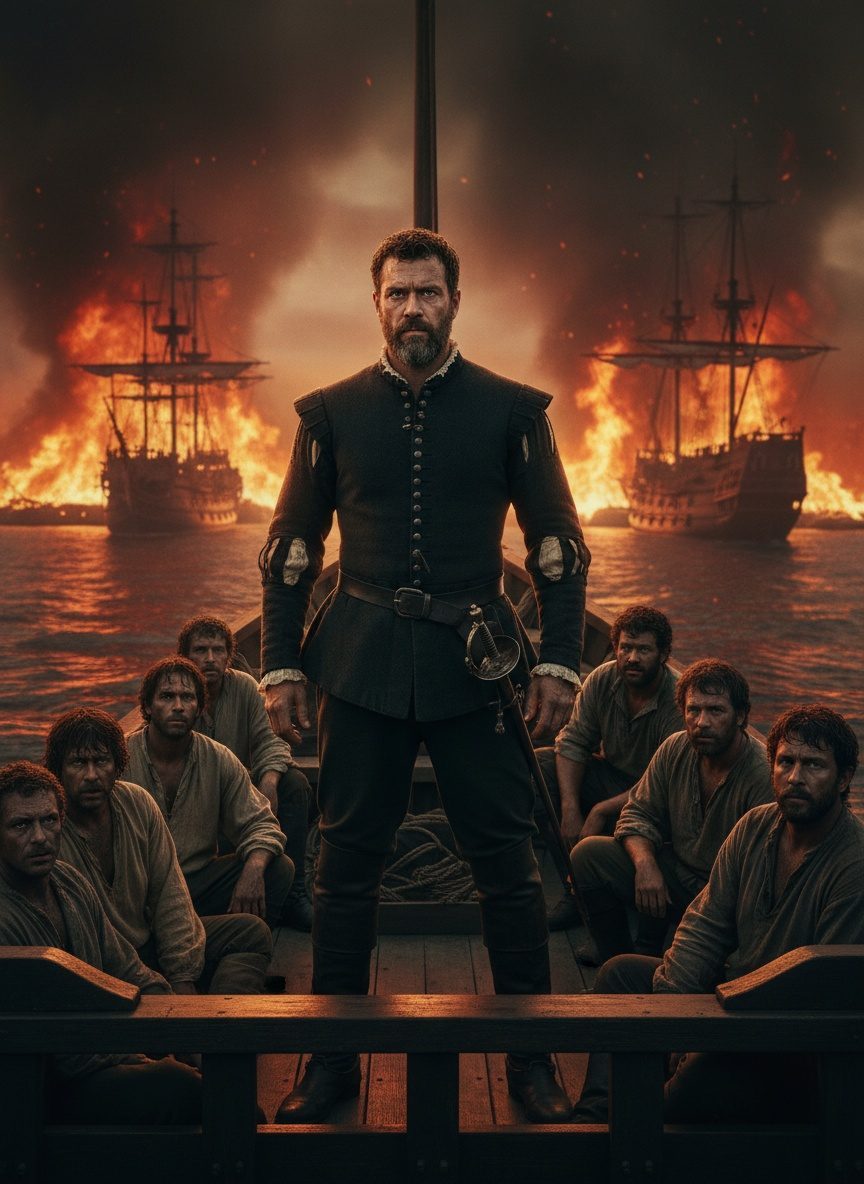
The Spanish forces, far superior in both number and artillery, caught Hawkins unprepared. In a dawn raid of iron and fire, the English fleet was overwhelmed. Ships burned, masts splintered, and the ocean waters turned red beneath the unforgiving sun. Amidst the chaos and carnage, a desperate Hawkins had to make a soul-wrenching decision.
A Moment of Impossible Choice
As the inferno raged around him, Hawkins faced a heart-breaking dilemma. With only one relatively small ship remaining usable — barely able to hold a fraction of his crew — he was forced into a terrible calculus: who would stay, and who would go. Those who stayed would face certain capture and likely death at the hands of the Spaniards.
Hawkins chose not by status or skill, but by fate and the flips of a weighted coin. Left behind were many of his loyal men, friends who had sailed with him through storm and sun. Their lives exchanged for a fleeting chance that others might live. As the last ship creaked under the morning’s tragic weight, Hawkins sailed away, the cries of his compatriots echoing against the waves.
The Aftermath: Destinies Defined
Escaping the wreckage of San Juan de Ulúa did not absolve Hawkins from the consequences of his decision. The news of his betrayal raced back to England ahead of his return, carried on every ship and whispered in every port. The ordeal marked him both as a pragmatic leader and, perhaps unfairly, a coward in some eyes.
For Spain, the incident affirmed their tightening grip on colonial waters while also deepening their suspicion and distaste for English encroachers. It exacerbated tensions that would, decades later, fuel the fire behind the great naval conflicts between these maritime powers. For England, it was a wake-up call, exposing vulnerabilities in its naval aspirations and prompting a reevaluation of its ocean-faring tactics.
A Legacy of Shadows and Salt
In the years following, John Hawkins bore the weight of his choice. Haunted by the faces of his abandoned men and the fiery destruction he witnessed, Hawkins would continue to serve and scheme for his nation but never again with the same innocence and zeal. His later contributions to the emerging English Navy were substantial, but the shadows lingered.
This tale of pragmatism and sacrifice is a reminder of the harsh realities faced by those at the forefront of empire-building. Hawkins' story urges us to look beyond textbook victories and losses, to consider the personal cost of ambition and survival. In the annals of seafaring history, sometimes the legends that echo loudest are not of conquest but of the human condition — of choices made and lives left behind.