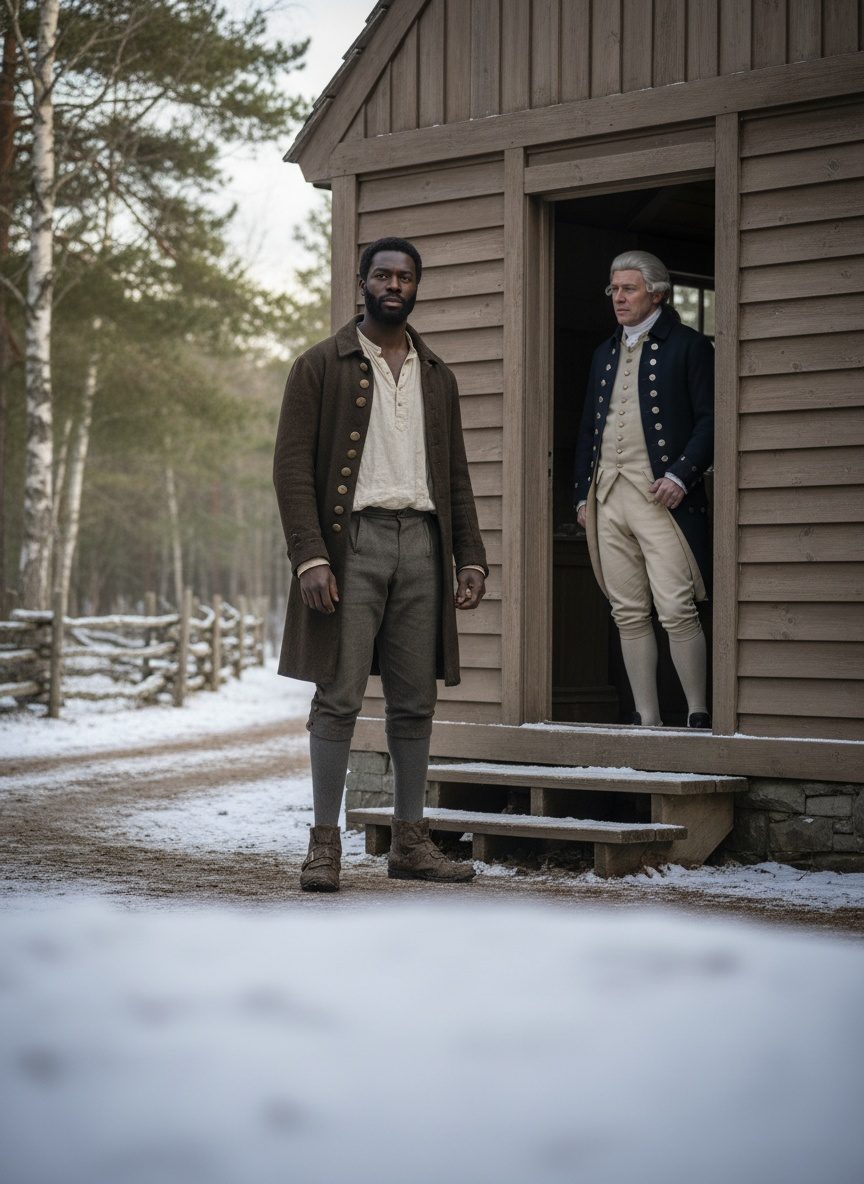
John Graves Simcoe had a vision for Upper Canada that surprised many. Unlike the typical aristocrat of his era, his ambition reached beyond personal gain.
The Shockwaves of a Single Act
It was a brisk day in 1793 when a brutal incident shook the shores of the Niagara River—a place echoing with the promise of a new world. Chloe Cooley, a Black woman enslaved in Upper Canada, found herself bound and screaming as she was forcibly taken and rowed across the dark waters into the United States, her fate now woven with the harsh realities of American slavery. This scene unfolded under the eyes of witnesses like Peter Martin, a Black Loyalist and resident of Niagara, whose conscience could not let him ignore the injustice he had seen.
In an era when the narrative of the brave new world was told through the eyes of settlers and traders, the stories of Black settlers were often left in the shadows, unspoken in broader history books. What Chloe Cooley endured that day was not isolated; it reflected a common, though unspoken, reality—slavery’s insidious hold even in burgeoning Canada. Simcoe's radical vision for this land included a departure from such brutal practices, but it would take uncommon courage and moral fortitude to bring change, a mission that Martin, along with others, undertook with urgency.
Peter Martin traversed the nascent settlements, seeking out those in power, his report mixing with the whispers of a land slowly grappling with its identity. His journey led him to the doorsteps of Upper Canada's Lieutenant Governor, John Graves Simcoe. Martin's testimony pierced through the comfortable oblivion of those who lived on the promises of freedom yet ignored its contradictions. His recounting of Chloe Cooley’s plight was inflammatory, a waking call that reverberated in the halls of government. Such acts of dignity from Black settlers like Martin were not anomalies; they were seeds planted in fertile ground, poised to transform the legislative landscape of British North America.
A Governor's Resolved Gamble
Simcoe was no ordinary man. Born into the gentle embrace of English society, he bore the weight of expectations but looked at Upper Canada with unique eyes. When Peter Martin's fervent pleas reached him, it ignited a long-held resolve—the time had come to lay down legislative roots for the end of enslavement. Abolition was not yet a popular or widely supported cause in Great Britain or its colonies; it was a radical idea to many. Yet, Simcoe saw such change as essential to the moral fabric of a society he hoped would flourish.
Back in the 18th century, political maneuvering required both courage and diplomacy. Simcoe understood the delicate balance between too rapid progress, which might shut down support, and too timid an approach, which could render the issue moot. So he drafted the Act to Limit Slavery in Upper Canada—not an outright ban but a strategic wedge into the edifice of slavery. The act, passed that year, reflected a compromise designed to appease current slaveholders while ensuring that the institution could no longer take root. New slaves could no longer be imported, and children born to enslaved mothers would be free at the age of 25, a provision ensuring its slow unravelling.
In a land teetering on the cusp of greatness, the act was nothing short of revolutionary. It positioned Upper Canada, with its sweeping lakes and vast forests, as a place setting firm moral precedent before others in the British Empire. The enactment rippled through the land like the antecedent waves of a coming storm. It was a gamble that sought to reconcile economic interests with a budding sense of justice, hinting at the potential within Britain and her colonies to reshape the world not with iron chains, but with bold legacies.
The Unsung Ripples of Change
The passage of this Act was not the end; indeed, it was but a stepping stone. The path from slavery to freedom was long and fraught with perilous turns, yet the echoes of this legislative action were profound. Chloe Cooley’s struggle and Peter Martin’s advocacy may have begun a wave yet visible to few, but it would eventually gather momentum, carving into the bedrock of British policy until the entire empire declared freedom for all oppressed individuals in 1834.
For those living amidst the wild, untamed lands of Upper Canada, the act of 1793 marked a silent but powerful revolution. As narratives ossified into history, the tales of colonial leaders often overshadowed the contributions of those who spurred change from below. Yet, the struggles of Chloe Cooley and the courage of Peter Martin offered emblematic reminders of the power inherent in individual action. In canvassing these stories, we find not only catalysts for abolition but visions of community and courage that invite us to reconsider the pillars that support modern society.
As we look to the past, the story of John Graves Simcoe and the transformations he began remind us of the potential embedded in years when the world feels on the brink of becoming something greater. Here lies a tale common at first glance but extraordinary upon closer examination—a reflection of those unsung achievers who bore the weight of moral change, ensuring that their stories, though often omitted, leave an indelible mark on history that beckons us to a more equitable future.