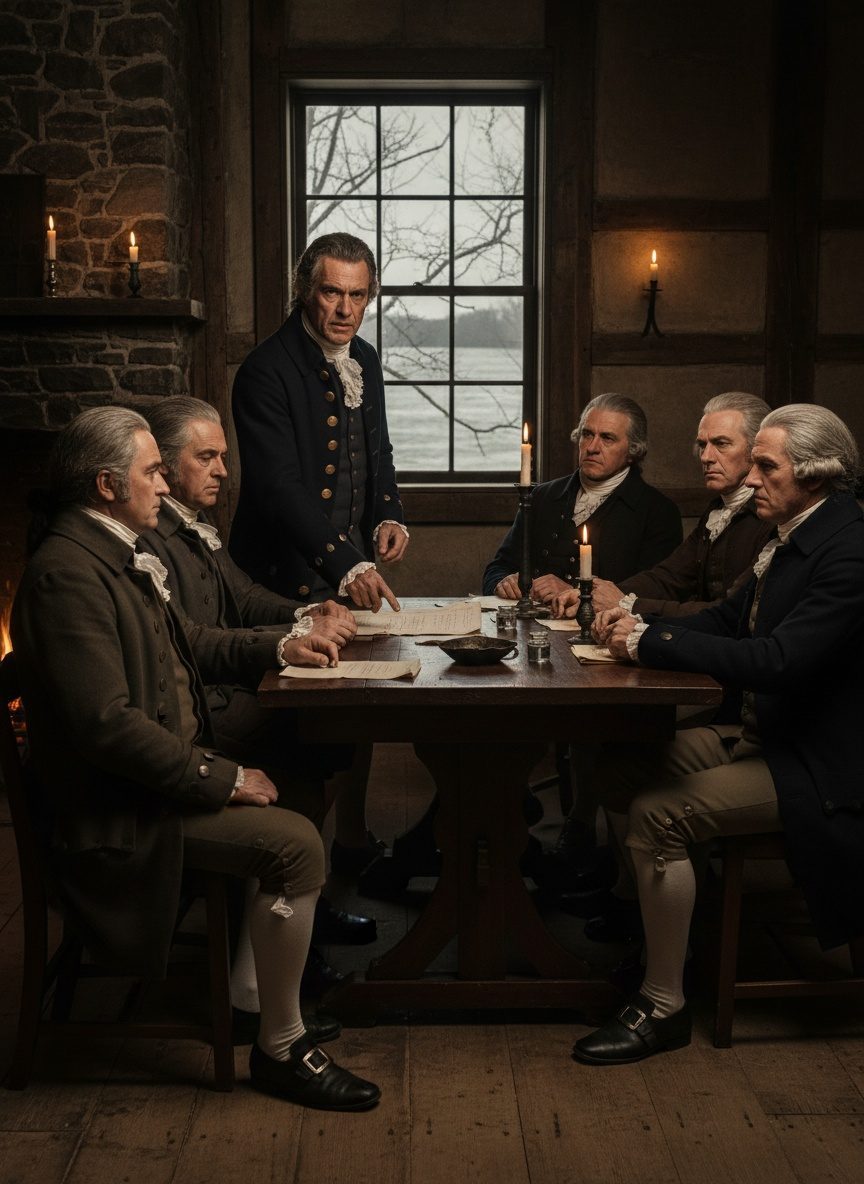
March 1793. The turbulent waters of the Niagara River mirrored the chaos unfolding on its banks.
The Inhumanity on the Riverbank
On this day, the serene landscape of Upper Canada's Niagara region was shattered by cries of desperation. Chloe Cooley, a Black woman who had endured bondage on Canadian soil, found herself forcefully dragged from her home. The calm Canadian frontier, with its crisp air and thick, coniferous forests, stood starkly in contrast to the horrifying scene. Cooley, bound and protesting, was thrust across the frigid river to the United States, where slavery remained permissible.
The sheer brutality of her ordeal would have been enough to silence many, but the echoes of her screams carried across the societal boundaries of the fledgling colony. Peter Martin, a free Black man who witnessed this atrocity, ensured that Cooley’s cries did not fade into obscurity. He brought the incident to the attention of Lieutenant Governor John Graves Simcoe, setting in motion a chain of events that would challenge the moral framework of a young empire.
The Ripples Reach the Governor
John Graves Simcoe, a man renowned for his sense of justice and progressive ideals, was troubled by the tale of Cooley's forced removal. The profound disparity between Upper Canada's promise of a new life free from tyranny and the ghastly reality faced by enslaved peoples troubled the Governor. To Simcoe, the nascent colony held the potential to light a path towards freedom and equality — a path starkly diverging from Britain's colonial legacy.
Simcoe's discomfort wasn't confined to philosophical musings. His resolve to address the issue of slavery led him to the Executive Council of Upper Canada, where he made his case for the abolition of a practice that was inimical to the values he wished all citizens to share. The discussions in the council were colored by debates over economic necessity versus the moral imperative. There were those who feared the loss of labor, but Simcoe's clarity of vision compelled action against the inhumane practice.
William Osgoode and the Legislative Breakthrough
In the council's chambers, one man emerged as a catalyst for change: William Osgoode, the Chief Justice of Upper Canada. Known for his acumen and keen legal mind, Osgoode's stance was pivotal. He had seen the systemic injustice at work and aligned with Simcoe’s desire for a legal resolution. The dialogue was passionate yet courteous, a careful navigation of legislative reform in a land governed by British laws yet separated by an ocean of evolving ideas.
Ultimately, it was the passage of the Act Against Slavery in 1793 that crystallized these deliberations into action. While it did not eradicate slavery outright, the act prohibited the importation of enslaved people into Upper Canada and ensured that the children of existing enslaved individuals would be freed upon reaching the age of 25. The transition towards abolition was gradual but groundbreaking, marking Upper Canada as the first jurisdiction in the British Empire to take legislative action against slavery. This watershed moment foreshadowed larger movements towards abolition that would sweep across the empire in the years to come.
The Legacy of Chloe Cooley’s Struggle
The reverberations of Chloe Cooley's resistance are often left unspoken in the broader narrative of history. However, her story underscores a critical turning point, illustrating how the courage of one woman in the face of unimaginable oppression spurred legislative change. The act passed in 1793 was not the culmination of liberty, but a crucial step towards it.
Understanding the struggle of Chloe Cooley provides insight into the complexities of early Canadian history, where ideals often clashed with harsh realities. Her legacy lives in the legal precedents set by figures like Simcoe and Osgoode, and it serves as a testament to the capacity for change when people of conscience rise to meet injustice head-on. This moment in history is a stark reminder of the power of individual actions to influence systems, rippling through time to redefine a nation.