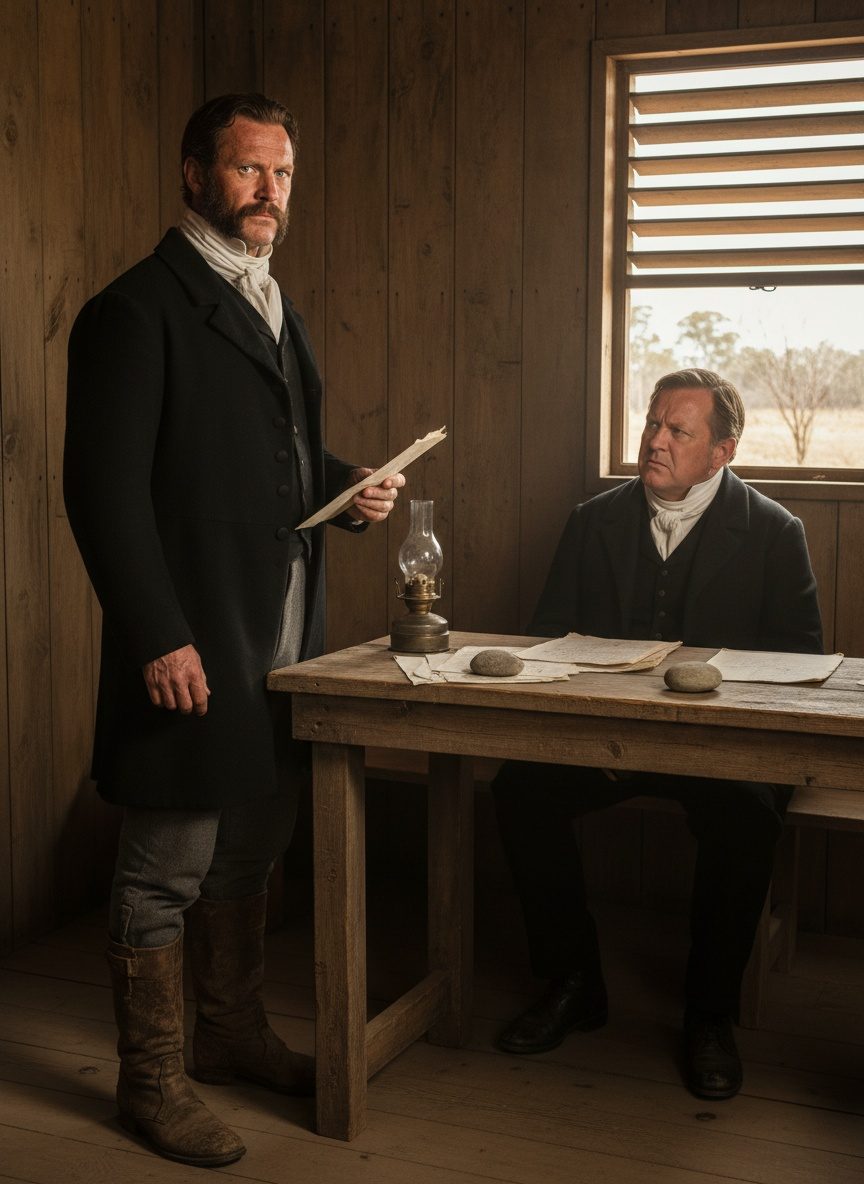
He was a man of deep convictions. They echoed louder than the crack of any whip.
Conscience Amidst the Colony
In the early colonial period of Australia, silence was survival. But in 1840, amidst the sprawling landscapes of New South Wales, a lone settler's refusal to accept the brutal norms of penal justice resonated far beyond the quiet bushland. When Angus McMillan, a Scottish pioneer navigating the harsh realities of colonial life, walked into a New South Wales courtroom to file a formal objection, he became an unlikely moral beacon. At the heart of his protest was a singular act of defiance—his refusal to witness the flogging of a starving convict.
Flogging was an entrenched part of the punitive measures in the penal colonies, wielded with unapologetic regularity by magistrates keen on maintaining order through fear. Few dared to challenge this ferocious display of power, and most settlers, whether free or convict, turned a blind eye. Yet, McMillan, moved by conscience rather than compliance, boldly defied this entrenched system. His objection lay not only in personal sentiment but in a formal documentation—a rare and daring act in an era when opposition could mean risking one's livelihood and standing.
The Pioneer's Perspective
Angus McMillan, like many settlers of the time, was no stranger to hardship. Life in the colonies demanded resilience and adaptability, qualities McMillan harnessed from his Scottish roots. Settlers like him hailed from diverse backgrounds, often driven by tales of opportunity and the promise of fertile lands in this raw new world. Yet, the shadow of penal practices loomed large over their daily lives, with justice often turning a blind eye to human compassion.
McMillan observed the scene that unfolded in front of him with mounting horror. A starving convict brought before the magistrate, skin clinging to bones, sentenced to fifty lashes for petty theft—an almost instinctual act of desperation, driven by hunger. The sound of the sentence echoed in McMillan's mind, more daunting than the physical echoes each lash would create. In that moment, McMillan made his choice, stepping out of the crowd of compliant witnesses and into the principled isolation of objection.
The Act of Defiance
Walking away from the gathering crowd, McMillan stepped into an unfamiliar role, an advocate not just for a single soul, but implicitly for the unsung notion of humane justice in a world yet to embrace it. His path to the courthouse might have been short in distance, but it represented the crossing of an invisible boundary—a venture into moral territory untraversed by his peers.
The filing of his formal protest against the flogging was an act fraught with risk. The colonial administration, unforgiving of dissent, could easily see him stripped of his land grant and cast into ostracism. Yet, McMillan's protest was not just a written objection; it was a profound statement that humanity must transcend law. This anomaly—a written record that remarkably survived amidst the silence of historical archives—shocked even a system accustomed to quashing opposition.
The Silence Broken
The fact that McMillan's protest made it to the records is telling of its impact. It stands unique among the annals of colonial administration documents, a note not easily brushed aside or forgotten. This singular act of defiance did not incite immediate reform, nor did it topple the judicial status quo overnight. However, it pointed to a burgeoning consciousness among settlers—a small but significant recognition of an inherent injustice demanding acknowledgment, if not resolution.
The legacy of McMillan's act survives not in a changed law or immediate cessation of punitive practices but in the testament of his conscience over comfort. It serves as an enduring reminder that even within the strict confines of law and order, the spirit of humanity can flicker against overwhelming darkness. In the small courthouse of a bustling penal colony, Angus McMillan's name was penned into history—not for feats of exploration or wealth, but for a simple, unwavering resolve to do what was right.
By refusing to be a bystander to brutality, McMillan's story offers us a glimpse into a past where the path of least resistance was often chosen, yet also reminds us that the courage of a single conscience can indeed ripple through the ages, urging us to question, to stand firm in our beliefs, and ultimately, to progress towards a more compassionate society.