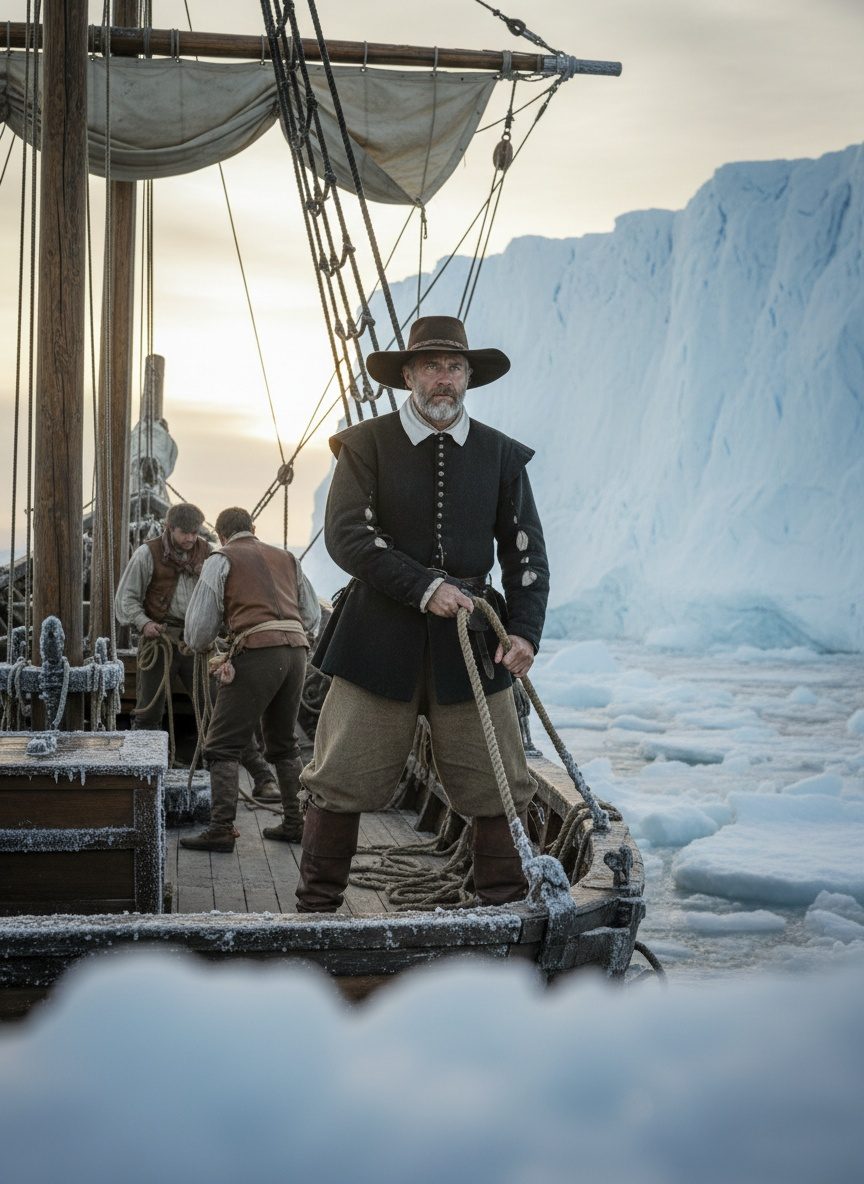
No governor sanctioned it. And yet, John Batman's journey into the bush would alter a continent’s course.
Man of Van Diemen's Land
In 1835, John Batman was a figure of notable audacity emerging from the rugged heart of Van Diemen's Land, now known as Tasmania. He stood at the cusp of an era desperate for change as the British Empire sprawled across Australia. While most settlers lingered on the safety of coastal edges, Batman’s thoughts turned to the mysterious and uncharted mainland across the Bass Strait. What lay beyond the charted waters? Unlike many of his contemporaries, Batman was not simply a settler; he envisioned himself a visionary explorer.
Armed only with a determination that others might mistake for reckless ambition, Batman embarked upon a venture that would entangle legal, moral, and historical threads. His sense of destiny was not bound by the decrees of far-off London, nor did he require the backing of armed escorts to affirm his courage. In a landscape as sprawling and diverse as the vast Australian bush, Batman's resolve felt as formidable as the unexplored land itself.
Meeting of Minds at Merri Creek
Few settlers had ventured as far into the bush as John Batman did in the winter of 1835. Navigating through dense undergrowth and abiding by no path but the one unmarked by time, Batman arrived at Merri Creek in what would later become Victoria. Upon finding the Wurundjeri people, he discovered that what waited at the heart of the land was a people as deep-rooted to it as the eucalypts that surrounded them.
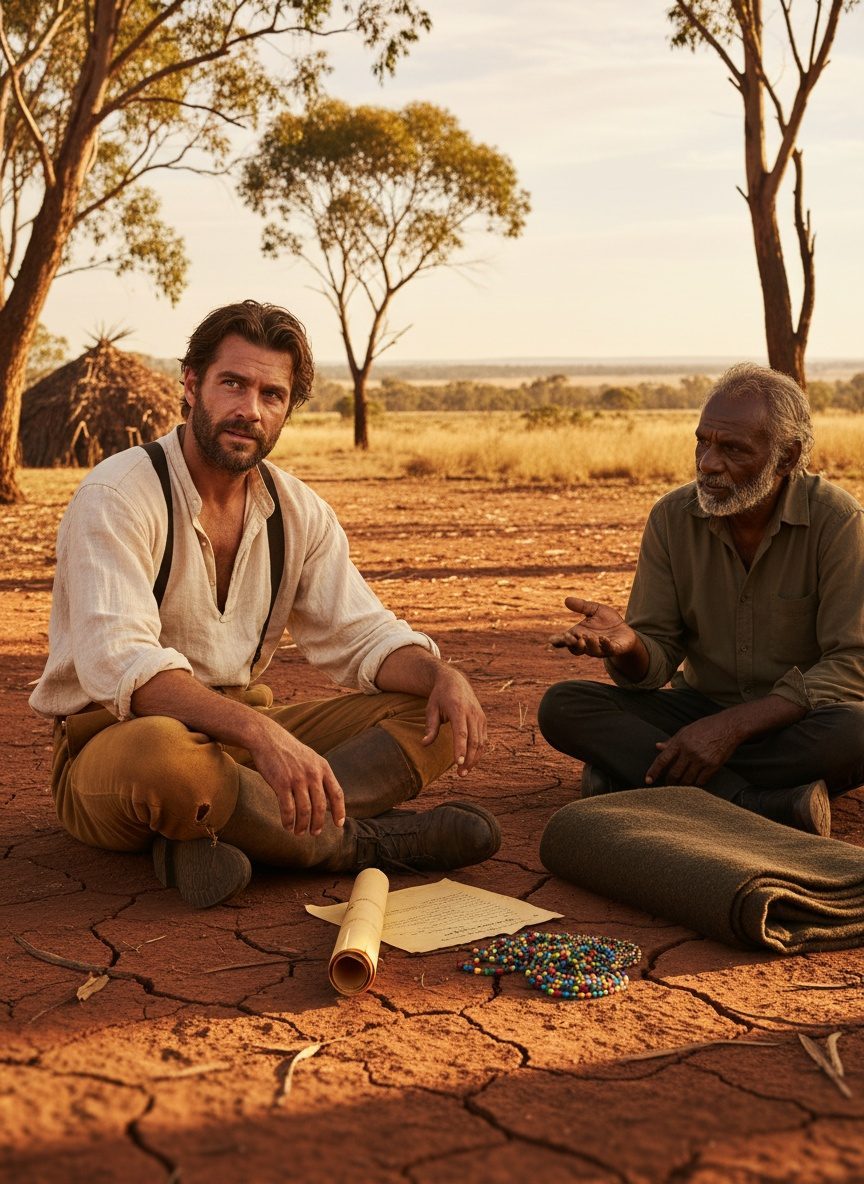
Exactly how Batman approached the Wurundjeri elders, history leaves us to ponder. Accounts suggest he offered rolled tobacco, beads, and blankets as gestures of goodwill. Such trinkets were customary in British practices of treaty-making, tokens of an uneasy beginning for negotiations that would unfurl in broken language and gesture. More so, they were part of a bold proposition—a treaty that sought to acquire 600,000 acres.
The scene at Merri Creek was a tableau of contrasts; Batman, alone and far from regal pomp, seated before a council of Wurundjeri elders whose laws and customs were as ancient as the land Batman dreamt of claiming. From differing worlds, one spoke of ownership, the other of custodianship. In this exchange, Batman handed over his part in what he saw as an agreement sealed with signatures marked on a sheet of vellum. The 'Batman Treaty', he believed, was a promise both legally binding and honorously kept. As years passed, who truly had the power to give or take when neither fully understood the ramifications was left to the wind, blowing as it pleased across the pasturelands.
The Land That London Would Not Acknowledge
Despite Batman's optimism, the treaty did not sit well with authorities distant in England. To them, the concept of a single man negotiating land ownership with native people lay beyond policy and precedent. The colonial administration, unable even to grasp the possibility that such an agreement could be valid without the Crown's stamp of endorsement, swiftly dismissed the treaty's legitimacy. No soldier had enforced it, no Governor had approved it, and so in the eyes of empire, it never existed.
Yet this diminishment could not erase the profound stir Batman's actions had set into motion. Melbourne, sprouting from the seeds of this disputed claim, burgeoned from settlement to thriving city, its skyline soon to echo with the dreams of countless others who followed in Batman's metaphorical footsteps. What began as a solitary act became the unlikely foundation for an urban narrative still unwinding through history’s annals.
The Shifting Sands of Legacy
Today, John Batman's legacy is as complex as the treaty he once believed to be binding. To some, he is a pioneer—a man bold enough to step beyond the boundaries of maps into the dynamic unknown. To others, Batman's treaty is seen as a manifestation of colonial arrogance, a naive attempt to legitimize settlement through a unjust transaction. His treaty, shadowed by differing perceptions, nevertheless crystallizes the era’s dissonant clash of cultures.
The ultimate importance of this almost forgotten encounter lies in its reminder of an ever-present tension between settlers and traditional custodians, each navigating overlapping landscapes fraught with shared and colliding meanings. Batman's story is testimony to the complexities of Australia’s colonial past, offering a lens with which to examine our ever-evolving understanding of ownership, belonging, and reconciliation. In remembering, we must choose not merely to recount the legend but to untangle the lessons it continues to offer, challenging us to question what it truly means to give one’s word.