The conquest of Sindh was Charles Napier's crowning achievement. But the man whose hands molded this victory into being was James Outram, who chose to stay in the shadows of his own triumph.
A Land on the Brink
In the tumultuous year of 1843, the British Empire's reach was extending deeper into the Indian subcontinent, eyeing the fertile plains and strategic territories that could bolster its supremacy. The province of Sindh, with its vast reaches along the storied Indus River, was a focal point. It was here that James Outram, a soldier of both strategic genius and moral fortitude, began to weave his silent but enduring legacy.
Outram, known for his keen intuition, had spent years on reconnaissance, understanding not just the lay of the land but the intricate web of allegiances and animosities that threaded through Sindh's political landscape. With his finger pressed firmly on the pulse of the region, he discerned early the fragility of alliances formed under duress or for fleeting convenience.
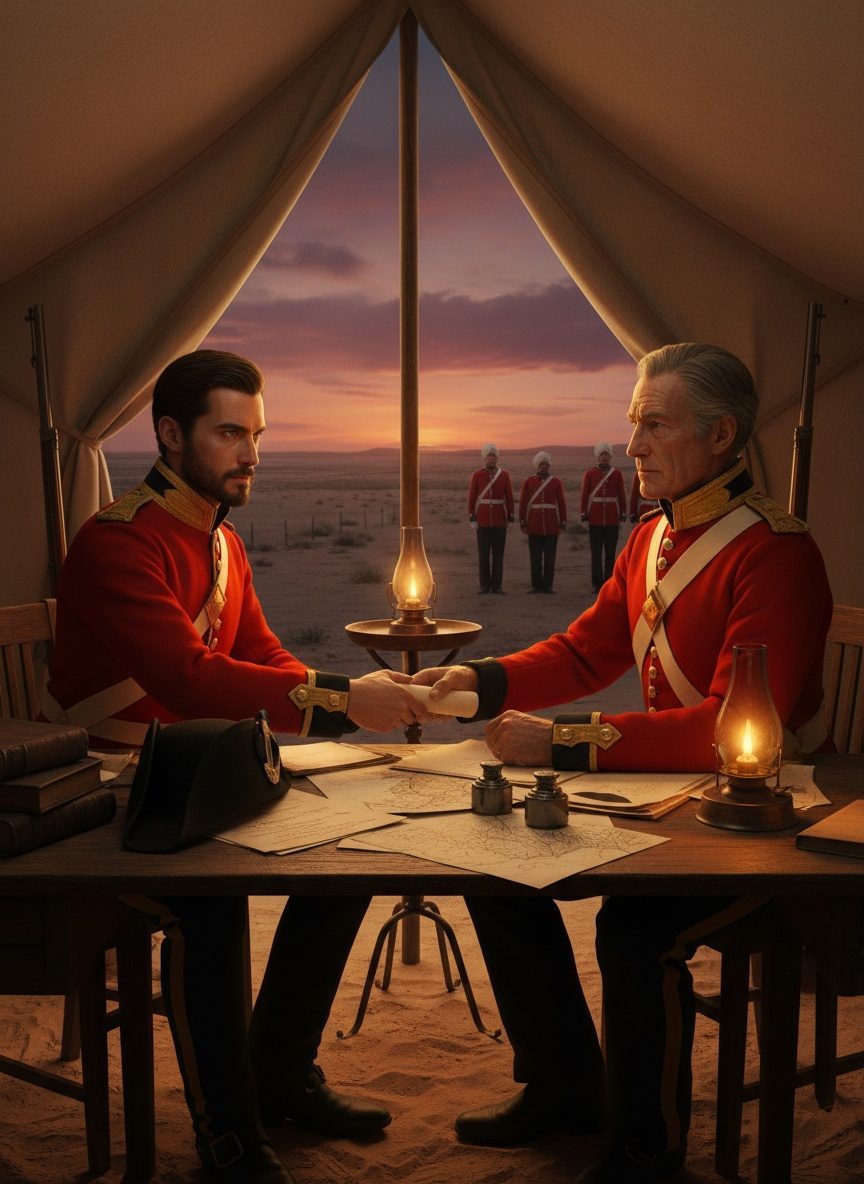
Crucially, it was Outram's diplomacy that held potential unrest at bay. He worked diligently behind the scenes, a shadowy presence that united rather than divided. He understood the importance of the intricate dance of negotiation, binding local tribes and influential leaders to a temporary peace that allowed British forces to maneuver adeptly. The tension in Sindh was palpable, poised on a knife’s edge, but Outram’s deft touch kept it from slipping into chaos.
Yet, in this volatile climate strained by expectation and ambition, a more forceful, immediate resolution was drawing near. Outram’s intelligence reports funneled upwards, helping craft the strategies that would eventually lead to the full military engagement — a campaign that would bear the stamp of Charles Napier's aggression but was, in essence, underpinned by Outram’s methodical groundwork.
The Showdown at Sindh
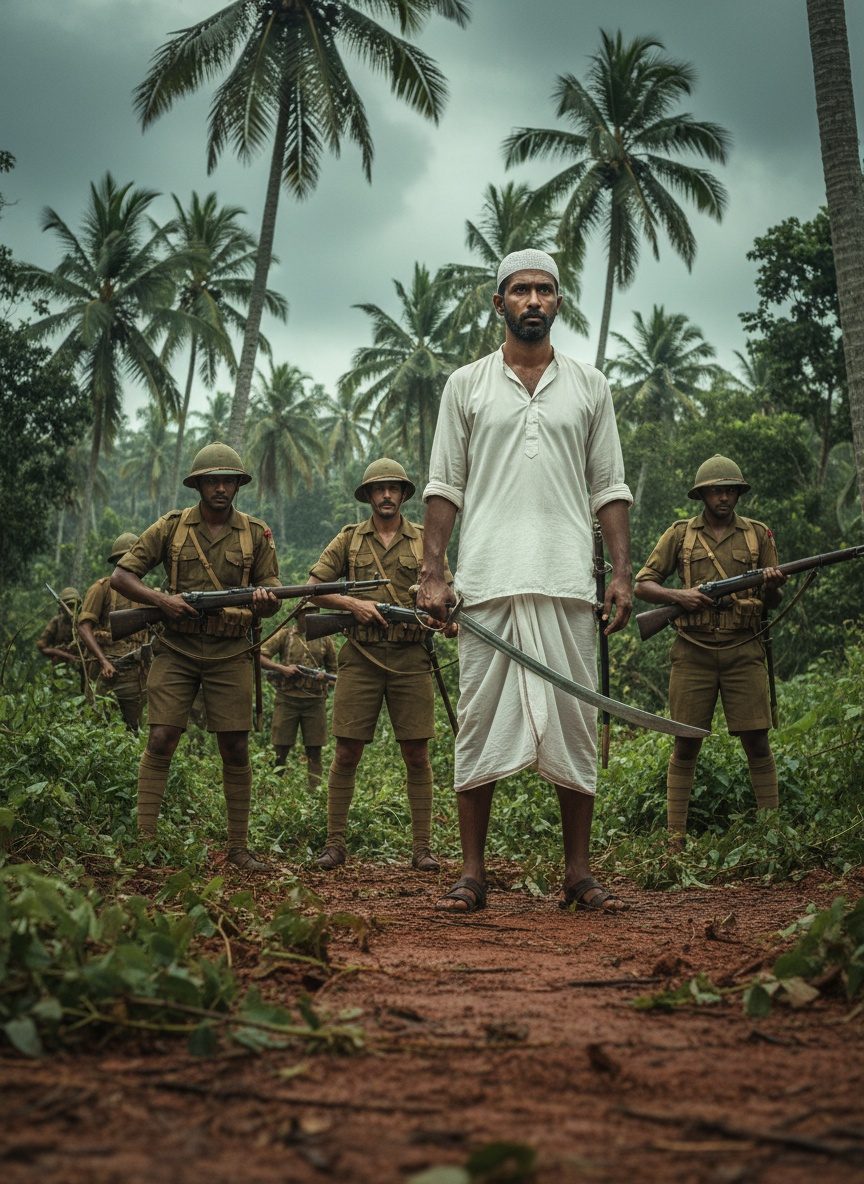
The confrontation that historians often recount as the definitive moment in the annexation of Sindh culminated in the Battle of Miani in February 1843. On the dusty plains, British forces faced off against a significant coalition led by the baleful Emirs of Sindh. It was a battle of staggering contrasts — the disciplined British regiments arrayed against the swarming, spirited contingents of local forces whose very way of life was under threat.
Through the clamor and smoke of cannon and musket fire, Napier's role was singular and public; his orders crackled with authority as his troops clashed with gusto into Sindh's defenders. The conquest, bloody and swift, tilted decisively in the British favor. Napier’s victory was indeed tangible and resonant — his authority over the battlefield granted him the title often reserved for those who crush a well-defended enemy into retreat.
But while Napier’s boots strode the battlements of newly claimed victories, it was Outram's invisible blueprint that had guided the empire’s hand. The intelligence he provided was critical, the alliances he fostered essential, and the preparation he orchestrated, meticulous. Yet, as the final cries of battle settled into weary, expectant silence, Outram did something extraordinary.
Deliberately, he stepped back. Victory in hand and honor within reach, Outram declined the acclaim. This was no misstep of hubris, but an act of almost unthinkable self-denial. He saw that the aftermath of victory required more than personal glory. It demanded a united front, exemplified by Napier. Outram, content in his impact, chose instead the path of humility. As Napier ascended in military lore, Outram receded, his name nearly lost to the obscuring folds of history.
The Quiet Triumph
As Sindh's landscape changed, wrapped now in the colors and customs of the British Empire, Outram's absence from its storied maps remained a silent testament to a leader different from the ranks — one who refused his own legacy in favor of another’s triumph. The admiration he garnered among his peers persisted quietly; those who understood the critical depths of his contribution recognized the unique elevation of character shaped by such a willful eclipse.
James Outram's story did eventually surface, not as a forgotten tale, but as one marking the distinct pattern of an individual who practiced a virtue rare among the ambitious Victorian officers: magnanimity. Though the annals of the Empire may sing louder of battles and its vaunted generals, Outram’s legacy is one of whispers — one realized in the stable transition of powers and in the subtle dance of diplomacy over force.
This singular choice to step aside in the world's most transformative stage — that of Empire-building — challenges us today. It alters the narrative of victory and prompts a reflection on what true leadership entails. In a realm where conquest and credit were paramount, James Outram’s selfless withdrawal leaves us to ponder the nature of victories unseen: those forged not in the roar of guns, but in the quiet corridors of strategy and unity.