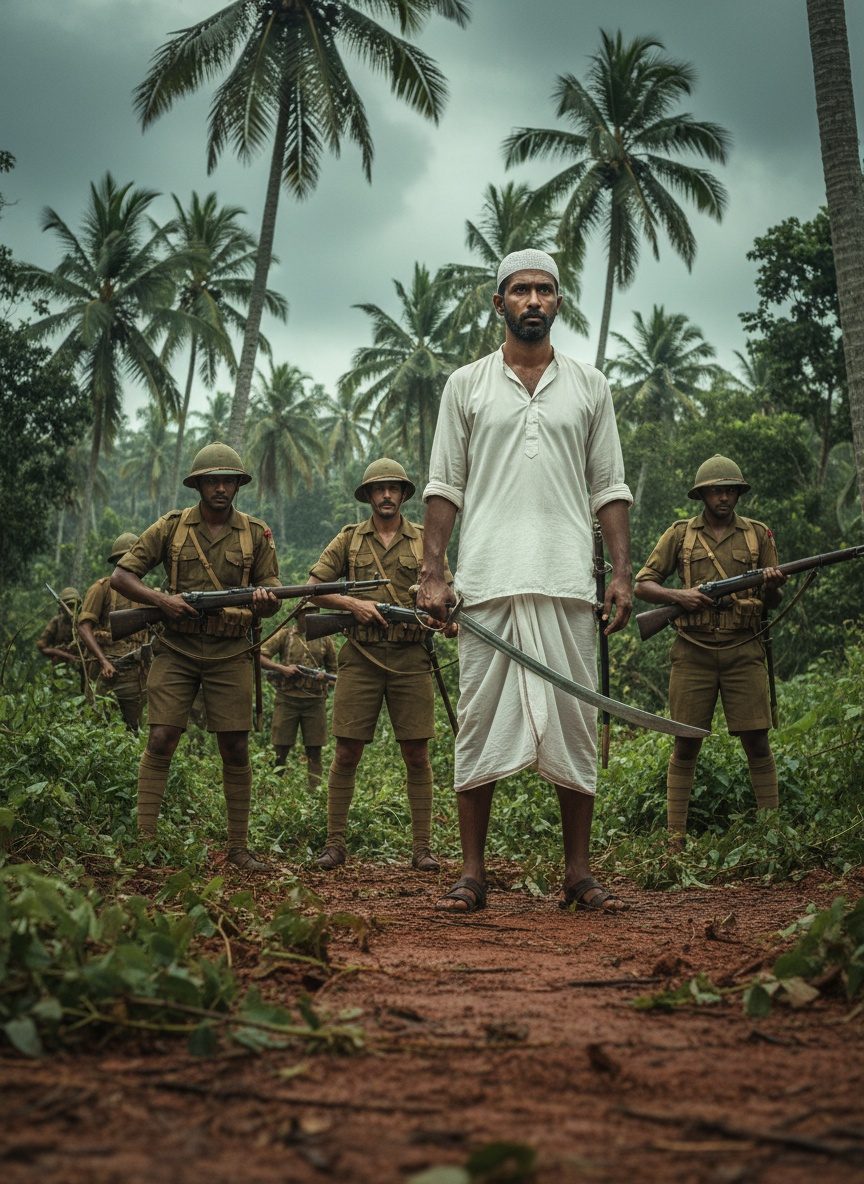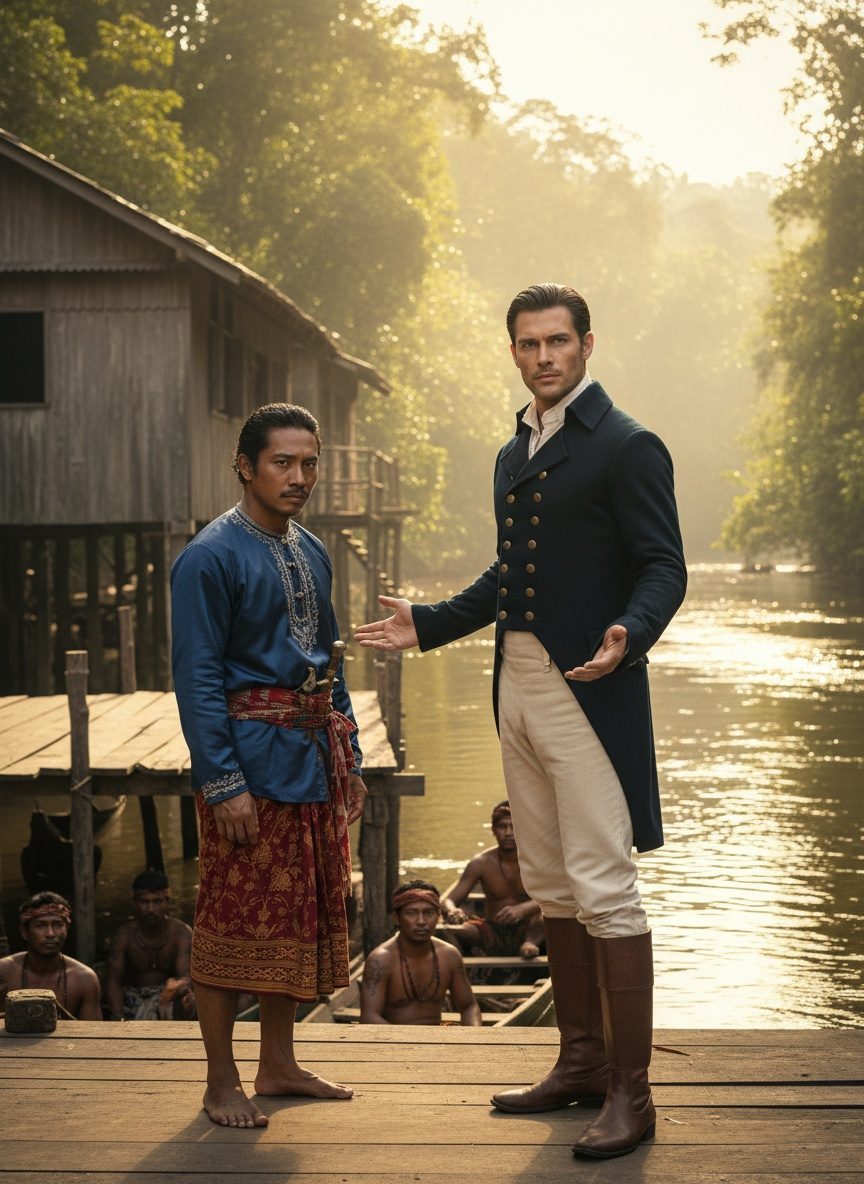
The tropical humidity clung like a wet shroud to James Brooke as he stood on the muddy riverbank, his breath steady despite the sweat trickling down his neck. The rebel chief, a figure of defiant humility, knelt before him, awaiting the verdict. Around them, the tranquil silence of the surrounding jungle was punctuated only by the murmur of the river, a haunting reminder of the battles it had borne witness to. Brooke’s men were tense, expectant. Execution was the expected course, yet here stood their leader—calm, resolute—contemplating a mercy unchartered in the annals of empire.
The Cauldron of Borneo
The rivers of Borneo were lifelines to its complex tapestry of tribes and allegiances, a region as turbulent as the rapids Brooke had navigated to reach this corner of the world. Sarawak, unlike any European territory, was a mosaic of cultures that had long resisted foreign domination. The most ferocious of these defenders were river pirates, marauders who throttled commerce and spread fear through the waterways.
James Brooke, an Englishman with a handful of men and a small steamer named the Royalist, had made it his mission to bring order to this chaos. This wasn’t a conquest driven by crown or country; this was a personal crusade, fueled by Brooke’s ambitions and his visions of justice. As he traveled upriver, each encounter was a test of his resolve, each skirmish a step further into the murky depths of local politics, which were as perilous as the crocodile-infested waters beneath his keel.
The Confrontation on Foreign Shores
It was an arduous journey that led to this fateful moment. Brooke's campaign against the pirates had been relentless, a demonstration of naval grit versus guerrilla cunning. His steamer, ill-suited for the labyrinthine estuaries, had nonetheless become a symbol of Brooke's unwavering intentions. Against this backdrop, the rebel chieftain’s surrender was a culmination of tactical prowess and an empire’s shadow looming large.
The scene was set against a backdrop of towering rainforest canopies, their leaves glistening with the recent rain. Brooke, with eyes as sharp as flint, had anticipated victory yet faced the more daunting prospect of what to do next. The path of the bloody hand was clear, its consequences predictable. But mercy held its own allure, its threads woven with possibilities that no tactic manual could outline.
The Choice Unheard Of
Every fibre of Brooke’s imperial training, every expectation of his men at his back, screamed for the rebel’s blood. Yet Brooke was never one to dance to society’s drumbeat. Standing in the oppressive heat of Sarawak, he chose a course that confounded allies and foes alike. The rebel chieftain was made to rise from his knees not by force of arms, but by an act of grace, unexpected and unprecedented.
The locals had tales of Brooke’s justice, a mix of British law and native understanding, that whispered along the rivers and through the jungle. Suddenly, in this moment, those whispers found form. Brooke saw in the rebel chief not an adversary but a potential ally. With a motion as deliberate as it was daring, he led the chief away from the shadow of execution towards the riverbank and uttered a single word—"Go." It was a sentence that set ripples through time, a pardon that painted history on a new canvas.
Brooke’s New Order
This act of clemency did not just save a life; it gestated a new epoch in Sarawak. The local tribes, previously embroiled in cycles of revenge, began to see the possibility of another path. Brooke’s clemency subtly dismantled entrenched hostilities, allowing the seeds of cooperation to take root in a land where vengeance had previously bloomed.
Under his governance, Brooke nurtured a tapestry of alliances and compromises, navigating ancient enmities with a deft hand. Sarawak slowly transformed into a realm where peace was brokered not from fear of the colonial gun, but from accorded respect. This pivot from subjugation to collaboration fostered decades of stability and economic growth in the region.
A Change in the Imperial Wind
This singular act of courage—an officer of the empire sparing the life of a vanquished enemy—not only changed the fate of Sarawak but also hinted at an evolving philosophy of leadership within the empire itself. Brooke’s victory was not merely in territories won, but hearts and minds swayed; an alchemy few empire builders had mastered.
James Brooke’s story is a complex weave of ambition and morality, a tale obscured in the shadows of imperial chronicles. Yet, it reflects on the transformative power of mercy, the strength found in empathy amidst conquest. As histories often focus on battles won and kingdoms forged, here lies a tale of a single act of grace which proved mightier than the sword. It reminds us that sometimes, the untold legends of empire are those where charity forges the future more indelibly than the clash of steel ever could.