September 1857. Dust hung thick in the air outside Delhi, twisting into golden spirals as the sun set behind the ancient skyline. The heart of the Mughal Empire had fallen, its corridors emptied of power as the British forces reclaimed their hold on the vast subcontinent. Yet, echoes of rebellion whispered through the plains, urging the holdouts and the hidden to persist. Into this fraught tapestry rode a single figure with destiny hot at his heels: William Hodson.
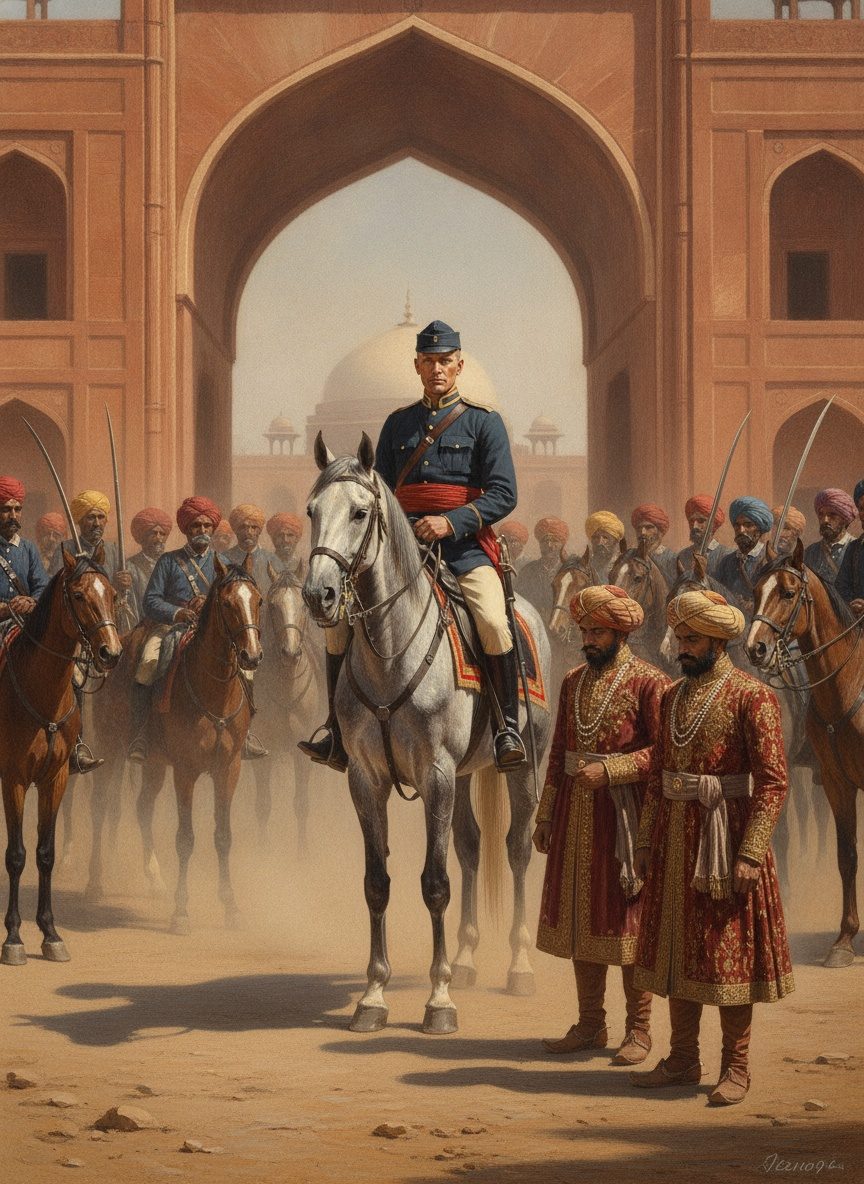
Hodson, a man of rigid sinew and unflinching resolve, commanded an irregular cavalry known as "Hodson's Horse." These men, fifty sowars in all, were more legend than military, embodying a fierce independence that reflected their leader. Their mission was perilous and unsanctioned, driven by the rumor that two Mughal princes—fugitives tipped to rally a resurgence—were hiding within an ancient tomb in the outskirts of Delhi. The nooks and crannies of this derelict monument whispered the stories of those who sought refuge within its timeworn walls; this day, it cradled the scions of an empire.
As Hodson approached, his senses heightened. The air held a taut silence, as if thickened by the weight of history resting upon it. These princes carried more than royal titles—they embodied a last glimmer of Mughal sovereignty. Capturing them alive would not only signal an end to organized resistance in the region; it would serve as the ultimate coup de grâce against the fading empire. Still, the challenge loomed formidable. Thousands of loyalists and desperate fighters swirled around the tomb, men willing to sacrifice unto death for just a glint of princely freedom.
What Hodson executed next, few could have predicted. With confidence carved over years of adversities and close skirmishes, he presented the terms—surrender in exchange for their lives spared. Strangely persuasive and towering in conviction, his bold proposal swayed them. Perhaps it was the realization of inevitable doom or the mystique surrounding Hodson himself; serene amidst the storm, the princes agreed to be escorted back, alive and unharmed, under a banner of uneasy truce.
The brothers, captives in their own land, were mounted and escorted towards the city by Hodson and his sowars. The scene was an evocative tableau—a magnificent juxtaposition of imperial grandeur diminished now to royal humility against the backdrop of the bloodied plains. Watching eyes absorbed the procession with disbelief; such a spectacle defied the grim expectations of an allied army readying for slaughterous conquest.
The journey back was a march through history's remains, each step echoing stories of grandeur turned to ash. The princes bore silent faces, eyes cast upward as if seeking divine counsel, their pasts and possible futures hanging precariously in the balance. Trapped between despair and a tenuous hope, their slow passage spoke volumes more than words ever could, an unspoken testament to the dynastic decay witnessed throughout the city.
Crossing the gates of Delhi, carried upon horses rather than rolling thrones, the Mughal princes were met with a stillness that told tales of resilience—of a city stretching back from carnage towards uneasy stability. For Hodson, this procession was much more than mere military command fulfilled. It was a demonstration of leadership that did not require screaming at the wind but rather navigating through its furious dance to emerge unscathed.
Why this audacious act remained inscribed boldly in the annals of history is a tale of its own accord. The capture of the princes alive underlined a deftness often overshadowed by the brutality synonymous with conquest. Few could master the subtle art of persuasion while perched so precariously amidst chaos. Hodson's endeavor forever colored perceptions of political mastery and pacification, embedding an indelible page into the intricate saga of colonial India.
The sepia tones of history nearly dried upon its pages, this episode demands introspection. Here lay the story of two lives intersecting under the shade of clashing empires, bridging worlds that strained fiercely for dominion over belief and sovereignty. As students of history, it reminds us that victory is often found less in triumphant outcry and more so whispered through the subtle art of dialogue and decisive sagacity. In moments like these, where human resolve meets historical reverberation, one glimpses the legacy of decisions that lay circumvent timelines and define epochs. For Hodson, for the princes, and for the battered yet breathing heart of India itself—the past forever plotted their entwined path on the ever-unfolding canvas of time.