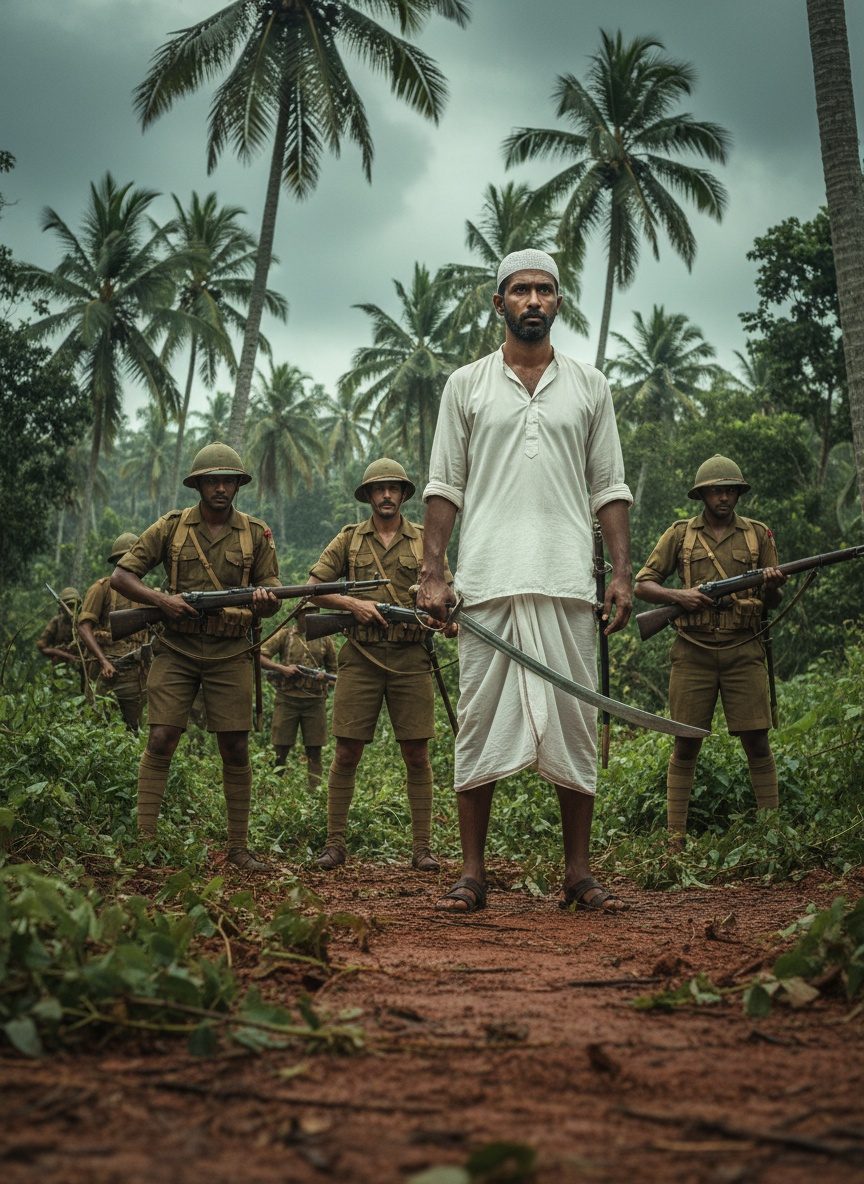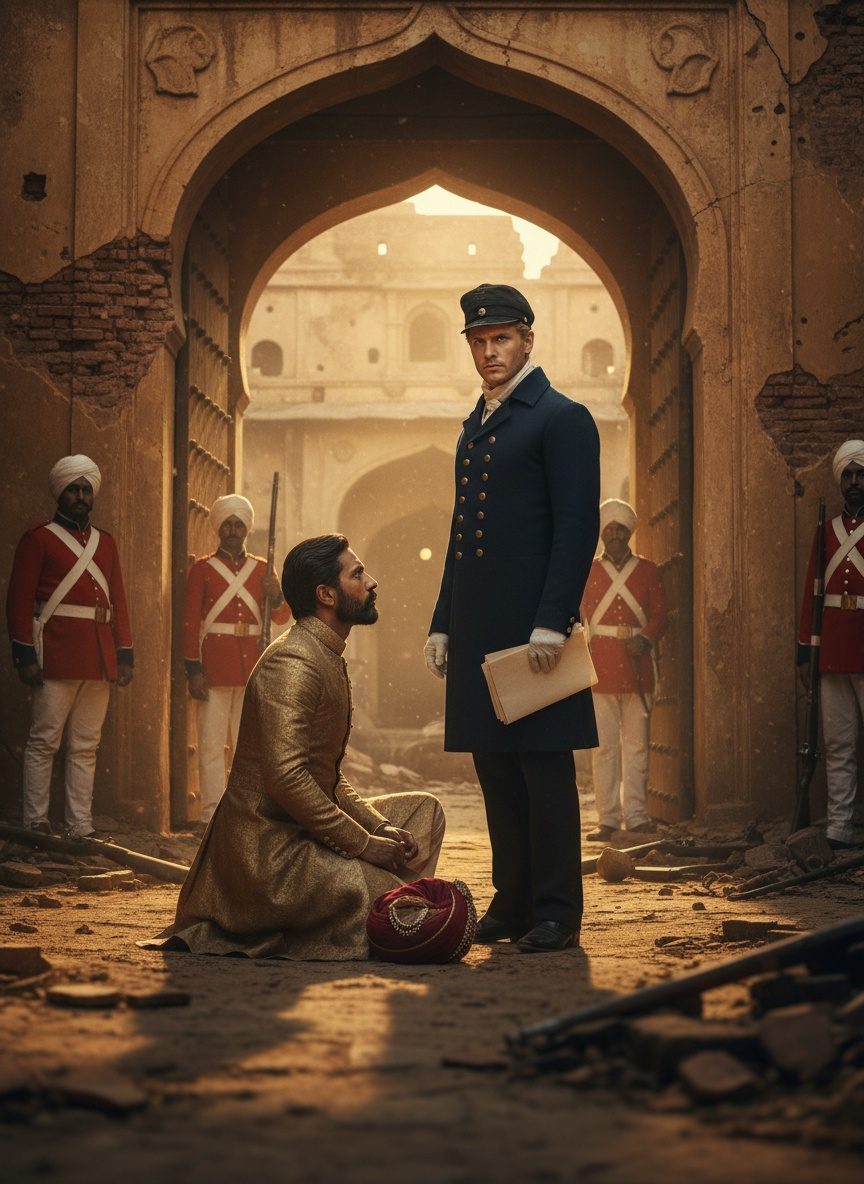
Herbert Edwardes was only twenty-nine years old when he made a decision that would ripple through history. He had never executed a man in cold blood before, and that day, he chose not to start.
The Storming of Multan
The fortress city of Multan had seen many sieges in its storied past, but perhaps none were as significant as the one in 1848. Situated in what is now modern-day Pakistan, Multan was a key stronghold for the Sikh Empire, a region caught between the jaws of colonial ambition and local sovereignty. The British East India Company, inexorable in its quest for control, had its eyes set on securing the Punjab. The resistance in Multan coalesced under the leadership of Diwan Mulraj, a formidable ruler who became the face of rebellion against British expansion.
As the conflict raged, Herbert Edwardes, a young political officer known for his diplomacy rather than warfare, found himself embroiled in the siege of Multan. The atmosphere was one of intense heat, both literal and metaphorical. Cannon fire and musket shots blurred the lines of day and night as the city walls crumbled under British artillery. Edwardes, with his keen mind poised between military necessity and moral imperative, played a pivotal role in the siege. What came next would astonish everyone — not just because of the victory, but because of the unexpected mercy he displayed.
The Weight of Victory
With Multan's defenses finally breached, the city's surrender came amidst the dust and chaos of ruin. Diwan Mulraj, the formidable figure at the heart of the resistance, was now at the mercy of his conquerors. By the brutal standards of 19th-century conflict, his fate seemed sealed. Many among the British ranks saw execution as not only justified but necessary — a severing of the head, a message of dominance to others who might dare resist. The atmosphere in the camp crackled with anticipation of retributive justice, as soldiers whispered of Mulraj’s impending doom.
Yet, Herbert Edwardes saw a different path. He believed that might and right need not always be entwined. Delivering retribution was easy; seeking justice was another matter. Heeding the moral compass within him, Edwardes chose to spare Mulraj the sword, insisting instead that the defeated leader be sent to face trial. In an era where capital punishment was often meted out without hesitation, Edwardes' decision resonated through the ranks like a bell tolling a call to grace.
A Trial of Conscience
Sending Diwan Mulraj to trial instead of summary execution was more than an act of personal mercy; it was a bold political statement. The optics of this decision did not escape Edwardes, nor those in command. To some, it was seen as weakness, an unnecessary delay that could embolden more rebellion. To others, it was a demonstration of the British principles that were proclaimed yet so often contradicted in their imperial pursuits.
The trial, held not long after the siege, stood as a unique spectacle, a blend of British legal process and Punjab’s tumultuous political reality. The court proceedings were scrutinized, both by those in the Punjab and across the British Empire. The trial of Mulraj was as much about justice as it was about stamping British authority in a manner that soothed the conscience of its colonizers. Edwardes, steadfast in his belief, saw this as an opportunity for the Punjab to witness British justice at work—a convoluted, almost theatrical exercise in fairness that would have implications far beyond the court's judgement.
The Repercussions of Forgiven Rebellion
The decision to try rather than execute Diwan Mulraj reverberated through the intricate layers of the Punjab’s social and political fabric. It was a moment of reflection on the part of the British, a pause that questioned the very tenets of their colonial machine. Was it power at any cost, or power with moral responsibility? The trial itself symbolized an attempt to weave fairness into the narrative of imperial rule, an endeavor as risky as it was novel at the time.
Herbert Edwardes' decision underscored that even in a world dominated by empires, where might often made right, there remained the possibility of a different course—one where justice took precedence over revenge. The trial did not undo the annexation of Punjab or abate the imperial ambitions of the British, but it did plant a seed of awareness. This act of clemency hinted at a more nuanced form of administration, one that might have seemed idealistic to some but carried profound implications for both rulers and the ruled.
The story of Edwardes and Mulraj is more than a footnote in the annals of the Second Anglo-Sikh War. It is a contemplation of mercy in the crucible of conflict, an assertion that even amidst the thundering chorus of war, a single decision rooted in justice can alter the course of history. Though the physical fortifications of Multan were shattered, the echo of Edwardes' choice endures, suggesting that in the clash between empires, compassion can reshape destinies as surely as cannonballs can level walls.