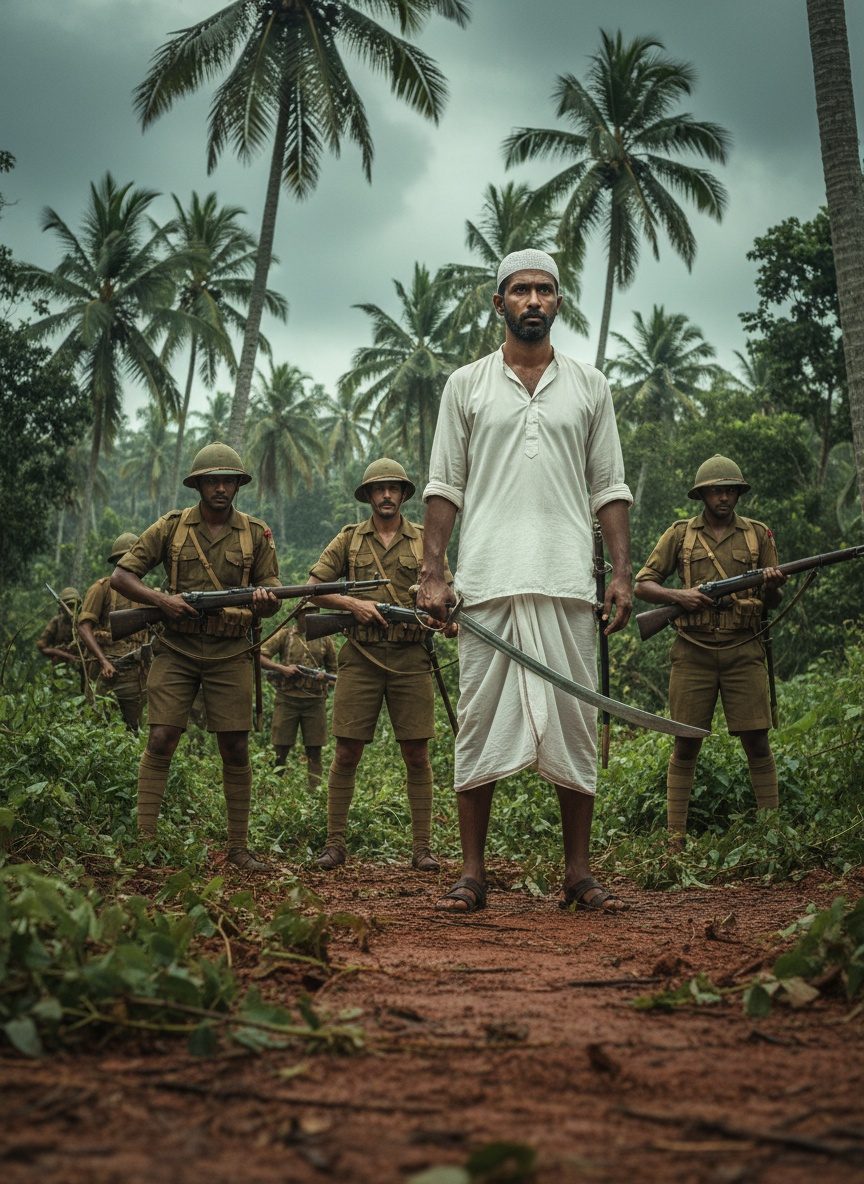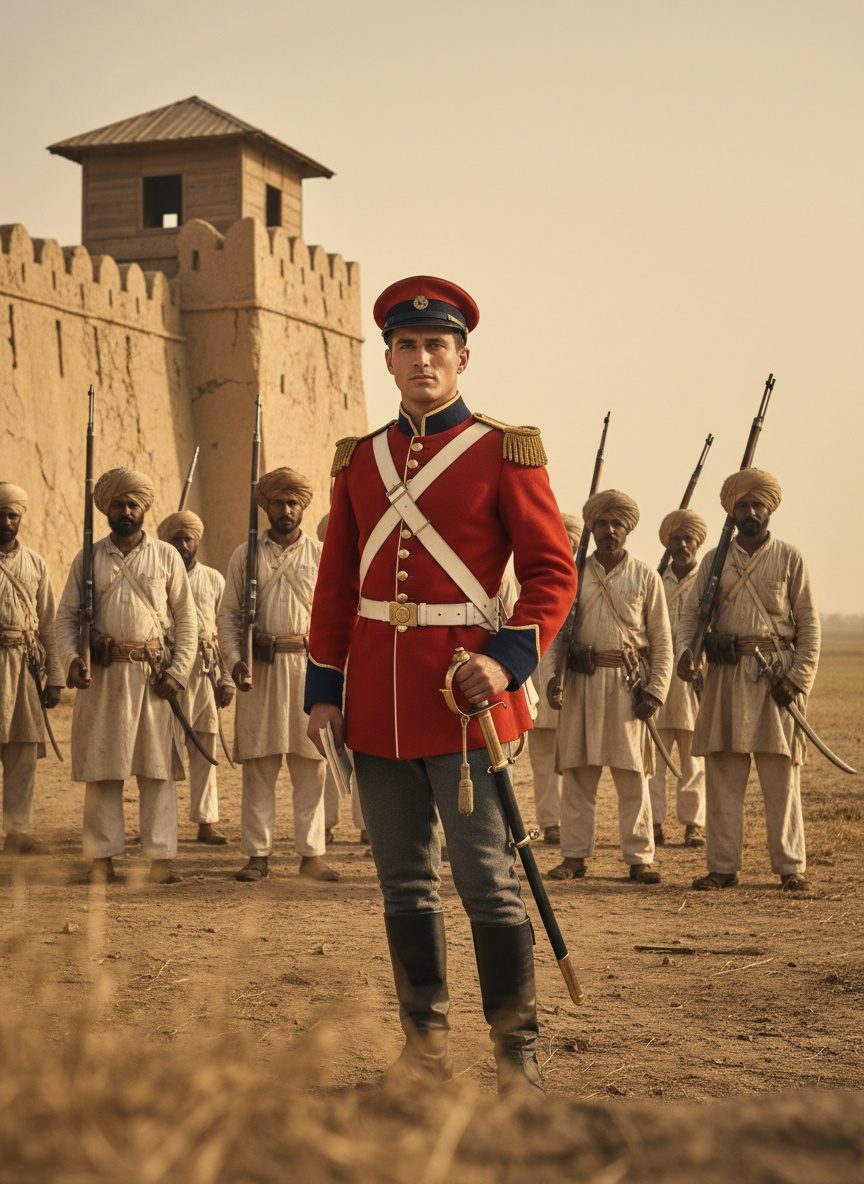
The Second Anglo-Sikh War called for soldiers, but a single letter redefined the limits of British influence. One man, Herbert Edwardes, stood between control and chaos in the Punjab in 1848.
Sparks of Revolution in the Punjab
It was the summer of 1848, a time when the air of the Indian subcontinent was thick with uncertainty. The Punjab, still reeling from the First Anglo-Sikh War, simmered with a growing discontent that threatened to spill over at any moment. Against this tense backdrop, Herbert Edwardes, a relatively unknown but fiercely determined British political officer, found himself in the unlikely role of a lone sentinel on the northwestern frontier of British India.
Appointed as the Assistant to the Resident in Lahore, Edwardes was stationed near the city of Multan, a fortified bastion that lay as a keystone in the doorway to greater India. When news broke of the assassination of the British-appointed Sikh governor of Multan, a powerful tremor shook the fragile stability of the region. The city erupted into rebellion, and the shockwaves were felt across Punjab's vast expanses.
With British forces spread thinly across the Indian subcontinent, Edwardes quickly assessed the dire lack of military resources available to quell the uprising. There was no cavalry streaming in to bolster his position, and artillery pieces were dotted far and wide. Yet, driven by an audacious spirit, Edwardes grappled not with the comfort of numbers but with the power of persuasion.
The Pen as Mightier Than the Sword
In a calculated and daring gambit, Edwardes picked up his pen, a seemingly inadequate tool in the harsh realities of war, to accomplish what many might have deemed impossible—raise an army from scratch. His letter was not just a call to arms; it was a masterclass in diplomacy and rhetoric, skillfully piecing together the shards of a fractured alliance.
Addressed to the influential local chiefs and leaders in the region, the letter was a potent mix of tact and shrewdness. Edwardes appealed directly to their sense of duty, honor, and the shared benefits of stability. He painted the rebels not as liberators, but as disruptions to the existing order that benefitted all. It was a stark reminder that a return to peace and stability depended on quick and decisive action.
This call to arms did not fall on deaf ears. Local chiefs, swayed by the urgency and sincerity of Edwardes' message, responded with swiftness and purpose. Their support came not only in the form of promises but with the might of men and resources. Overnight, the British officer found himself at the helm of an eclectic coalition—a disparate army formed from local militias, loyal Sikh forces, and fervent tribal warriors.
Defiance at Dawn
Armed with determination and a freshly-assembled force, Edwardes took the offensive. The subsequent engagements with the rebelling forces were a testament to his raw leadership and charismatic command. Each confrontation epitomized a strategic dance along the precarious lines between diplomacy and warfare. The siege of Multan became the stage where Edwardes' resolve was both tested and proven.
The resistance faced by Edwardes and his coalition was formidable. The city of Multan, with its ancient walls and seasoned soldiers, offered only reluctance to surrender. Yet, through a combination of tactical skirmishes, psychological warfare, and relentless negotiation, Edwardes tightened the noose around the rebellion. His actions displayed not just military acumen but an understanding of the delicate balance of power and persuasion that governed the region.
With each passing day, the tides of battle turned, favoring the bold officer whose initial act of bravery had carved a path through insurmountable odds. When the full force of the British Army eventually arrived to reinforce the siege, Multan’s defenses had already been significantly weakened by Edwardes' relentless campaign. What began with a solitary letter had unfolded into a pivotal chapter in the story of British India.
Herbert Edwardes' triumph at Multan, aided by his remarkable ability to forge alliances through mere words, did not merely hold the Punjab; it redefined Britain's strategic presence in the region. His success had demonstrated an extraordinary lesson in leadership—a potent reminder of the power of individual agency in the swirling tides of history. For Edwardes, and for many others yet to be written about, that one letter was not just ink on paper; it was a lifeline, drawn straight from the front line of the frontier.