June 1857. The afternoon sun hung like a molten sphere over the besieged city of Lucknow, painting the smoke-laden sky with shades of oppressive heat. The air buzzed with tension amid the natural cacophony of conflict, the kind that grips a city under siege. The Residency, a hub of British administration, stood steadfast in the heart of the city, its brick walls a testament to resilience that sheltered a mix of soldiers, civilians, and memories of a gradually unfolding rebellion.
Inside the Residency, Sir Henry Montgomery Lawrence, a seasoned veteran of the East India Company's complex web of military engagements and diplomacy, faced one of the most challenging decisions of his storied career. Lucknow, once a vibrant city resonating with the hustle and bustle of trade and culture, had transformed into a battlefield, a cauldron boiling over with the flames of the Indian Mutiny of 1857. Both sides bore the scars of the conflict that had quickly torn across the Indian subcontinent — a mutiny marked not just by battles but by dramatic shifts in the loyalties and fates of those involved.
Among the beleaguered defenders of the Residency were individuals from all walks of life, including those unarmed and unprepared for war. Naturally, as pistols were drawn and cannon fire echoed, many fell victim to the indiscriminate hand of violence. Yet, beyond the chaotic scene of the British defenses, rebels who had once sworn loyalty to the Crown now surged forward, driven by the fires of insurrection. Here, too, the casualties were mounting, and humanity’s cry for mercy found its echo in limbs shattered and lives broken.
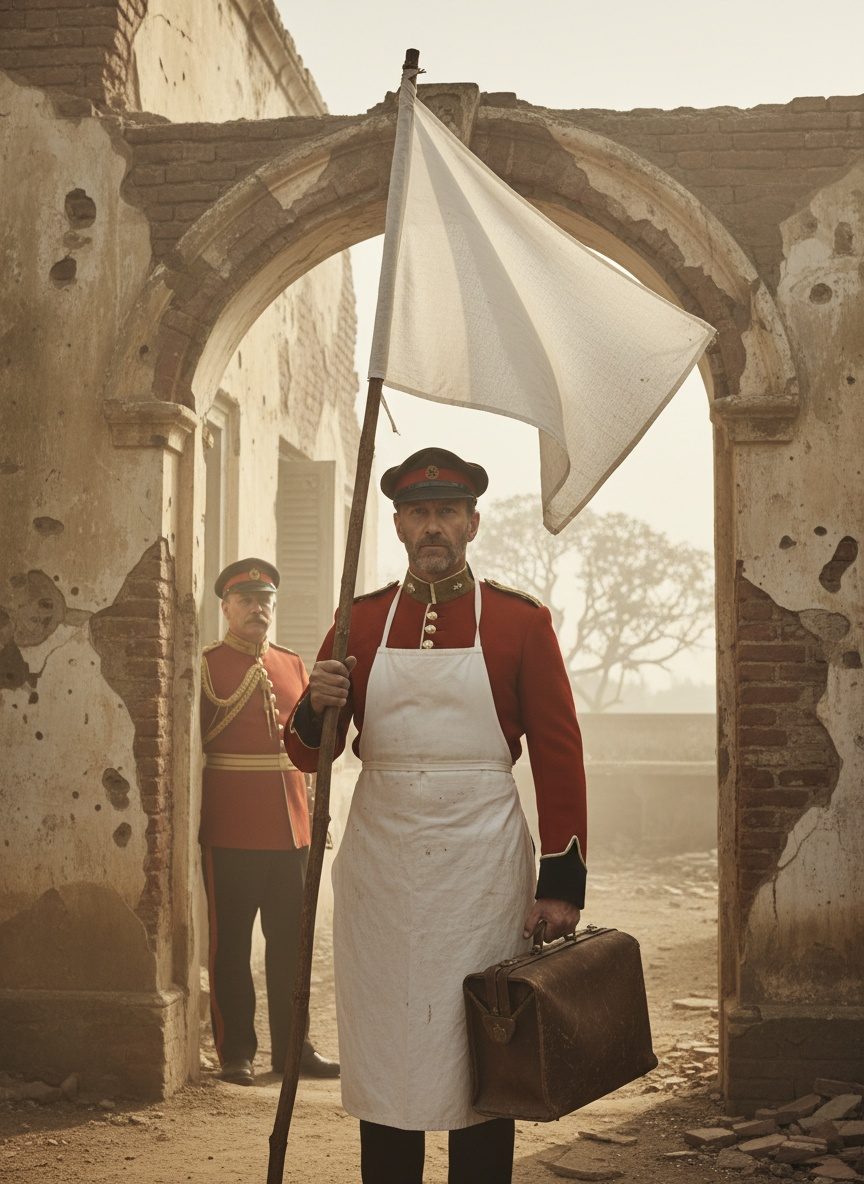
In the midst of this grim tableau, Lawrence made a decision that would echo beyond the confines of the Residency itself. As a man more accustomed to the harsh calculus of military strategy than acts of compassion toward the enemy, Lawrence's choice defied convention and expectation. He ordered his chief surgeon to step beyond the safety of British-held lines under a flag of truce, not as an emissary or negotiator, but as a healer.
The flags of truce, mere strips of white, would have seemed little more than tokens, fluttering in the blistering summer breeze. Yet their symbolism was profound; they signaled a pause, however brief, in a storm of unrelenting hostility. This was a venture not without its perils. The white flags carried the risk that the armed crowd, swelling beyond the Residency, might disregard such tokens, driven by a rage stoked with stories of past grievances and expectations unmet.
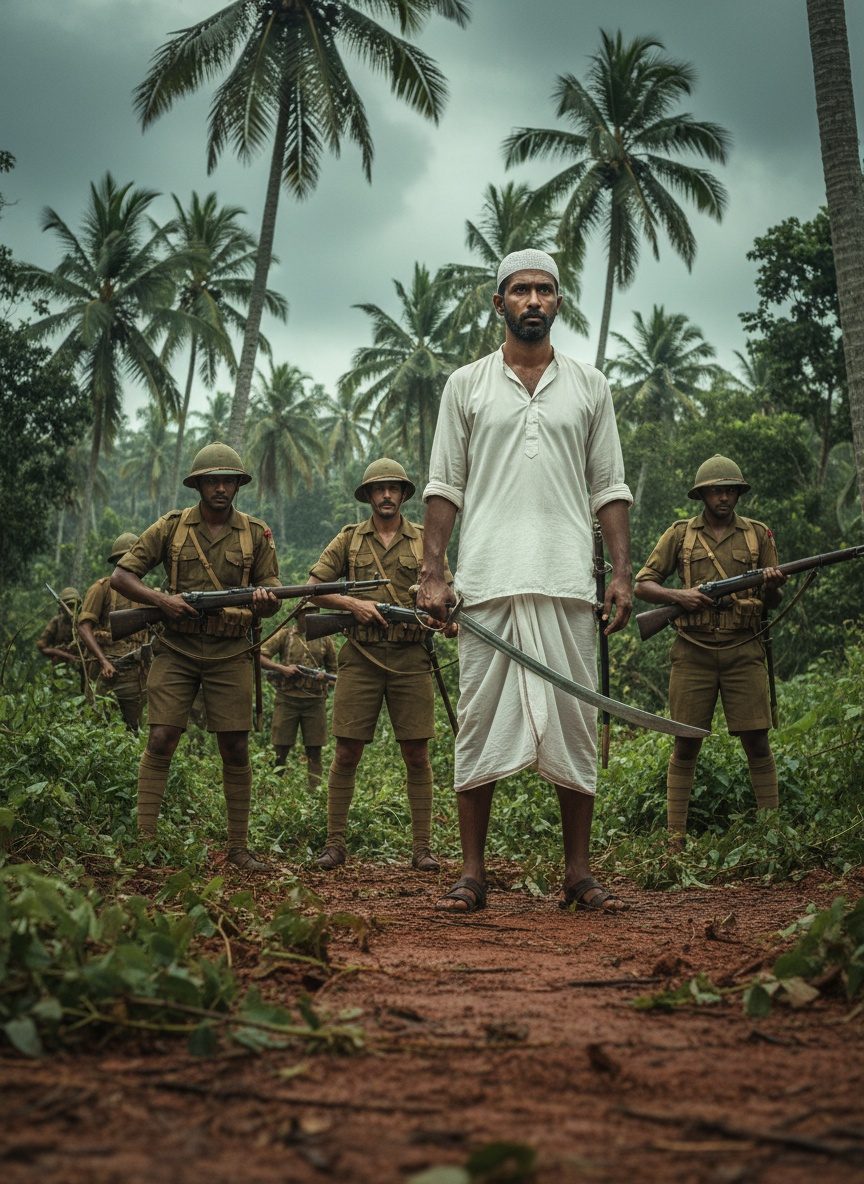
Noteworthy was the courage required of the surgeon sent forth on this mission — a solitary figure stepping into uncharted territory where distrust roamed alongside musket-toting rebels. Yet the decision rippled outward, resonating through the ranks of those in arms against each other. Among the rebel leaders, there was one whose response was not of skepticism or derision but profound acknowledgment. This act of extraordinary humanity pierced the hardened shell of combat-hardened resolve. The rebel commander, a figure in stark juxtaposition to Sir Henry Lawrence by position and outlook, did the unexpected — he wept.
The sight of the surgeon tending to the fallen, indiscriminate of the colors they wore, opened a window into a shared humanity often lost amid the din of muskets and the smoke of cannon fire. Here was a man, driven by the tenets of his duty to heal, demonstrating that beneath the uniform and the cries of rallying war, compassion could transcend the chasms carved by conflict. The rebel commander's tears whispered truths spoken rarely in the history tomes — that beneath the armor of rebellion was a heart that understood loss and pain as poignantly as any within the Residency walls.
This sacrifice was not without precedent, yet history often overlooks such acts amid grander narratives of battle and conquest. The siege of Lucknow would continue through the oppressive summer months, eventually encompassing both sides in what would become one of the most iconic sieges of the Victorian era. However, the isolated episode of the surgeon's outreach into enemy lines infused the hard stone and mortar of Lucknow with an anticipation of renewed humanity, a fleeting image of a future entwined by healing rather than division.
As the dust of history settled over the Indian Mutiny, recollections of treaties signed and battles won or lost took center stage. Yet, for those who were there — for Lawrence, the unnamed surgeon, and the weeping rebel commander — there existed an indelible mark, at once subtle and profound, signaling a moment where the courage to extend mercy sang louder than the deafening call to arms.
In the present, reflecting on this chapter stirs a poignant reminder of how acts of unexpected benevolence can shift narratives. When Sir Henry Lawrence sent his surgeon beyond enemy lines, it was not just a gesture of medical intervention but a message emphasizing shared humanity in a time when divisions seemed immutable. In a world that frequently polarizes along lines of difference, the story of Lucknow stands as a stark contrast, inviting us to peer beneath the banners of conflict and discover the ties that unite, even when burdened by enmity. The legacy of that day in June 1857 reminds us that sometimes, amid the torrents of war, it is the quiet moments of compassion that spark the brightest and light the way toward peace.