June 1857. The turbulent hot winds carried the sharp scent of gunpowder and charred wood through the air.
The Siege at Lucknow
It was the height of the Indian Mutiny, a struggle that saw soldiers and civilians caught up in a tide of rebellion that threatened to sweep British rule from the subcontinent. Even amid the turmoil of 1857, the city of Lucknow stood out on the map of the uprisings as both a literal and symbolic fortress. The British Residency, an austere brick compound besieged from all sides, became a bastion of imperial resilience and desperation in equal measure.
Lucknow was teeming with tension. The Residency's defenders, a motley group of soldiers, civilians, and loyalist Indians, were isolated behind stout walls, enduring the pounding bombardments, each day counting the dwindling supplies and ammunition. Throughout the Residency, flickers of fear mingled with determination as those inside prepared for either relief or ruin.
Sir Henry Lawrence, who had only recently assumed his post as Chief Commissioner of Oudh, was the man in charge. Known for his judgment and humane concerns, Lawrence was a towering figure whose military acumen was matched by his empathy. He saw the Residency not just as a stronghold, but as a point of contact—a threshold where two opposing powers could meet, even fleetingly, with humanity.
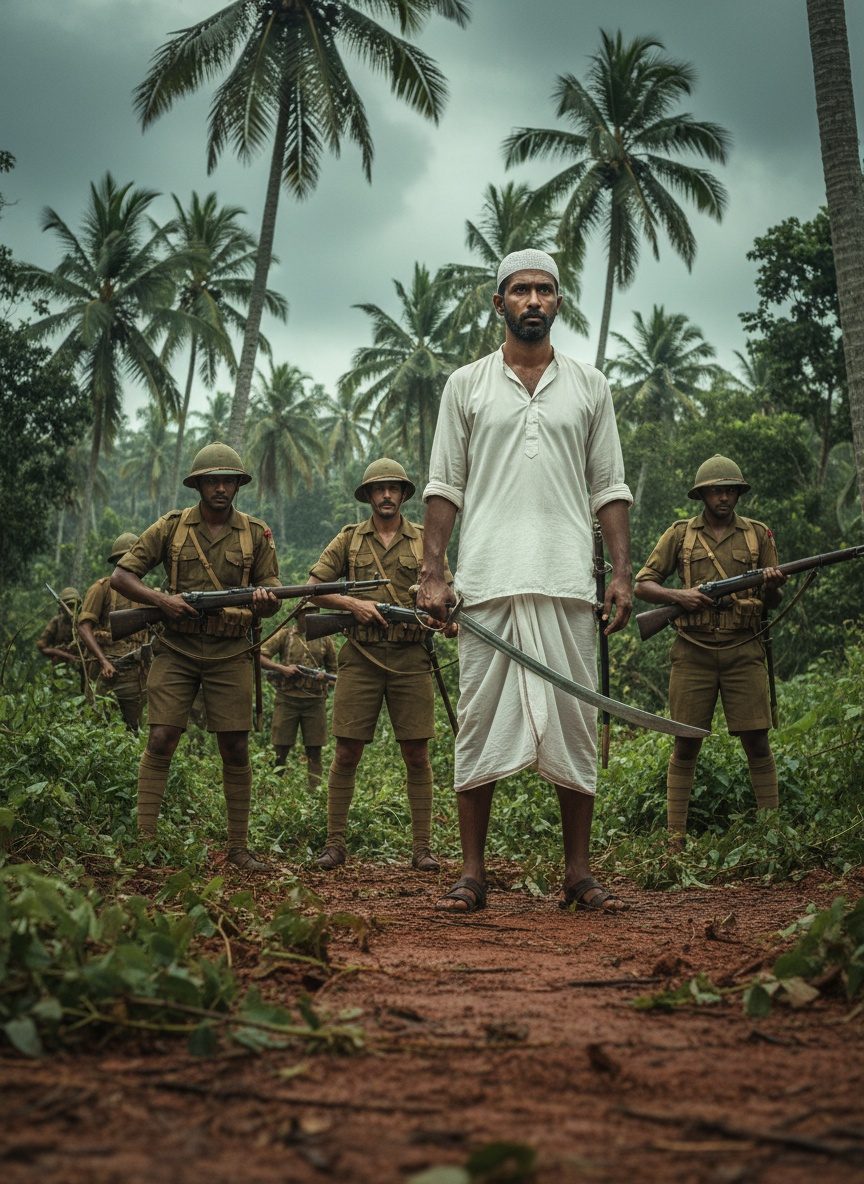
Somewhere amidst the chaos, a sepoy, once part of the British East India Company's forces but now opposing it, lay wounded outside the Residency's protective walls. Lines of conflict were clear-cut, yet blurred by the fact that the man lying bloodied was a brother, a son, perhaps even a friend to those within the compound. It was in these muddy intersections of loyalty that Lawrence saw a sliver of opportunity for humanity amidst warfare’s inhuman conditions.
A Surgeon’s Unexpected Mission
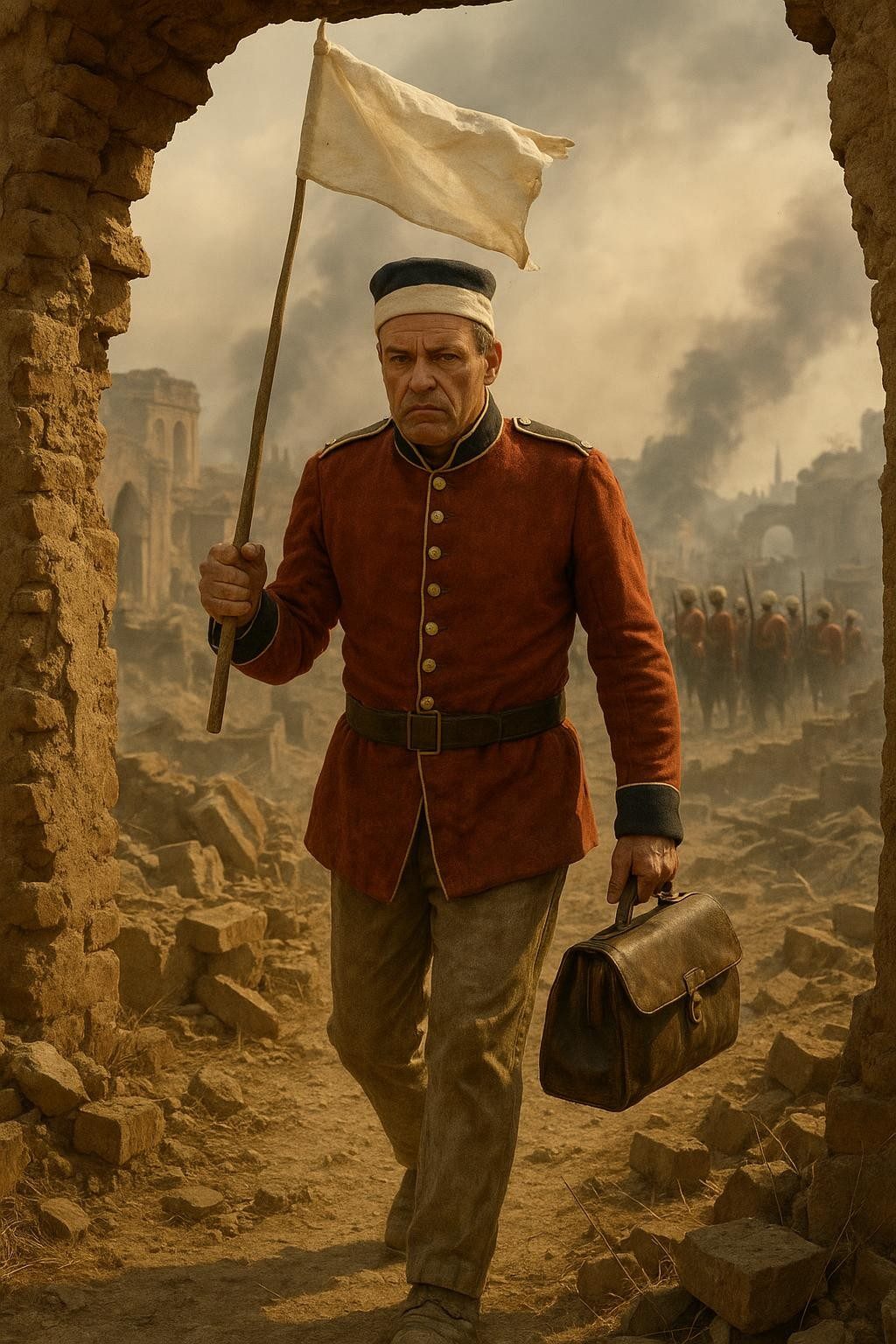
When news of the dying sepoy reached the Residency, a complex moral puzzle presented itself. How do you grapple with the ethos of warfare when compassion calls you to break its rigid norms? It was within this tangled conundrum that Lawrence made his decision. Defying the strategic instincts that demanded defensiveness, he ordered Dr. Scott, the Residency’s surgeon, to step beyond the fortifications under the sanctuary of a white flag.
No weapons. No escort. It was a gamble and an unprecedented act of magnanimity during such a hostile siege. The decision to extend medical aid to an enemy combatant spoke volumes about the humane principles Lawrence aimed to uphold. It was an effort to remember the human behind enemy lines.
The air was taut with the suspense of Dr. Scott’s slow stride into potential danger. Moving past the battered gates of the Residency with little more than his medical kit and resolve, he walked towards where the injured sepoy lay, wary of the scores of mutineers who could have easily put an end to his mission. But the risk of violence was diminished by the power of the gesture itself—a universal white flag, even to adversaries who often disregarded the niceties of wartime conduct.
The rebel forces, perhaps surprised by the audacity, or perhaps moved by this fleeting whisper of fellowship in the midst of carnage, permitted Dr. Scott to pass unhindered. Carefully, he tended to the sepoy, competently and quietly working under the most watchful of eyes. Here, healing became a language that transcended the barriers of war, nationality, and enmity.
A Story Remembered
The story of Henry Lawrence’s surgeon stepping beyond the lines offers more than just a remarkable footnote in the annals of the Indian Mutiny. It's a tale rich with symbolism and an illustration of how a single act of compassion can ripple outward, challenging both friend and foe to reconsider their understanding of empathy and duty.
Lucknow's siege eventually ended, but the narratives that emerged from it continued to weave tightly within the fabric of British colonial history in India. The events that unfolded showed the Victorian age’s military powers that even during the bleakest sieges, small acts of humane decency could punctuate the relentlessly grim tide of war. Lawrence’s decision wasn’t just about challenging the norms—it was a testament to his unwavering belief in a shared humanity that could bridge the chasms between contradictory loyalties.
In an era often characterized by power dynamics and imperial ambition, this singular act of bravery and care illustrates an alternate story, one written not in conquest but in compassion. It offered a radical, albeit momentary, glimpse of an empire that could wield its power to heal rather than hurt. The lessons from Lucknow resonate today, offering poignant reflections on how we confront conflicts, and the choices we make even when a quick conclusion might seem impossible.