Everyone thought they knew wool in 1803. They were wrong.
Seeds of a Woolen Empire
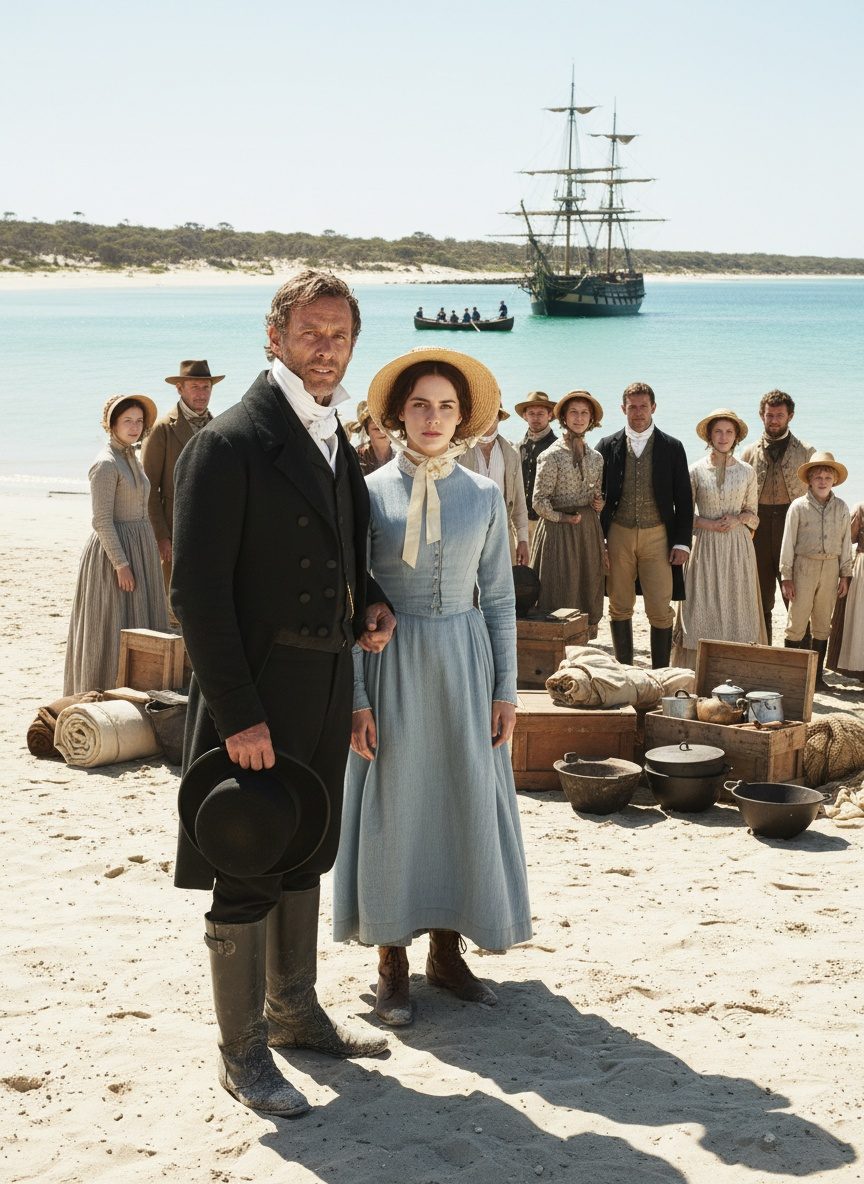
When John Macarthur first landed on the shores of Australia, even he couldn't envision the moment when he would stand before Britain's most discerning wool merchants with a secret weapon — fleece from a distant convict colony. Macarthur, known for his ambitious nature, had a knack for finding opportunities where others saw none. His journey from the rank of a soldier to a prominent figure in the early colonial economy was marked by defiance and intrigue. Stationed initially in the fledgling settlement of New South Wales as a British officer, Macarthur's confrontational demeanor often kept him at odds with the colonial administration. But where there was friction, there were also breaks for a man keen to carve his own legacy.
Parramatta, a small and uncertain outpost at the time, became the unlikely cradle for what would soon transform Macarthur's fortunes — and Australia's as well. While many settlers were preoccupied with subsistence in the challenging land, Macarthur saw beyond. He saw fleece that was unlike any other he had encountered, one that could potentially dominate the global textile market.
A Sheep with Royal Roots
The secret to Macarthur's audacious plan lay in the sheep themselves, descendants of the prized Merino stock. Originally hailing from Spain and fiercely guarded by its shepherds, Merino sheep were coveted across Europe for their superfine fleece. How these prized sheep made their way to the antipodes is a saga involving both luck and Macarthur's well-timed actions. The Merinos' journey from Spain through Capetown to the pastures of Parramatta was a testament to the potential Macarthur saw in them. These sheep, seemingly better suited to Spanish hills, thrived paradoxically in their Australian surroundings, nurturing a fleece so fine it put even the best European wool to shame.
By 1803, Macarthur, with bales of this superb fleece, journeyed over the seas to England. His ambitions were clear: he intended to convince the influential English wool merchants of the extraordinary qualities of his Australian Merino wool. No simple venture, for in that era, the British wool industry was considered the pinnacle, with its deep-rooted traditions and powerful guilds. His aim was audacious: to challenge and change perceptions with a mere textile.
The Unveiling in London
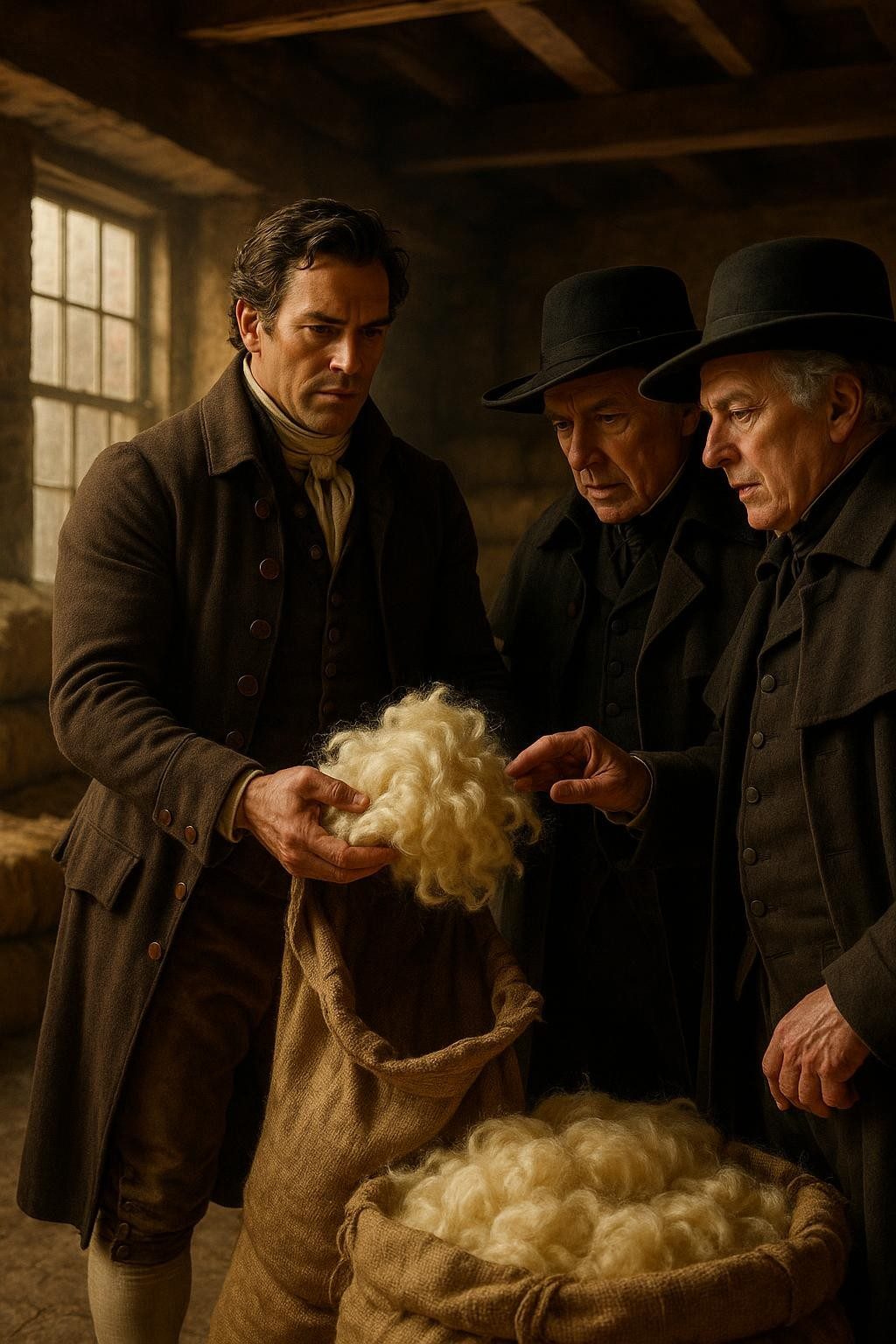
In the bustling heart of London, a city defined by its commerce and tradition, John Macarthur made his pitch. As seasoned wool merchants gathered around the sample, their expectations were modest. However, the moment of revelation was as striking as it was swift. Macarthur's Australian fleece, with its delicately refined texture, cut through the usual skepticism with unexpected force. The bold gamble taken halfway across the world started to pay off. The murmurs of approval crescendoed into unmistakable acknowledgment — this was wool unlike any before seen, foreshadowing a shift in global textile industries.
The reactions of these merchants hinted at an unfolding future none had anticipated. In those rooms, filled with smoke and mercantile clamor, Macarthur's Merino wool broke boundaries. His fleeces’ qualities not only silenced seasoned experts but reshaped how the colonies could contribute to the Empire’s industry. For Macarthur, it marked an imperial power's acknowledgment of what a rough-hewn corner of the world was capable of producing.
The Continental Influence
This singular show-and-tell was more than pathfinding; it was transformative. The presence of Australian Merino wool in London marked a turning point in colonial economics. What followed affected everything from pastoral practices in the Vale of Clwyd, where Macarthur’s own lands lay, to broader geographical perceptions of Australia itself. As international interest in this unparalleled raw material grew, so did the understanding of Australia’s potential as a wool-producing powerhouse.
Macarthur’s endeavor catalyzed a symbiotic relationship: British industrial prowess met Australian raw wealth. Though the seeds lay in Macarthur’s early visionary zeal, they germinated into the great Australian wool trade, an industry that flourished beyond even his considerable dreams. The reverberations extended far beyond wool; it challenged and eventually redefined Australia’s place in the British Empire. Wool export emerged as a cornerstone of Australian economy, knitting together diverse societal fabrics the world over.
This tale from the early 1800s endures because it offers more than a look at sheep and trade. It holds a mirror to the ceaseless human drive to shape destiny, to recognize opportunity even in the least likely circumstances, and the profound ways in which singular acts can ripple outward to influence nations and empires. As the contemporary gaze turns back to this historical convergence of intent and chance, we realize that across time, one man's vision transformed a continent's trajectory with nothing more than an unassuming fleece. Australia’s claim to wool preeminence began with a single leap of faith, as steadfast and surprising as the enduring fleece itself.