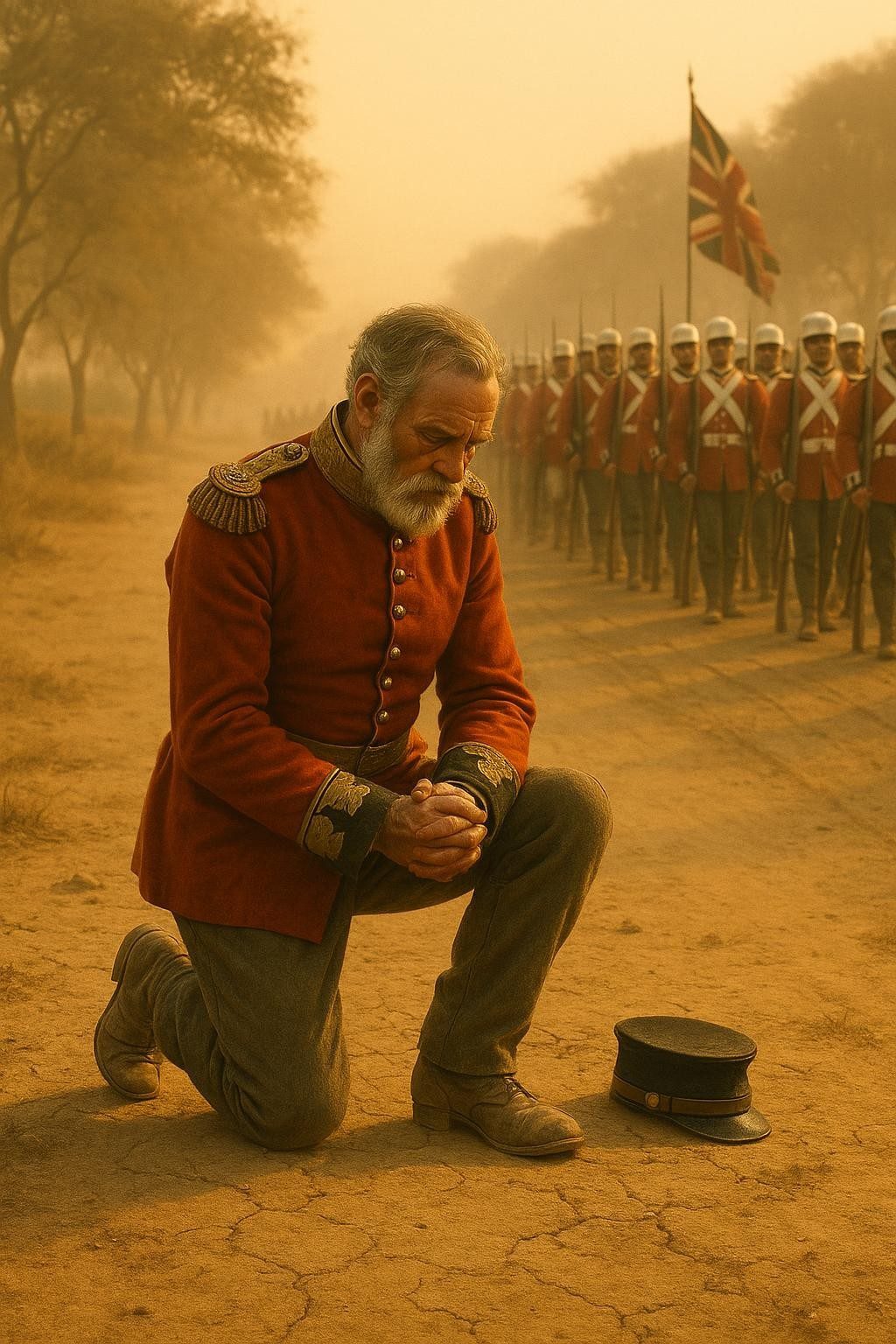
The sun blazed mercilessly, searing the dusty plain. General Henry Havelock knelt in silence, his lips moving in silent prayer, against the backdrop of the chaos enveloping Cawnpore. Sweat trickled down his brow, mixing with the dust of the Indian plain. He knew the risks, the overwhelming odds, but his faith was like steel. Rising, he surveyed the men behind him—1,500 soldiers, weary yet resolute. And then, the impossible march began.
A Road Paved with Determination
The Indian Rebellion of 1857 had unleashed chaos across the subcontinent, a seismic tremor in the vast British Empire. Cawnpore, a name that would soon be etched with blood and valor, lay ahead—a city engulfed in tragedy. For General Havelock and his men, the journey demanded every ounce of endurance they possessed, their path carved through an unforgiving landscape, both physically and emotionally.
The atmosphere crackled with tension, not only from the acrid smoke of distant skirmishes but also from the palpable urgency of their mission. Days earlier, Cawnpore had witnessed horrors pinned into the chronicles of history. The news of British captives—men, women, children—massacred seemed to hang in the air like a grim specter that followed every step. But Havelock, renowned for his devout character, transformed prayer into purpose.
Traveling light at breakneck speed, his force was a testament to disciplined precision. Rations were scant, the journey harsh. The men battled more than just an enemy; they contended with the scorching Indian sun that lashed their backs and the stifling, dust-laden air that clogged their throats. Yet, driven by the echoes of those trapped and slain in Cawnpore, Havelock pushed on, inspired by a mission larger than themselves.
Contrary to the image of the soldier's steadfast resolve, each man was acutely vulnerable in the face of this oppressive march. Yet, the leadership of Havelock, whose own visage had become gaunt under the strain, never wavered. A man of deep commitment, he not only shaped their strategy but infused the ranks with a shared spirit of resilience.
The Clash of Necessity
Each screeching skirmish along the path was not just a clash of forces but a battle of necessities. The odds were never in Havelock’s favor—a scenario that might have defeated a less determined leader. As they engaged in battle, clouds of gunpowder mingled with the cries of clashing forces. But for Havelock’s men, these were not just foes; they were obstacles separating them from their brethren ensnared in Cawnpore.
Amidst this chaos, Havelock’s strategies were meticulous orchestrations fueled by inexhaustible fervor and religious conviction, as if each command was a prayer for victory. Every engagement was executed with precision, transforming his numerically inferior force into an unstoppable wave. Victory wasn't just about defeating the rebelling forces; it was a moral imperative, a drive to save those still breathing within the city walls.
The days stretched into an agonizing eight, marked by three ferocious battles—each a testament to Havelock's strategic brilliance and his troops' indomitable spirit. Determination pulsed through the ranks as stories of distant gunfire signaled the ferocity of the battles fought to reclaim humanity and dignity. Their feet sore from the endless march, uniforms soiled by the road's trials, they pressed on with an unyielding will that would become the stuff of legend.
Even the native rebels, seasoned and resolute in their positions, could not withstand the combination of Havelock's tactical acumen and the ethereal defiance that surged through his men. The battlefields bore witness to the very thing the rebellion symbolized—a clash over the soul of a continent, yet, in the intermingling dust and gunpowder, Havelock’s ambition for reclamation persevered.
The Gates of Cawnpore
With the battles behind them, the road to Cawnpore lay open, calling with the promise of liberation, even retribution. As they approached, the memories and shadows of the massacre loomed over Havelock and his men, an indelible imprint on every soldier's heart. Yet beyond the sorrow lay their redemption—a broken city in need of healing, survivors in need of saving.
The dusty air about Cawnpore carried more than just the scent of aftermath; it was filled with the whispers of those whose lives had been extinguished, alongside the muted cries of those who had endured. Havelock, characterized by an unshakeable moral compass and renowned as “a saint” among his men, ultimately brought not just tactical prowess to his campaign, but a deep compassion for justice and salvation.
The relief of Cawnpore, while surely a pinpoint in strategic success, transcended military achievement. It became a testament to an unyielding fidelity to ideals, an illustration of how faith and courage interwove within the tapestry of conflict. Havelock’s resolve, as articulated through his prayer and subsequent actions, demonstrated the power of belief—whether in the divine, in one's duty, or in humanity itself.
In the grand narrative spun by empires and rebellions, stories like Havelock’s rise around the flashes of muskets and the shuffle of weary feet on dusty roads. This is a story not just of military might, but of the human spirit, a forgotten page in the annals of history where endurance, faith, and leadership prevailed against all odds. Even today, it echoes the timeless truth: in unity and purpose, adversity can transform into a journey of hope, always a prayer away.