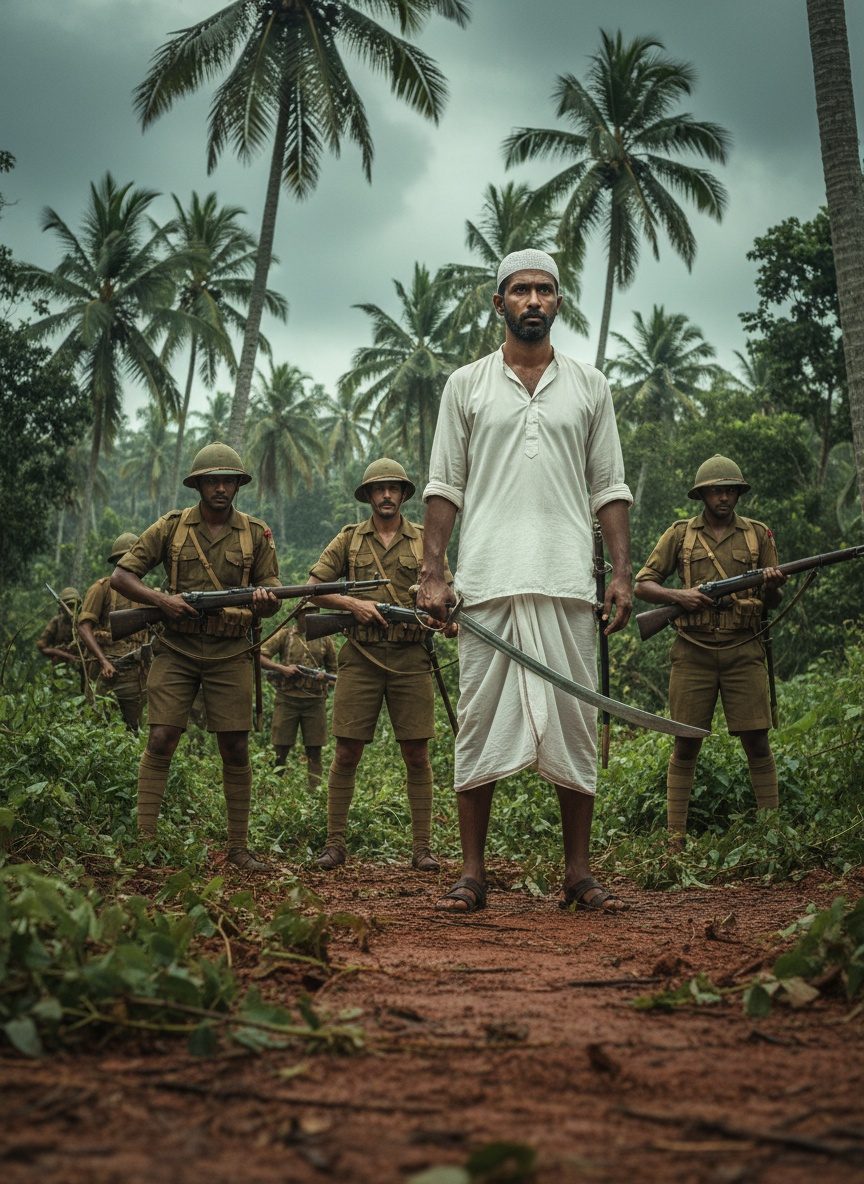
September 1857. The air shimmered with heat, and the city of Lucknow lay beneath a suffocating cloud of smoke.
The Siege of Lucknow
The Victorian era was defined by the tension between the expanding British Empire and the territories striving for autonomy, none more gripping than the Indian Mutiny of 1857. At the heart of this conflict was the siege of Lucknow, a prolonged and brutal struggle. The British Residency in Lucknow had become a fortress surrounded by a sea of uprising, and it was here that General Henry Havelock was inexorably drawn, compelled by duty and honor.
For six weeks, Havelock marched through inhospitable terrain, facing scorching heat, cholera, and unrelenting ambushes. His men were worn to the bone, yet their resolve was steeled by the iron will of their leader. Lucknow had become a critical point—the survival of those inside the Residency seemed improbable, with supplies dwindling and the enemy growing bolder by the day.
The siege was characterized by extreme deprivation. Food and medical supplies were nearly exhausted, and Havelock's men, many of whom were injured, desperately needed relief. Yet, the challenges were incessant, an unending barrage of suffering and endurance.
A General's Compassion
What set General Havelock apart was his unwavering empathy for his troops. In an era where the spoils of war often determined a leader’s success and survival dictated ruthless pragmatism, Havelock exemplified a rare humility. As his contingent of soldiers reached Lucknow, their condition starkly mirrored the desperation within the besieged Residency walls.
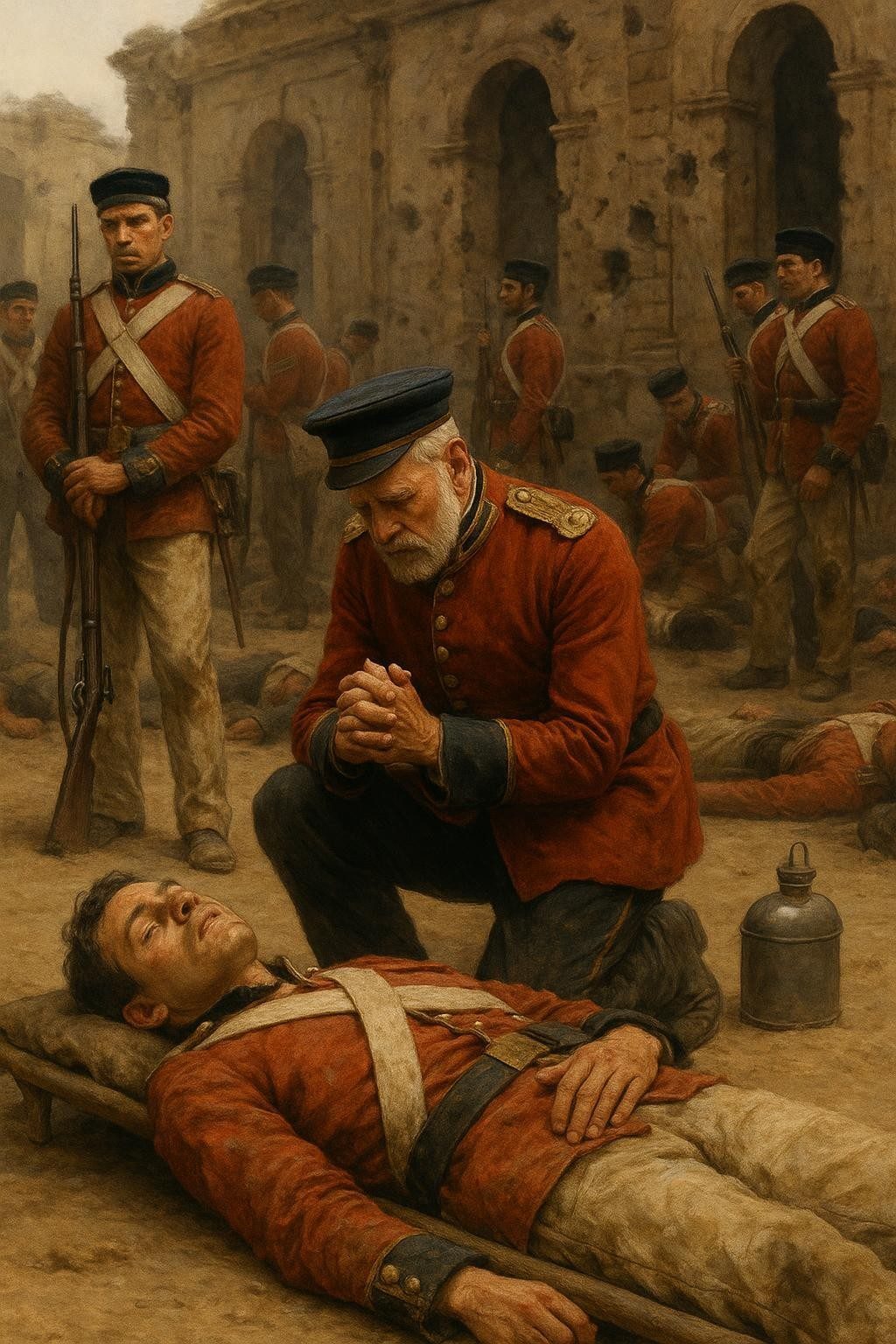
Amidst the chaos of September 1857, with the relief mission seeming more mirage than reality, Havelock made an unexpected decision. Most leaders would have secured their own survival first, conserving strength to continue commanding the beleaguered forces. But Havelock took no convenience for himself. He ensured that every available ration and medical resource reached his wounded men before addressing his own pressing needs.
Havelock's actions transcended strategic warfare; they were emblematic of a commitment to his men. By prioritizing their well-being, he fostered an unmatched camaraderie and loyalty that would bolster their courage through the tumultuous battles to come. For the men who followed him, Havelock was not just a general but a guardian whose leadership was defined by integrity and selflessness.
The Spiritual Resolve
Amid the dire straits of September 1857, another image of hope emerged—Havelock on his knees, praying. In a world governed by imperial might, this moment of prayer stood out as a profound display of vulnerability and faith. It was a spiritual reaffirmation that, despite the earth-shattering trials, there was a force greater than any empire or rebellion.
Havelock's faith was known to imbue his leadership with more than just tactical foresight; it infused his decisions with moral clarity. He believed in duty not only to the Crown but to the men he commanded. This spiritual dimension of his leadership provided assurance during bleak circumstances that their sacrifice stood in a greater cause.
Encapsulated among the cannon smoke and cries of battle, Havelock's faith reminded his troops of a narrative beyond the scope of gunfire and sieges—a story intertwined with destiny and a steadfast conviction that right would prevail. This intangible force kept their spirits buoyed when physical resources could not.
Lessons Beyond Lucknow
The tale of Henry Havelock's relief of Lucknow speaks to us over the echoes of time not merely as a tale of military strategy but as an illustration of moral fortitude. In an era where conquest often overshadowed compassion, Havelock's actions were a testament to the human spirit's capacity for empathy in warfare.
By prioritizing his men's needs over his own, Havelock etched a narrative that challenges us to reconsider the true measure of leadership. His story reminds us that even amidst the brutality of conflict, the principles of humanity and integrity should not be forgotten. In today's world, where the complexities of leadership are boundless, Havelock's legacy endures, urging us to hold these values close, never allowing them to be eclipsed by circumstance.