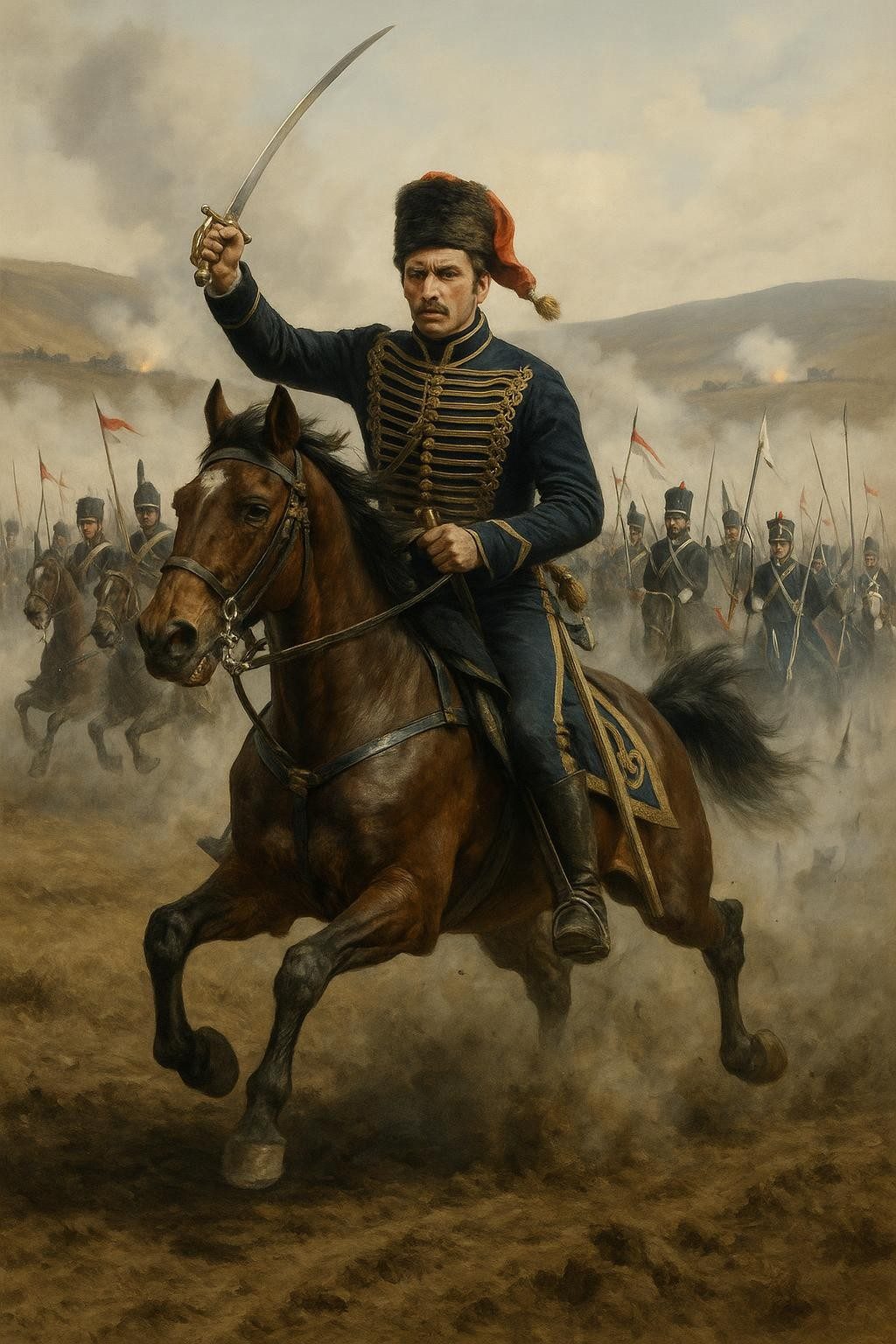
The ground trembled as hooves pounded the earth, a cacophony of sound drowned only by the deafening roar of artillery from above. A steel wind lashed through the ranks of the Light Brigade, its whistle cutting through the air before slamming into flesh and bone. Trooper Harry Paget Flashman gripped his reins tightly, feeling the metallic taste of fear mixed with the acrid smoke blanketing the valley. The sun hung balefully overhead, casting long shadows as the chaos of Balaclava unfolded around him.
The Anatomy of a Miscommunication
The charge into the Valley of Death began with an innocuous piece of paper. The order, penned by the ambiguous hand of Lord Raglan, was a harbinger of doom wrapped in the mundane lexicon of military dispatches. "Lord Raglan wishes the cavalry to advance rapidly to the front," it read. But as simple as it seemed, this communication bore the seeds of disaster. The confusion lay not just in the order's phrasing but in its delivery. Captain Louis Nolan, the officer tasked with relaying the message, was known for his fiery temperament and disdain for the aristocratic leadership of the cavalry. When he brought the order to Lord Lucan, commanding the cavalry division, he did so with a scornful edge that further exacerbated the misunderstanding.
Neither Lord Lucan nor Lord Cardigan could have fathomed the horror awaiting their men. Had they conferred about the sprawling Russian artillery that menacingly lined the valley, their fateful mission might have unfolded differently. Cardigan, leading the Light Brigade, was not known for his depth of military strategy. Instead, he embodied the very stoicism expected of British officers, steering his men into a path many could see was a lethal corridor.
The Light Brigade was a fearsome sight despite the odds, their discipline arising from years of relentless drills. Six hundred and seventy men, a tapestry of experience, youth, and military bravado, now enveloped in a symphony of thundering cannons and desperate cries. With the chaotic din surrounding him, Flashman could sense the carnage but pushed onward, bound by orders and the unyielding charge of his comrades.
The Dance of Death
Amid the chaos, the grim ballet between man and machine unfolded. Russian gunners, perched high above, loaded their weapons with a cool detachment, reveling in the calculated destruction below. The shouts of British officers echoed through the valley as officers and men were eviscerated. Flashes of honor shone through even the darkest moments: Noble men rode beside friends only to watch horror render their valor moot, lives marked by thirty seconds of blood and glory.
For Harry Flashman, the reputed rake and known coward confounded all expectations. He leaned into the charge, his instincts a mix of self-preservation and the bizarre punctilio that often drives soldiers in dire situations. This day he was one among many—charging into myth and madness as the world raged around him.
To this day, the actions at Balaclava draw deep contemplation; they stir admiration for bravery and disdain for military folly. The magnificent spectacle of the Light Brigade, a study in strength and suffering, encapsulated a war that defied categorization. Even the victorious Russians regarded their adversaries with a strange mix of awe and confusion. As the brigade continued their harrowing ride, their casualties climbed. Seventeen fleeting minutes passed before the valley could claim silence, broken only by the solemn echoes of retreating survivors.
Echoes Through Time
In the aftermath, the echoes of Balaclava reverberated far beyond Crimea. The Cabinet shuffled pages of postmortem reports, and wide-eyed reporters sent word back to an eager England, painting pictures of heroism tested against insurmountable odds. Tennyson immortalized their deed, etching their names into the fabric of memory with every pen stroke. Yet beneath the layers of immortalization lay questions about the cost of obedience unto death and the marshaling of youth unto the specter of war.
Flashman, who survived the onslaught, knighted his own vanity with exaggerated tales in drawing rooms and barracks across the Empire. He personified the duality of the event—both mundane and extraordinary, humorous and tragic.
Harry Flashman's ride with the Light Brigade serves as a visceral reminder. It was a convergence of perfect storms; human error meeting unwavering discipline within the imperial theatre. It exposed the chasms between command and cannon fodder, celebrated undying loyalty yet questioned blind obedience. It forces yet another confrontation with the relentless march of history, pressing us to sift through valor and vanity, to see if in the cavalcade of heroics, we find the lessons of courage, folly, and the human condition amidst the fog of war.