May 14, 1772. The tide of the Thames River steadily marked its ebb and flow against the hull of the Anne & Mary, a slaver ship anchored in London's limpid docks. On its deck, beneath the autumn sky that hovered low with an uneasy calm, the fate of a man named James Somerset hung precariously, poised to redefine the paradigm of human liberty.
The Relentless Advocate: Granville Sharp's Unyielding Resolve
In the bustling streets of Georgian London, Granville Sharp was a singular force of determination. A mere clerk in the Ordnance Office, his means were modest, but his spirit was formidable. Lacking formal legal training, Sharp was driven by a steadfast belief: that under the soil of England, no man should be bound by chains. His unlikely journey into legal advocacy began when he encountered the grievous plight of James Somerset.
James Somerset, an African man ensnared by the fetters of slavery, was at the brink of being shipped to the sugar plantations of Jamaica — a fate akin to a death sentence. His health ravaged by the seaborne confinement and brutality he had endured, Somerset's prospects were grim. But where others saw despair, Sharp saw an opportunity to strike a blow against the crooked institution of slavery. By securing a writ of habeas corpus, he challenged the legality of Somerset's detention, spiraling into an unprecedented legal battle.
Courtroom Drama: The Case Unfolds on English Soil
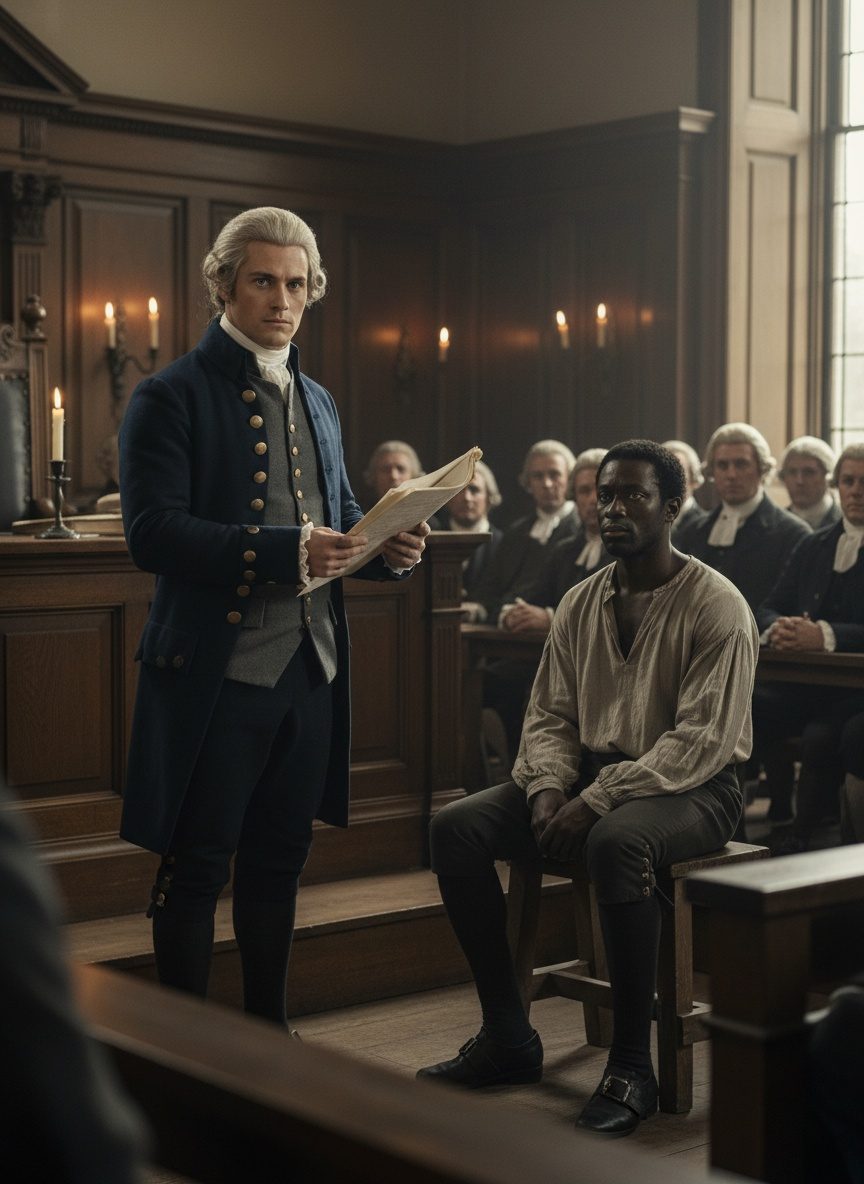
As news of the case spread through the cobblestones of London, the public watched with bated breath as the court convened. Presiding over the courtroom was Lord Chief Justice William Murray, the Earl of Mansfield — a man burdened with the colossal responsibility of addressing the fundamental question: Could a man be considered property under English law?
The courtroom swelled with tension. On one side, those who argued that slavery was an economic necessity and a fixture sanctioned by colonial frameworks. On the other, Sharp and his allies ─ including famed abolitionists like Thomas Clarkson ─ who passionately asserted that moral law, grounded in natural rights, superseded even the most entrenched practices. As his legal arguments unfolded, Mansfield's gaze betrayed a rare glimpse of introspection, signaling the weight of the decision that loomed.
A Jury’s Decision: When History Knelt at Mansfield’s Feet
On June 22, 1772, Lord Mansfield's judgment resonated through the air like a rallying cry for justice. He issued the famous words declaring that slavery was "so odious, that nothing can be suffered to support it." The verdict secured Somerset's freedom, setting a significant precedent that underlined English soil as incompatible with the chains of slavery.
While the judgment did not abolish slavery outright within the British Empire, it dismantled the legal framework that permitted slaves to be forcibly removed from England against their will, catalyzing a burgeoning abolitionist movement. To many, this was not just a legal victory, but a moral vindication. Granville Sharp's resolute valor transformed a moment of individual struggle into a collective stride toward justice.
The Ripple Effect: Seeds of Emancipation Across a Nation
The Somerset Case illuminated the dawn of an era, inspiring a wave of abolitionist efforts that surged across the Atlantic and stirred imaginations. Sharp's influence spread as conversations about freedom began to shift pervasive attitudes within Britain. It laid the groundwork for the eventual abolition of the transatlantic slave trade in 1807, and later, the Emancipation Act of 1833.
In the years that followed, Granville Sharp continued his arduous campaign, alongside figures like William Wilberforce, to vanquish the remnants of slavery. He founded institutions that bolstered abolitionist ideals and welcomed freed slaves into waves of activism and intellectual inquiry. Ultimately, his unwavering compassion and advocacy shone as a beacon for generations to come, affirming that the quest for human dignity knows no bounds.
The tale of a clerk who, fueled by conscience over convention, took a stand for one man reverberates through history's vast corridors. The battle for freedom was perhaps only in its infancy that day on the Thames, yet its echoes continue to resonate, reminding us of the profound impact a singular, impassioned voice can have in the fight against injustice.