Their position was hopeless. But hopeless can be just another word for courage.
A Night Besieged
January 22, 1879. A modest mission station became a fiery furnace. Set against the arid plains of South Africa, the garrison at Rorke's Drift represented a last stand in an otherwise bleak landscape following the annihilation at Isandlwana earlier that day. 139 men, many ailing in a makeshift hospital, braced for the impossible: holding off an impassioned assault by some 4,000 Zulu warriors, every one armed with spears and shields, relentless as a storm.
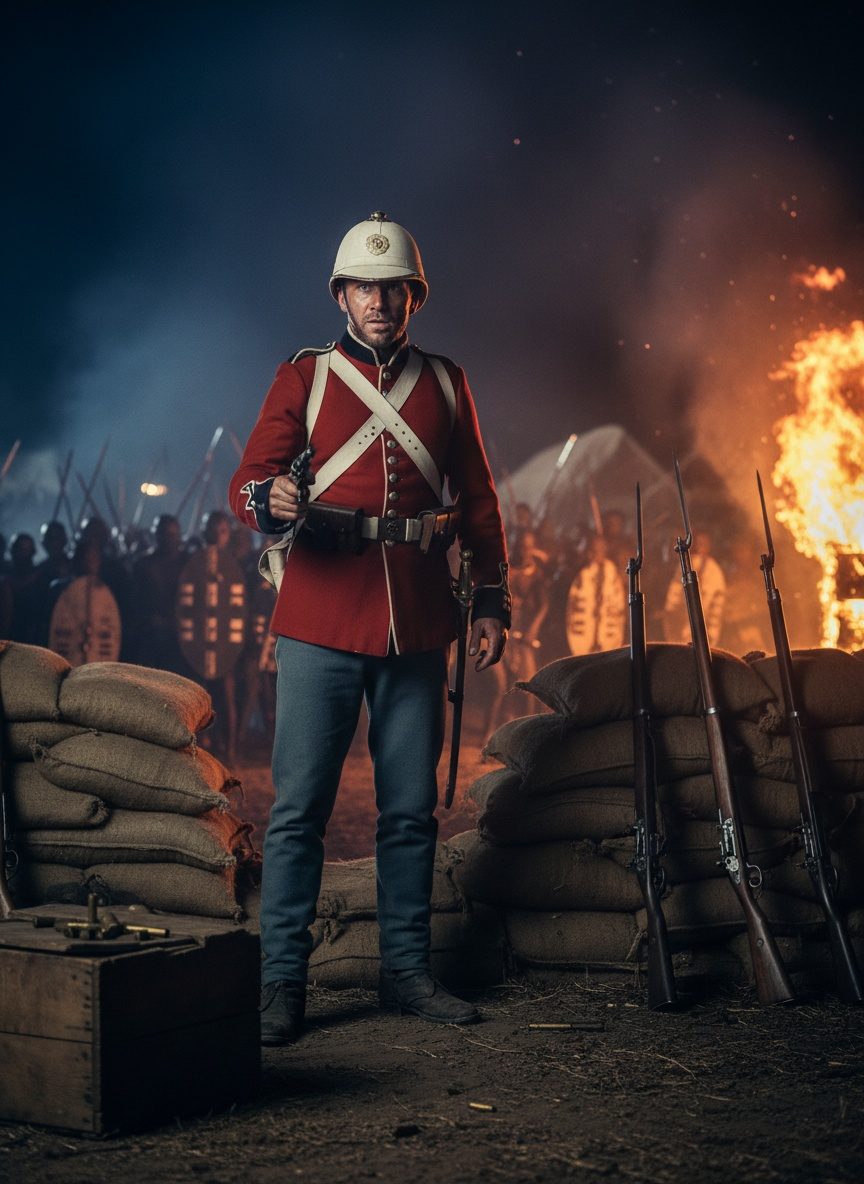
Lieutenant Gonville Bromhead and his men understood their forlorn hope. The Zulu advance was a brooding thundercloud on the horizon, each warrior's silhouette promising the end. Yet Bromhead, steadfast as the sandstone he stood upon, rejected retreat, cementing his place in the fire-lit tableau of history. There was no time for doubt—only time to fortify. Using sacks of mealie bags and biscuit tins, these men constructed barriers that would turn the mission into a citadel. For the men, every grain of meal was another grain of hope.
The Unsung Defenders
Most tales of Rorke's Drift center on the valorous actions seen through the smoke of battle. But behind these stories, lesser-known faces and feats highlight the humanity binding the fortification together. Bromhead himself, often eclipsed by his more flamboyant counterpart, Lieutenant John Chard, grounded his leadership in an understated resolve. His background was less than extraordinary—deaf in one ear and considered unremarkable by superiors, yet he transformed skepticism into defiance under the fire-lit sky.
The dwindling ammunition was counted bullet by bullet, each shot fired with precision that belied their urgence. Those too unwell to fight became medics in polka-dotted pajamas. The hospital became a crucible, a cacophony of the suffering and the determined, working with resoluteness to stave off annihilation. And there, amid the plumes of gunpowder, Daniel Keogh—a little-known chaplain—offered solace amid the din, tending to bodies and souls alike. The battle was not just waged at the wall, but in the hearts of those who fought, prayed, and persevered.
A Wall of Fire
As night descended, the Zulus beat their war drums, creating an ominous and mesmerizing cadence. Sparks danced from the muzzles of British rifles, each volley a defiant cry in the face of certain destruction. What light remained in the sky revealed a striking tableau: tangled figures locked in mortal combat, illuminated by the fitful glow of burning thatch. The redcoats held their ground, moving along the walls, their faces set with determination.
Bromhead, sword in hand, stood amongst his men, animated by an unbroken spirit. In the chaos, every man embodied the courage that his rank required. Despite the pressing mass of Zulu warriors surrounding them, their thunderous chants puncturing the African night, the defense did not falter. Each section of the barricade saw men cycling through roles— reloading, firing, dragging their wounded out of harm's way— and never letting up in a dance choreographed by necessity and tenacity.
The Coming of the Dawn
As darkness waned, the first light painted the harrowing scene—the red dust of the battle mingled with the dawn's crimson. The field lay scattered with fallen Zulu warriors, bearing silent testament to the fury of the onslaught. Yet, against all odds, the outpost at Rorke's Drift still stood. The British soldiers were bedraggled remnants of the force they had been, their bodies and minds pushed to the brink. That wall of makeshift defense was lined with men who had used every last ounce of their strength to keep it intact.
The victory, though hard-won, was sombre. As silence enveloped the battlefield, reality seeped in—despair juxtaposed with relief. The men, some barely more than boys, had been tempered by fire and darkness, transformed and marked by a night's defiance. The tale of Rorke’s Drift explores not just victory, but the conviction of those who believed in it. It urges us to acknowledge acts of valor overlooked by the spotlight of grand historical narratives. Their resilience inspires reflection, urging today's world not to underestimate the power of courage kindled by desperation—a force as potent as any weapon.