The Ink That Bound Nations
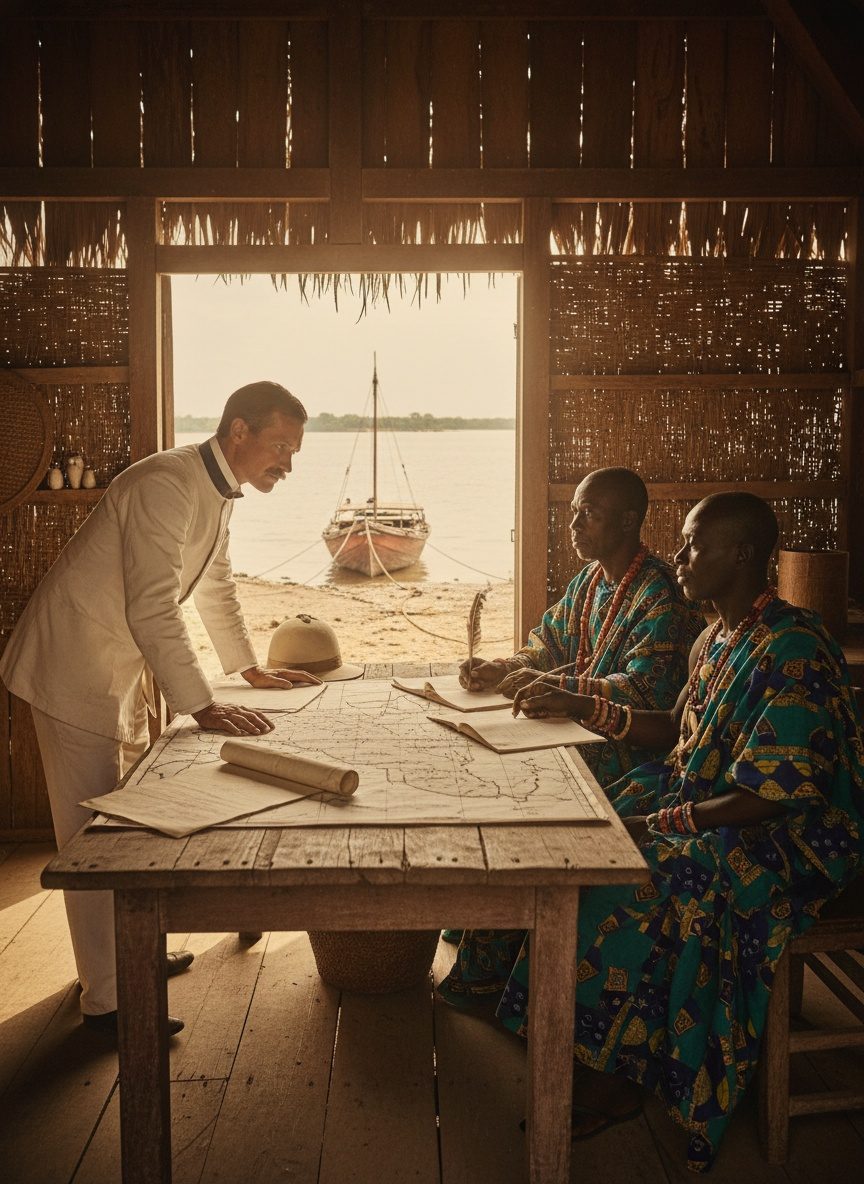
In an era where conquest was often measured in military might and the thunderous discharge of cannons, Goldie's approach seemed audaciously delicate. His weapons were neither soldiers nor sabers but signatures and stamp seals. Here, far from the bustling authority of the British Empire, diplomacy was his most formidable tool. As he presented his treaty, the air crackled with the tension of unspoken challenge. The chiefs, long weary of outsiders trying to pour foreign ambition into their cherished river, regarded Goldie with cautious eyes, aware of the history that had so often rewritten their own in scripts not of their making.
The Dance of Speech and Silence
Goldie’s journey to these moments at the banks of the Niger had not been one of mere whimsy. He understood that words could forge connections where force often failed. Each meeting with the chiefs was a delicate performance of balance—a dance of speech and silence. Here, he found that logic coated with respect and cultural insight could accomplish what aggression could not. Goldie listened more than he spoke, adapting his message to echo the sentiments and concerns of the chiefs. Dialogue flowed like the river itself, not in straight lines but in fluid and often seemingly meandering currents.
The Pact of the River
Little was celebrated about the treaties that emerged from these meetings at the time—contracts inked in the sticky heat of the Delta with those who held ancient claims to the river's bounty. Each signature marked a complicated alliance; it was both tentative and revolutionary. While these agreements offered the chiefs favored statuses and protection in a rapidly changing world, the corridors of power shifted imperceptibly yet profoundly. From here, the British Crown would extend its influence not by marching boots but through the curves of ink upon paper, penciling its presence in the heart of Africa.
Empires of Conversation
Tales of this unconventional conquest reflect lesser-known chapters of imperial history, where the might of empire was dictated not by how many regiments could be deployed but by how words could reframe the maps and mentalities of men. Goldie's initiative in the Niger Delta underscored the reality that diplomacy could not only replicate the brute impact of armies but reshape the geopolitics of continents. His treaties unlocked a waterway of untapped potential, weaving the Niger into the tapestry of British colonial interests without a single shot fired.
Ripples in the Persevering Flow of History
As the ink dried on those treaties beneath the sweltering African sun, the chiefs of the Niger learned that alliances could be as volatile and enriching as the river they knew, deep and whispering its secrets beneath the surface. These agreements facilitated the trade and enterprise that would bind regions in ways both prosperous and problematic. Goldie’s legacy highlights the power of persuasion over pulverization—an approach that stands as a compelling echo of a past where the simplicity of a handshake and a carefully crafted promise could carve new paths through history. Ultimately, his encounters with the Niger chiefs illustrate that the threads of empire were often woven with choices of cooperation, showing us that even in times of steadfast division, one might still chart new courses through the calm currents of understanding.