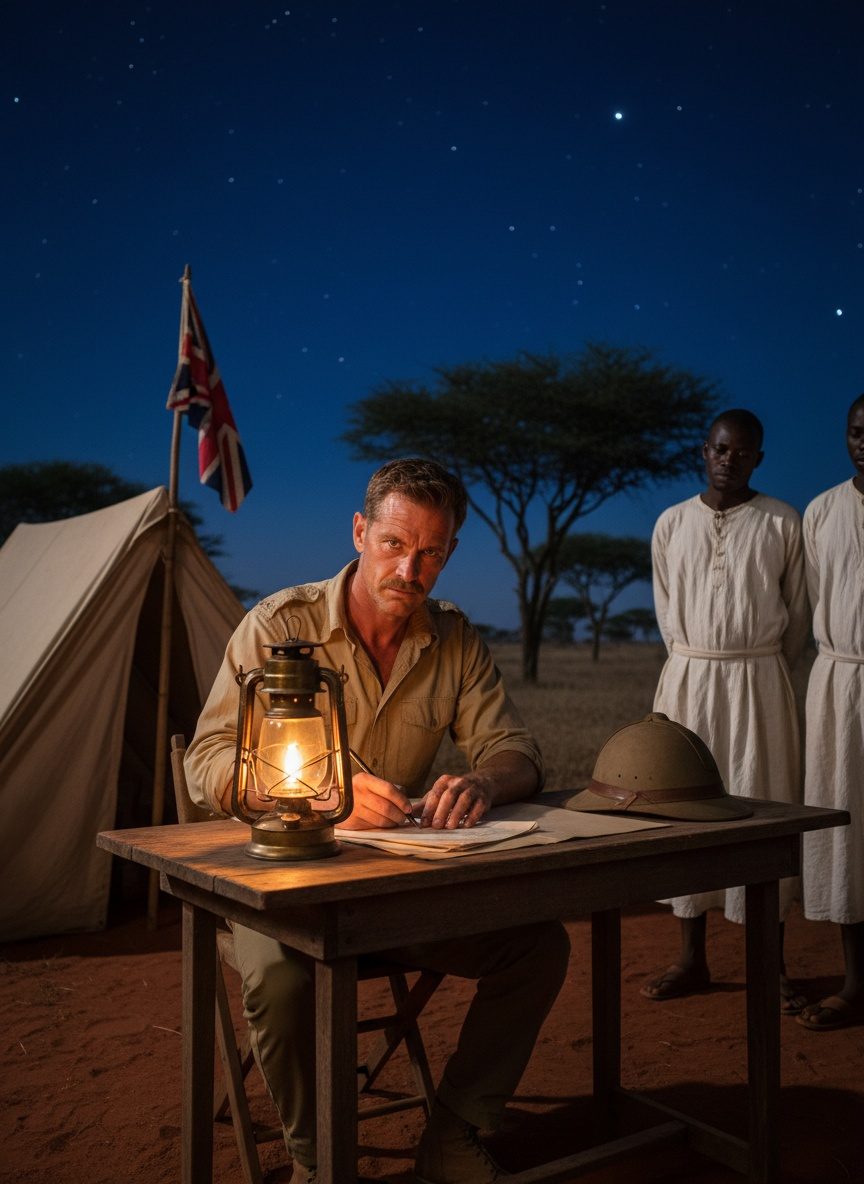
Night had fallen thick over the dense West African bush, its canopy a tangled silhouette against a velvet sky, punctuated by stars and the pale slice of a waning moon. The air was heavy and hot, a humid embrace that clung to the skin. From the shadows emerged a flicker—a lamplight cutting through the darkness, betraying the presence of Frederick Lugard and his weary entourage. The soft, insistent chirp of cicadas and the distant roar of predators echoed all around, but it was the pounding of his own heart that Lugard could feel most keenly. He had arrived in Nikki, the heart of the Kingdom of Borgu, and his mission was singular but monumental: secure Britain's claim before the French could do the same.
The Race to Nikki
By August 1894, the world was deep into the frenetic era historians have come to know as the Scramble for Africa. European powers were greedily carving up the continent, each seeking to expand their empires and harness the bounties of natural and human resources. West Africa was a strategic prize, and within it, the Kingdom of Borgu turned the heads of both British and French colonialists. A tug-of-war was underway, with the town of Nikki as the fulcrum. Whoever reached it first, the adage went, would lay claim to Borgu and the surrounding regions.
Frederick Lugard was the man chosen to bear the British flag in this endeavor, a soldier turned explorer with a reputation for determination and resilience. He had been tasked not simply with making his way to Borgu, but with securing it through diplomacy, laying down treaties like slivers of a Union Jack across the African terrain. The journey was fraught; dense forests and formidable rivers tested the resolve of even the hardiest crewmen, while fevers lurked invisibly, always ready to strike. Yet Lugard pressed on, driven by the weight of imperial responsibility and perhaps a desire—or desperation—to solidify his own legacy.
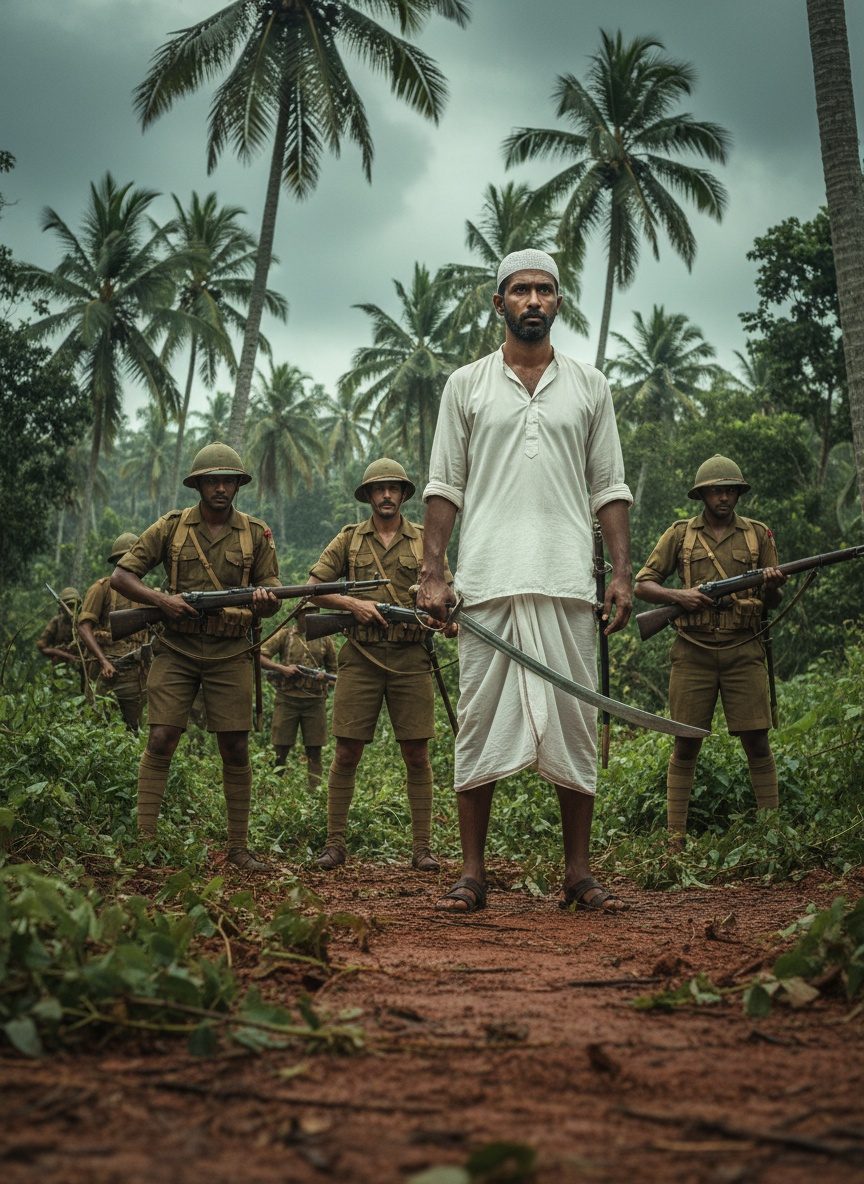
Lugard and his small band of men, less than fifty in number, tramped for weeks, navigating the malarial quagmires with the tenacity of those with everything to lose. They were driven by whispered rumors of French attempts to do the same; the clock was ticking. Cut off from certain communication with their peers and home country, these men relied on sheer human endurance and a savvy understanding of both the land and its complicated politics.
The Signing of a Nation
On that August night in Nikki, beneath the pall of a starry African sky, Lugard met with the rulers of Borgu. Their initial wariness—perhaps suspicion—had given way to cautious interest. For the British, it was the offer of protection and trade, promises wrapped in the language of diplomacy but underlined by the iron of empire-building. As they sat together, the lamplight quivering over faces deep in thought, the stakes solidified before Lugard's eyes: England's foothold in a vast and untouched territory was precariously close.
It was said that the treaty signed that night was sealed not just with ink on parchment but with the shared understanding of changed destinies. For the British, it was an assertion of dominance over a key region; for Borgu, it was a tether to a distant power whose ultimate impact could neither be seen nor measured so distantly. The treaty was a piece of the larger colonial framework, a document that would ripple through history with consequences few could fully grasp at that moment. Yet for Lugard himself, it was a crowning achievement, a pivotal success in a career defined by the breadth of its ambition.
The French arrived mere days later, frustrated and thwarted, with only diplomatic negotiations left to settle the borders. Lugard's victory was Britain's triumph, and with the Coco Chanel-like simplicity of a single signature, the boundaries of modern-day Nigeria began to take their rough shape. Such was the irony and inevitability of empire—fragile as the lamplight that seemed to waver with every night breeze.
A Lamp That Illuminates
Frederick Lugard's odyssey to Nikki is more than a tale of imperial competition and colonial ambition—it is a microcosm of an era's broader struggles. The tireless march through fever-ridden jungles and rival territories laid bare the lengths to which empires would go in their ceaseless quest for land and influence. By snagging Borgu first, Lugard did more than secure a territory; he imprinted the British footprint deeper into the African continent, shaping borders and destinies in the process.
Yet the implications of that act extend beyond conventional narratives of conquest. While the torch of empire burned bright, casting shadows far and wide, it also illuminated the complexities of colonial engagements. The treaty, seemingly a win for the British, was a gateway that forever altered the fates of those it touched, acting as a harbinger for modern nationhood and identity amid political lines drawn with a ruler's precision.
Today, the world reflects upon such acts with a more discerning gaze. The treaties inked under flickering lamp lights are seen not only as milestones of expansion but also markers of a time when imperial dreams overshadowed myriad cultures, traditions, and worlds. Lugard's journey served to intertwine tales of resilience and resistance, ambition and ambiguity, converging in a narrative as intricate as the African night. The lesson, if one can be so bold as to distill it, underscores the power of history's quieter moments: it is often in these, less heralded, spaces where countries were formed and futures, forever shifted.