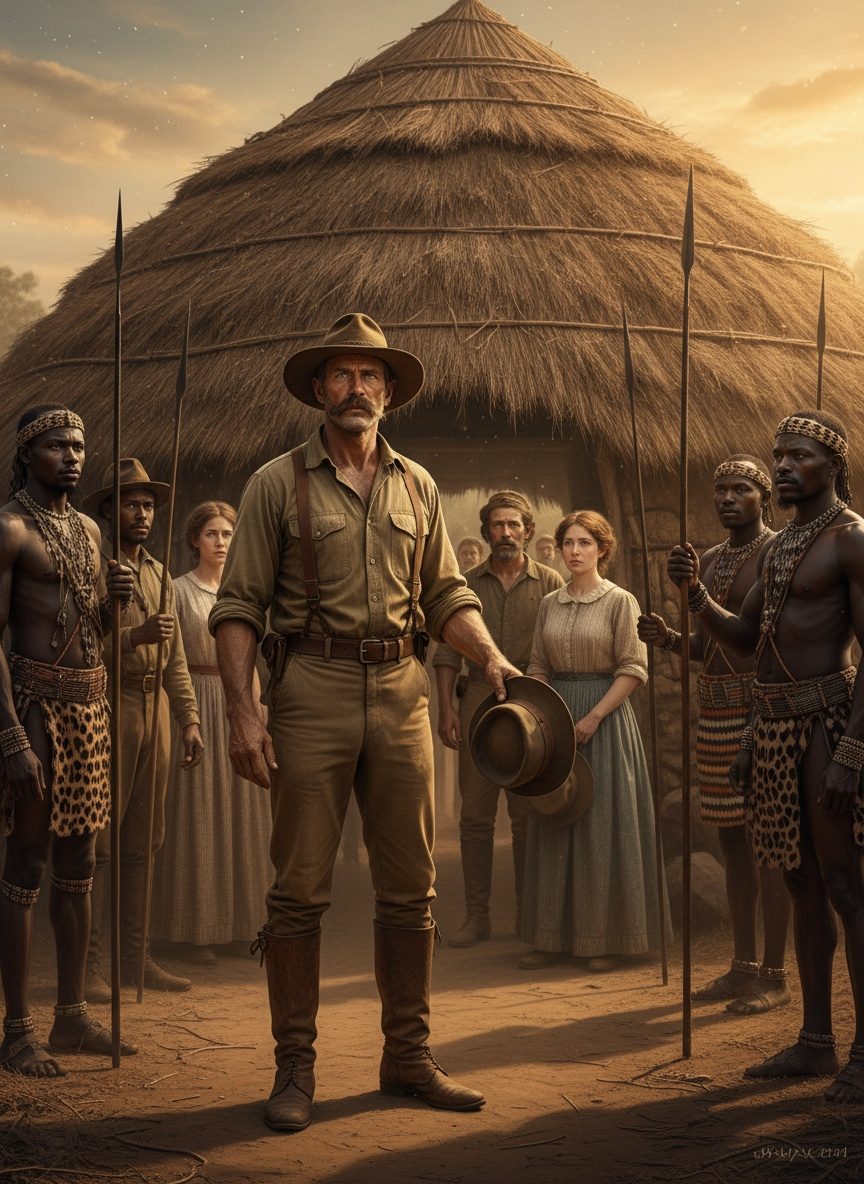
The air was tense, vibrating with the fierce, unrelenting heat of the sun above. Dust clung to Frederick Courteney Selous' skin as he rode into the heart of a Ndebele kraal, the clamor of the surrounding warriors' voices rising like a distant storm. Every eye fixed on this solitary figure, a man renowned and feared, as unpredictable as the land he so effortlessly traversed. Yet, neither his reputation nor his hunting rifle could assure silence or safety here. Charged with the impossible, Selous faced a mission few would dare to accept — parley to save the lives of captives without the sanctuary of soldiers or allies. It was a gambit wrapped not in fury but in an unyielding faith in his knack for diplomacy among the perilously unpredictable battlegrounds of Africa.
Matabeleland, 1893, a crucible of power and tension crafted by the collision of European imperial ambitions and indigenous sovereignty. At its heart lay Lobengula, a king as astute in diplomacy as he was formidable in warfare. The center of this storm, Lobengula's kraal, seethed with distrust for the foreigners who continued to press within their borders. Selous was no typical emissary. Ghastly tales of his lion hunts and his unrivaled knowledge of Africa painted him as a larger-than-life figure, a living legend striding through the pages of empire and adventure.
As the horse under him paced forward, Selous felt the scrutinizing weight of armed sentinels and their assegais, their tips barely shimmering yet carrying promises of swift and fierce reprisal. The energy was palpable, a juxtaposition of hostilities and a precarious hope. At the same time, the Ndebele's prisoners — settlers caught in the crossfire of expansion and resistance — saw not just the wilderness but their lives, futures, and friends hanging in this fragile balance. At stake was not only the physical freedom from a compound encircled by resentment but the symbolic victory of words wielded sharper than swords.
Selous had seen this land for what it was: a wild expanse, resplendent yet riddled with the prowling dangers of its beasts and the vigilance of its rulers. But here, in the intensity of tribal negotiations, Selous tapped into his wealth of knowledge pared from keen observation and ingrained respect for the people. He had studied Lobengula not just in court demeanor but in the granularity of human ambition — seizing on moments to bridge rather than break, to chart a path through dialogue forged in his travels and trials as a conduit of cultures.
The conversations opened with the nuance of chess pieces shifting along contested territories. Selous’ discourse with the king and his advisors were whispered across the flickering shadows cast by a blistering sun — arguments draped in history, politics, and mutual hopes. He spoke in terms etched into the soil with the lives of Ndebele ancestors, stories woven from the cloth of survival and wisdom. Here, Selous leveraged not merely words but the potent weight of understanding, expectations measured carefully amidst the ancient traditions and sovereign desires of Matabeleland.
It was in the realm of the unforeseen that Selous operated best, a realm where intuition transcended the taught and the brutal pushed upon a hunter far more experienced in saving them. Every argument he crafted, every gesture nuanced and stripped down to its essence, reached deep into the consciousness of Lobengula. Selous did not appeal solely to the conventions of allegiance or colonial pressures but to the voice of humanity that spoke universal through the ages. To the core of decisions where kingship demanded actions that would echo both forward and backward through time.
Throughout the negotiations, there pervaded an uncanny silence over the kraal, a seemingly psychic premonition shared by both warriors and captives. For in Selous' capacity to walk unarmed amidst armed dominion lay a beacon of compromise hard-fought yet reaffirming of something celestial, rare, and ephemeral in beleaguered lands — peace.
When Selous emerged, flanked by the now freed settlers, there was a reverent hush that spoke louder than a primal yell. The gunpowder hanging lightly in the air dissipated with a gentle breeze as if conjured away by the conjurer himself. It was a calm impounding proof not of the triumph of a man, but of humanity's most fragile, secretly held trusts upheld over the fears of man-made devastation.
Seasoned by countless adventures knitting together the fabric of the African tapestry, Selous' success in liberating the hostages was a testament to the power of diplomacy and respect amid colonial ambitions defined largely by violence. This unsung tale did not feature in the grand narratives of empires cataloging territories and treasures. Yet, there in the hushed veracity of unmarked histories crafted from whispers rather than proclamations, this tale stood as a quiet yet powerful parable for the ages.
What makes this story more than a chronicle of victorian gallantry and ambition shines more so in the implications upon the untrodden paths of concession and accord. It teaches an understated bravery — an act to speak, listen, and connect, enriching this timeless journey with the dialects of hearts rather than the drumming silences of defeat and submission. In a world often blurred by conquest and colonization, Selous’ venture into a kraal, absent of arms, profoundly echoes an arc of brave dialogue too seldom extolled in the annals of history's turbulent yet hopeful past.