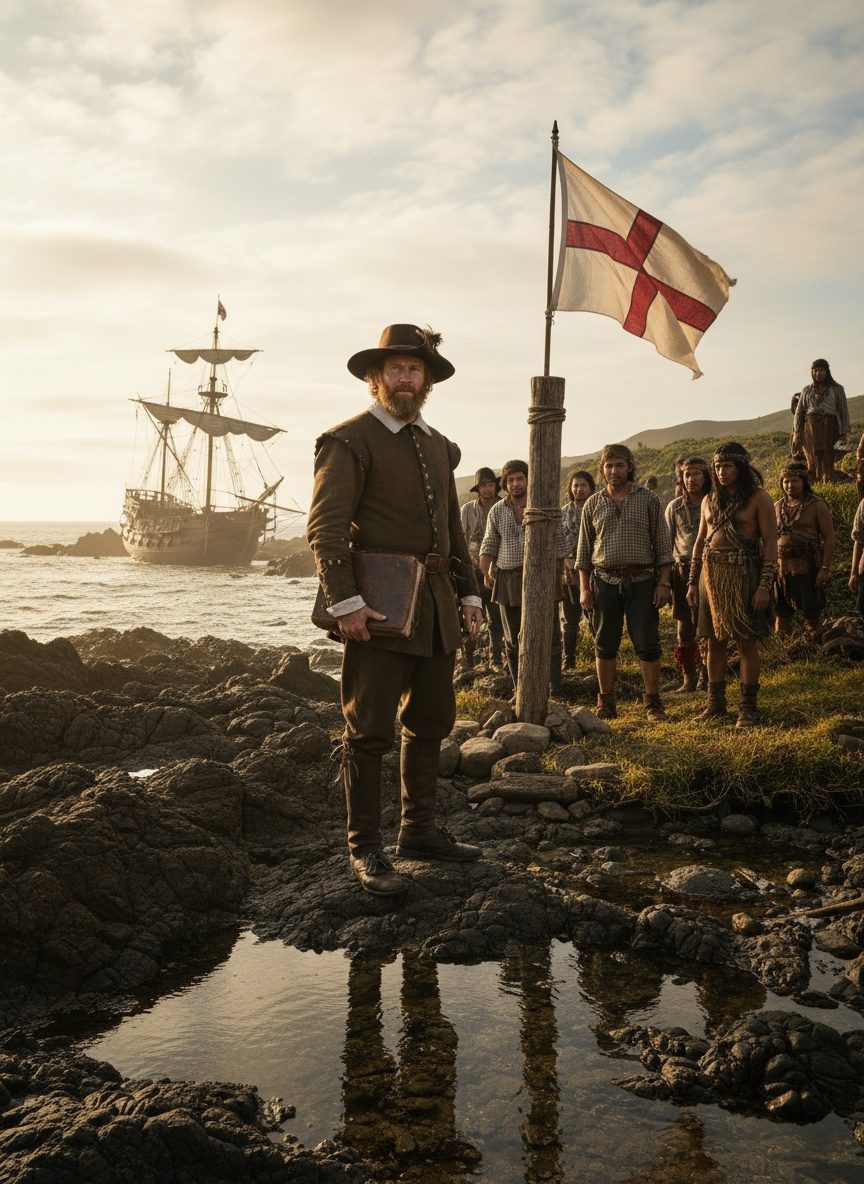
The salty breeze carried whispers of distant lands as Francis Drake surveyed the rugged coastline. Clutched tightly in his hand, the weight of the Bible balanced against the English flag billowing above him. White cliffs rose dramatically beyond his makeshift congregation—native Miwok settlers watching cautiously from the heights, their presence an ancient whisper against the backdrop of an endless Pacific expanse. This edge of the Earth—unknown, untamed—unfurled before him, holding the promise and peril of empire.
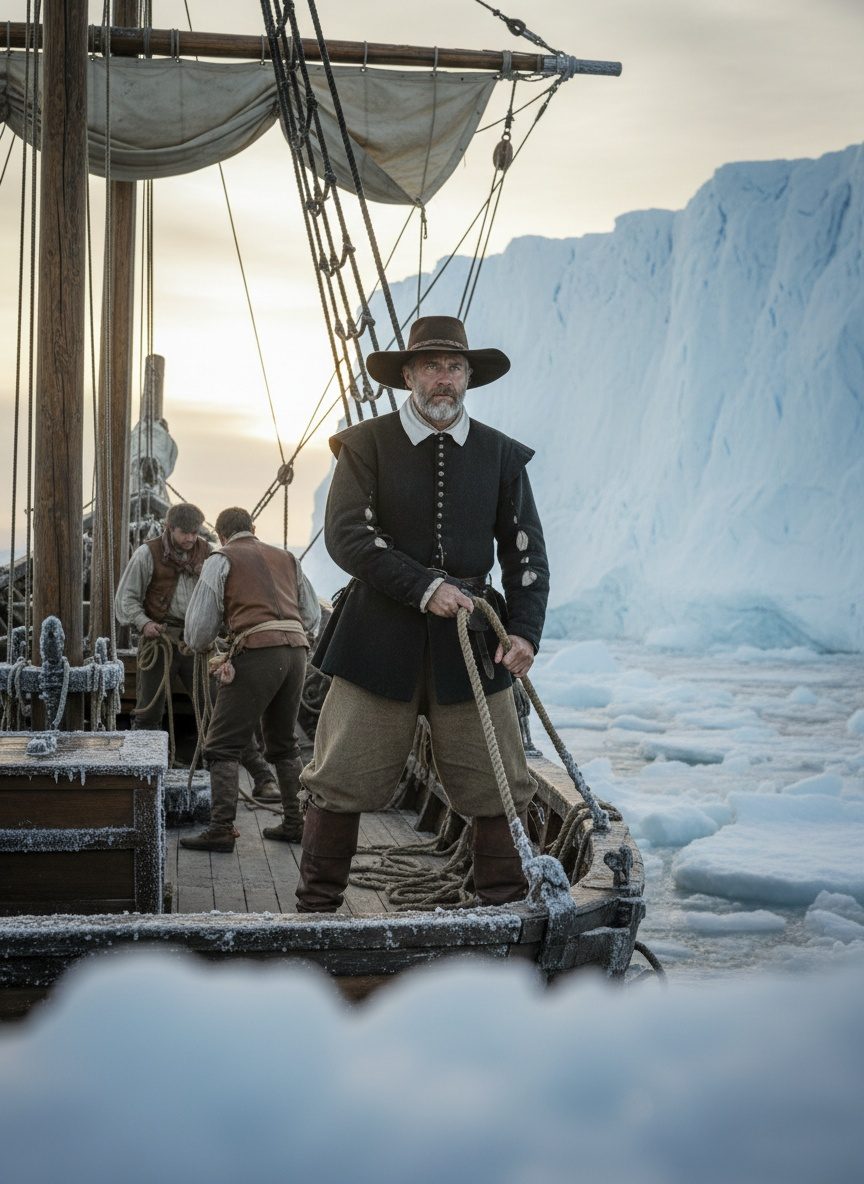
The Golden Hinde, his weathered vessel, had just endured a harrowing journey filled with scuttling Spanish galleons and tempestuous seas. Drake and his crew had charted a course few dared to venture, a daring circumnavigation aimed at seizing fortunes and glory under the banner of Queen Elizabeth I. But it was here, on a terrain so unlike the genteel drawers of European papers, that he saw the opportunity for something even greater—a foothold for England on the Pacific coast, a silent challenge to Spain's burgeoning dominions.
Drake had named the land Nova Albion, an echo of the “old white cliffs of Dover.” The ceremonial act of claiming it for England was as calculated as it was bold. The Miwok, intrigued yet wary, mingled between observation and the natural skepticism cultivated over generations exposed to the enigmatic visitors arriving from the sea. There was little in the way of shared language, yet through gestures and offerings, a tenuous peace was maintained. As English hymns rose from the beach—a mixture of steel resolve and hopeful invocation—the ancient and new worlds met, each as inscrutable to the other as the stars swirling overhead at night.
This was more than a land claim; it was an assertion of religious and political defiance. In the eyes of Queen Elizabeth and her realm, who saw the Catholic Spanish as rivals in every sense—theologically, politically, and economically—Nova Albion was a strategic message in the language of empires. Drake’s fleeting foothold, however momentary, was an audacious thrust into territories that Spain jealously guarded, a glinting flag that spoke of Protestant ambition.
Repairing the Golden Hinde’s hull took time, allowing for the forging of uneasy friendships. The Miwok, with their deep connection to the land and an oral heritage echoing back millennia, faced a choice as inevitable as it was paradoxical. They engaged with Drake's crew, exchanging goods, and maybe even stories, with gestures bridging the chasm of language. Yet beneath these interactions, the whispered promise of an unyielding tide of change lay like shadows, creeping ever closer.
For Drake, the mission extended far beyond geographical conquests. It was also an exploration into humanity’s boundless potential to transcend—no matter that this destiny involved thunderclouds of colonial expansion. As they sailed on, fresh provisions stocked, and the repair work on the Golden Hinde complete, the reality of what they left behind could only be imagined. The simple English cross and the fluttering flag marked a territory unrecognized by anyone except those within the reach of its waving shadow.
With the Miwok solemnly retreating to the cliffs, Drake’s eyes turned seaward once more, his gaze resting on the horizon. The sunset, casting both the land he claimed and the sea he sailed in a warm umber glow, hinted at the untold stories yet to unfurl with the cycles of the season. What future awaited these shores, and the peoples upon them, resided in the mysteries yet undiscovered. For Drake, the voyage continued—a circumnavigation complete, stories to tell, and a name engraved upon maps to inspire or inflame generations to follow.
Drake’s landing was brief, but its ramifications echoed far beyond the narrow timeline of his visit. His claim became the quiet precursor to a lineage of explorers, colonizers, and adventurers who would come to view the Pacific as a stage for imperial ambitions. As Spain’s influence reverberated across the Americas, Nova Albion represented not just land but the idea that no empire, no matter how vast, was unassailable. It imprinted on the minds of those who would draft acts of exploration and settlement—a map’s ink reflecting the dreams and declarations of an age of expansion.
In the silence of that Californian beach, Drake grasped the Bible, words of hope and conquest pouring into the Californian wilderness. The lessons for history remain—of the power of imagination to redefine boundaries, of the peoples and cultures whose lives intertwined at the dawn of an imperial age. These are the stories that drift just beyond textbooks’ reach, legends in the timeless dance between exploration and home, heritage and heart, woven deep into the fabric of what it means to claim and be claimed by history.