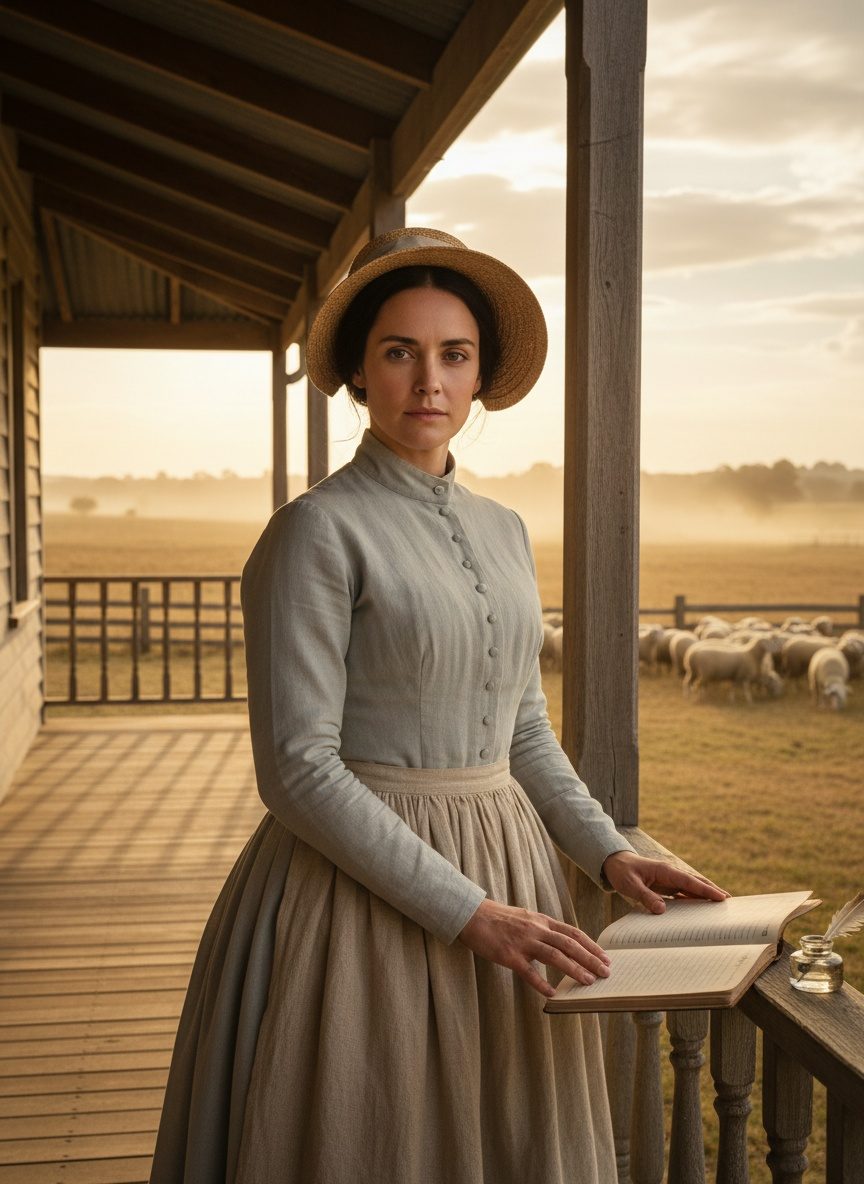
A dawn mist clung to the pastures of New South Wales as the first hues of daylight painted the sky in soft, golden tones. The land, still scarred from recent ploughing, stretched out with a quiet resilience beneath the rising sun. In 1801, at the other end of the world, Elizabeth Macarthur stood on the precipice of an enormous challenge. With her husband John detained in England on charges that threatened their future, she faced the daunting task of managing their remote sheep station, a pioneering outpost in the nascent Australian colony. This wasn't just a story of survival, but a bold and solitary charge into uncharted territory.
The Unexpected Departure
The year was 1801. John Macarthur, whose name is often echoed in the annals of Australian history as a pioneer of the wool industry, found himself embroiled in a fierce conflict with Governor Philip Gidley King. Renowned for his fiery temper and unyielding ambition, John challenged the governor—a decision that resulted in his arrest and transport back to England to face a court-martial. It was an abrupt departure that left Elizabeth unexpectedly at the helm of their fledgling empire, isolated in a colony teetering on the brink of collapse.
When John boarded the ship bound for England, he left behind more than just their land. Elizabeth was now the sole caretaker of eight children and a vision that threatened to dissolve into chaos without his guiding hand. The colony itself was a tapestry of uncertainty, with shortages in supplies bringing a pervasive tension to every interaction. Elizabeth's decisiveness at that moment would be as critical as the resilience she had shown since their arrival in 1790.
Managing the Homestead
Elizabeth Macarthur was not unfamiliar with hardship. Her early years in New South Wales had taught her resilience and ingenuity. The family homestead, nestled along the banks of Parramatta River, was more than just a home; it was the heart of their operations. The physical demands of the land were immense, yet Elizabeth took charge with a methodical precision. She was not just maintaining what her husband had left behind—she was expanding it.
The sheep, which numbered in the thousands, were the family's most prized asset. Although initially intended for broader agricultural pursuits, the unique qualities of the Merino wool had captured the couple’s ambitions early on. Elizabeth oversaw all aspects of the operation, from the shearing and sorting of wool to negotiating with traders. Her letters to John reveal an astute businesswoman at work, competent in her management and visionary in her scope.
Building Alliances
Beyond the practical concerns of running a sheep station, Elizabeth faced the equally daunting task of navigating the colonial power dynamics. Her intelligence and composure earned her the respect of Governor King, striking a stark contrast to her husband’s contentious reputation. She negotiated astutely, ensuring the continued resilience of their enterprise amidst shifting governmental policies and economic landscapes.
Amidst isolation, she formed invaluable connections, cultivating relationships with key figures who could offer aid or insight. Elizabeth’s social acumen not only helped sustain their enterprise but also positioned the Macarthurs at the forefront of the wool trade, laying groundwork that would later transform Australia into a global wool powerhouse.
Weathering the Storm
The New South Wales climate was often unforgiving, with long periods of drought threatening the stability of crops and livestock. Yet Elizabeth proved her mettle in these tough conditions, implementing practices that safeguarded their stock and livelihood against the unpredictable Australian weather. Her journals reflect the practicality and foresight she demonstrated, balancing immediate needs with longer-term ambitions.
Noteworthy is Elizabeth’s sustained communication with John, whose sporadic correspondences provided insight into shifting fashions and demand in England. Her adaptability in aligning the station’s output with market needs showcases a rare blend of perseverance and strategic thinking, a marriage of patience and innovation only she could orchestrate from so far away.
The Legacy Beyond Wool
In 1809, after eight arduous years, John returned to New South Wales. By then, Elizabeth had solidified the foundation of what would become Australia’s wool industry, turning their modest operation into a renowned enterprise. Histories often highlight John as the architect of this legacy, but it was Elizabeth who truly built it, brick by brick, in his absence.
The Macarthur story, often recounted through John’s triumphs and titles, owes an invaluable debt to Elizabeth’s quiet fortitude. In a time when women’s contributions were often relegated to the shadows, her story demands recognition, not just as a supportive spouse, but as a competent, innovative, and decisive leader who transformed uncertainty into opportunity. Elizabeth Macarthur wasn't merely keeping the fires burning—she was lighting the way for an entire industry. Her legacy invites us to reconsider the often underappreciated female voices that echo through history, remarkable pioneers who laid the groundwork for futures others would claim as their own.