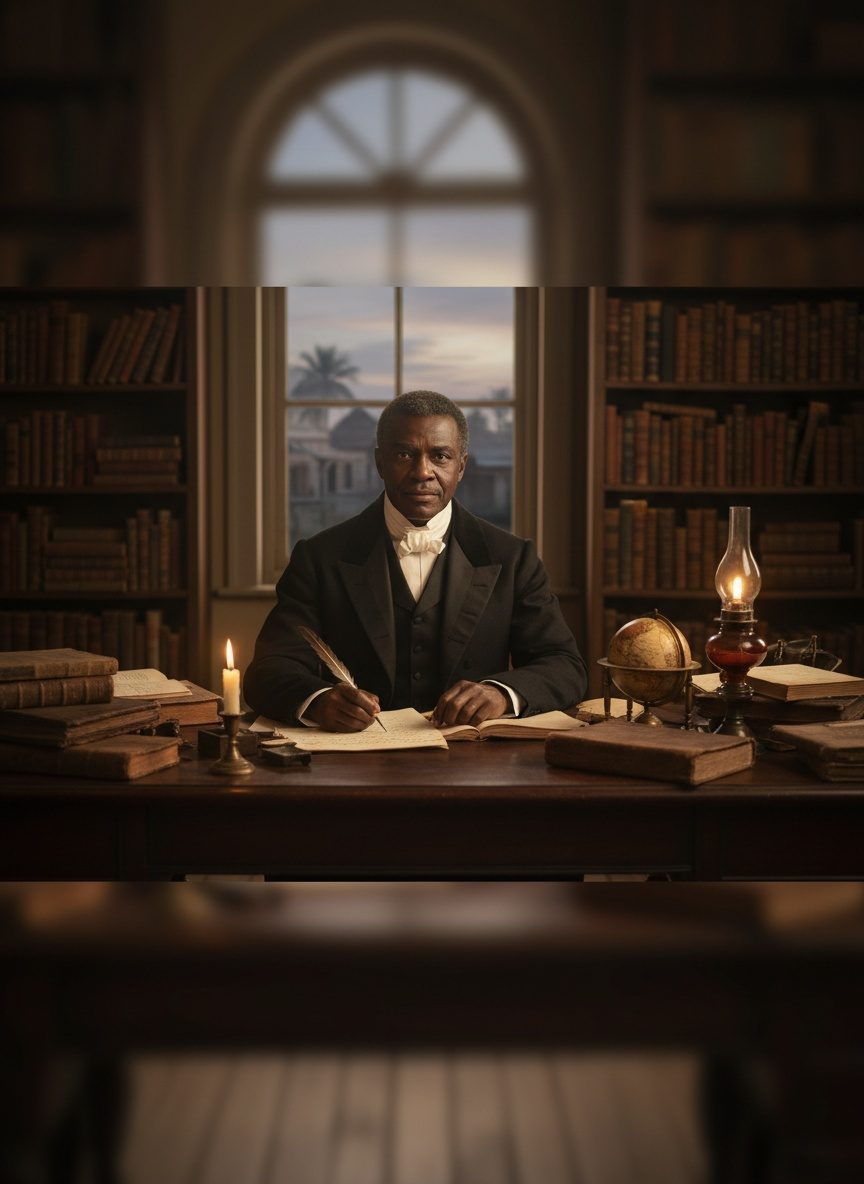
1887. The London air had a metallic chill, dense with the ambitions of an empire at its zenith.
The Scholar from the Caribbean
On an unassuming day within this year, a man of singular purpose and indomitable presence took center stage in the heart of London. Edward Wilmot Blyden, whose roots could be traced back to Saint Thomas in the West Indies, had journeyed across seas and continents. This learned scholar, educated in the intellectual crucibles of Sierra Leone, stood poised before the very architects of colonial power. His mission was both simple and revolutionary: to present a narrative that defied the Empire's understanding of Africa and its people.
Blyden was no ordinary visitor to the British capital. He had meticulously crafted his thoughts into pages that would soon challenge the entrenched perceptions held by those who viewed Africa as a mere footnote in the annals of history. His book, *Christianity, Islam and the Negro Race*, was not only a challenge to European frameworks but a declaration of the rich tapestry that Africa possessed—a soul, a culture, and a history that was undeniable and vibrant.
A Book as a Sword
For the men who shaped policy and empire, Blyden's book was a jolt to the system. It was not a tale of subjugation but a recounting of civilizations that flourished long before European ships landed on African shores. Blyden, with the confidence of a sage, presented his work as a revelation—a carefully constructed argument that shattered preconceived notions of African inferiority.
He argued with clarity and authority, painting a picture of African societies that were deeply spiritual, intellectually robust, and socially intricate. Blyden’s perspectives on religion were particularly provocative. He detailed how Islam, with its roots in Africa centuries deep, provided spiritual solidarity and resilience, offering what Christianity under colonial rule often failed to supply: dignity and understanding.
Blyden's book became a weapon of enlightenment, slicing through the ignorance that many in Britain harbored. He positioned African achievements not as an anomaly but as integral to the world’s historical narrative. These were revelations that shook the listeners, challenging them to reconsider the roles they played in this intricate saga.
The Heart of the Empire Listens
In the grand halls where decisions about the fate of continents were routinely made, Blyden's words resonated profoundly. His demeanor was calm yet unyielding, his arguments laced with reason and respect but underpinned by an unshakable confidence in the validity of his message. The listeners—power brokers, politicians, and academics—were captivated not just by what was said but by how it was presented.
Blyden's presence in these rooms was itself a silent testament to the resilience of the African spirit he championed. Here was a black man, educated and erudite, standing on equal footing with those who may have otherwise dismissed his people. He was living proof of what he preached—a man whose intellect was shaped by both African and Western influences, melding them into an insightful critique of imperial dominance.
A Precarious Balance of Power
As London’s elite wrestled with Blyden’s insights, the political landscape elsewhere was fraught with tensions and transition. The Berlin Conference, held merely a few years prior, had set the stage for a mad scramble for Africa’s riches. Yet, within this imperial frenzy, Blyden’s work was a counter-narrative—a reminder that the continent was more than a prize to be divided.
Blyden challenged the imbalance directly. He demonstrated that African culture and history could serve as a beacon, not just for Africans themselves but for the world. The complexity and longevity of African kingdoms and the sophistication of its languages puzzled many who sought to understand how these elements had been overlooked or dismissed.
His work suggested a world of African potential, a burgeoning renaissance that could flourish if freed from the yoke of external domination. Blyden's vision was one where Africa could stand alongside other great civilizations, its influence shaped not by coercion but by shared humanity and understanding.
The Echoes of Blyden's Challenge
The story of Edward Wilmot Blyden is not simply one of a book or a single man, though. It is the story of a shifting tide in history—an intellectual awakening that demanded a reevaluation of African agency and worth at the height of imperial power. Blyden's address within the circles of British power was emblematic of a larger struggle, one that would echo far beyond the corridors of London.
Blyden offered a glimpse of a future where Africa could reclaim its narrative and identity. This was his gift to the world—a call to recognize and honor the dignity of a continent rich with essence and experience. At a time when empires believed they could carve away at the soul of Africa, Blyden stood defiant, armed with truth, and shamed an empire with the simplicity of a book.