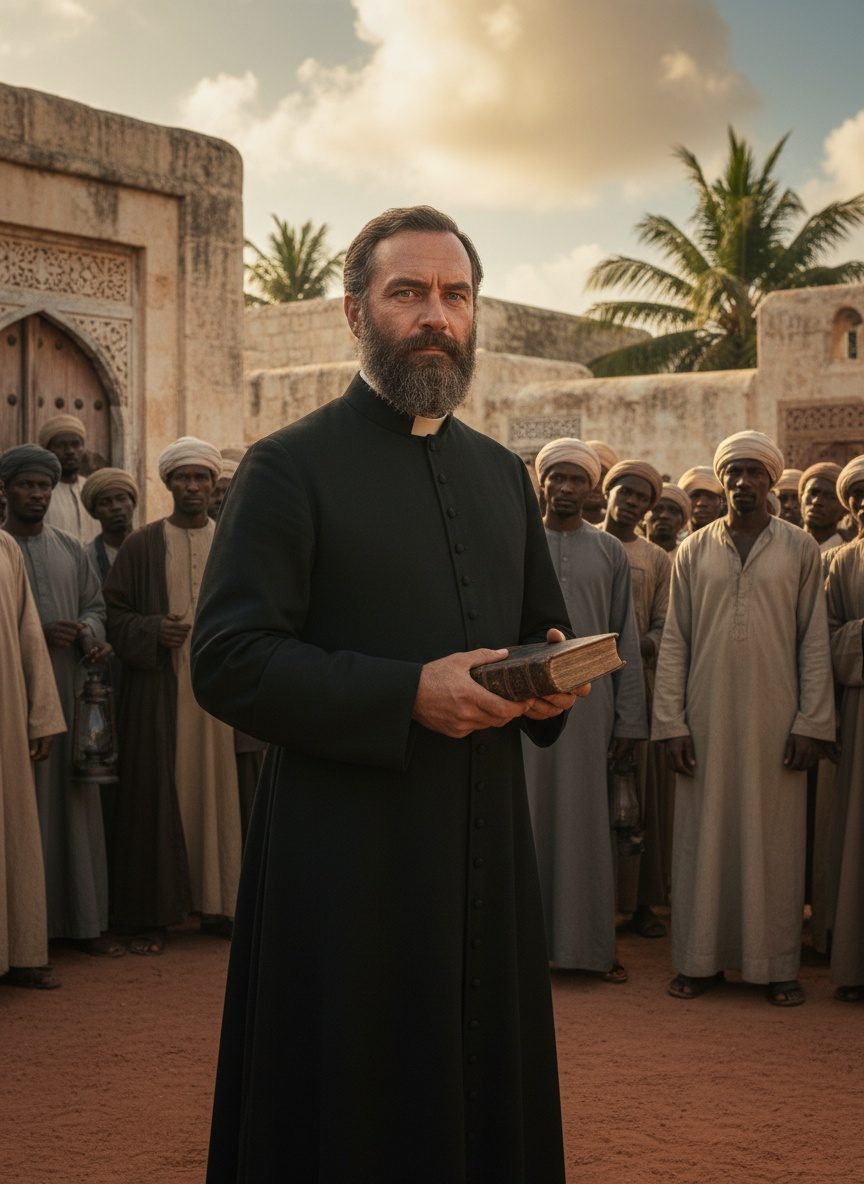
The crowded chaos of the bustling market enveloped the courtyard. Nearby, Bishop Edward Steere stood, unwavering under the relentless sun, his gaze fixed on Sultan Barghash's court. The hub of trade on the island of Zanzibar had long been marred by an insidious taint — the buying and selling of human lives. With resolute determination, Steere prepared to challenge the institution persisting for centuries under the Sultan's reluctant oversight.
Voices Echoing Through the Market
The air was thick with the scent of cloves mingling with the sea breeze, underscored by the cries of traders hawking their wares — spices, ivory, and at the center of everything, the heart-wrenching reality of the slave trade. For centuries, Zanzibar had been synonymous with this grim commerce. Human beings, shackled and silent, stood on auction blocks under the unforgiving gaze of potential buyers who scrutinized them with merciless intent.
Steere, who had long been haunted by the plight of these individuals, had found renewed purpose in the face of this cruelty. His every step reverberated a commitment to end the inhumane practices perpetuated in this market. The British government had been exerting pressure on the Sultan to abolish the slave trade, but it was Steere’s moral conviction that resonated deeply, cutting through the bureaucratic noise.
The Bishop's Impassioned Plea
Edward Steere was no ordinary missionary. Unlike his predecessors, his desire for action extended beyond spreading the Gospel. He saw the breaking of chains as a moral duty, speaking to the spiritual liberation he believed was every person's birthright. In 1873, with the world watching and tensions at a boiling point, Steere confronted the Sultan in his regal court, an audacious move that risked the volatile peace between British interests and the Sultanate's sovereignty.
Steere's argument was uncompromising but tempered with diplomacy. He appealed not only to the British pressures but also to the Sultan's own sense of humanity. Picture the court, an amalgam of opulence and tension, where Steere stood before Barghash, who listened intently to this foreigner's appeal. Steere’s voice carried the weight of those tens of thousands of souls who had suffered, making promises of a brighter future — one where Zanzibar would be remembered for its liberation rather than its bondage.
Stepping Through the Threshold of Change
The Sultan acquiesced, a decision that sent ripples through the Indian Ocean, reaching the farthest corners of the British Empire and beyond. The slave market was to be permanently closed, an act sealed with a doctrine that resounded with hope and the gradual unbinding of chains. Yet, for Steere, the work was only just beginning. The closure of the market led him to another vision — constructing a symbol of redemption and transformation on the very ground stained with the agony of countless lives.
The Anglican cathedral of Christ Church would rise where the market once thrived, its foundations laid not just in brick and mortar, but in the fervent prayers and dreams of those who had yearned for liberty. Steere marshaled his efforts and resources to erect this monumental testament to faith and freedom. It was a beacon of both spiritual and social transformation, marking the site where once stood the unspeakable sorrow of human trafficking.
The Cathedral as Testament and Transformation
The structure was an architectural marvel, one that embodied the merging of tragedy and hope, casting its shadow over the years of suffering below. It was designed with care, integrating elements reminding all who visited of its redemptive purpose. The altar was reputedly placed where the main whipping post once stood, a poignant symbol of salvation and restitution. The echoes of the past were tangible here, but so was the promise of a different future.
This transformative vision was not just the work of Steere alone. His steadfast efforts were supported by countless others who believed in the cause, combining local craftsmanship with the architectural techniques he had brought from his English heritage. Together, they would ensure that the remembrance was inextricably linked with renewal, the triadic bond of education, faith, and justice woven into each element.
The Lasting Impact Beyond Stone and Lime
The slave market's closure and the subsequent construction of the cathedral were pivotal not just for Zanzibar, but for humanity’s moral reckoning. It marked a turning point in how the world perceived human dignity and individual rights. Steere’s actions transcended the confines of religious duty, manifesting in a synergy of humane advocacy and political activism that reached beyond the local seascapes into global consciousness.
In reflecting on this profound chapter in history, we must consider what it means for the narratives we choose to celebrate. Steere's relentless pursuit of justice in 1873 remains a powerful reminder of the impact one person’s moral courage can have — galvanizing change amidst entrenched systems of oppression and inspiring us to confront the injustices of our present, with a vision towards a more humane future.