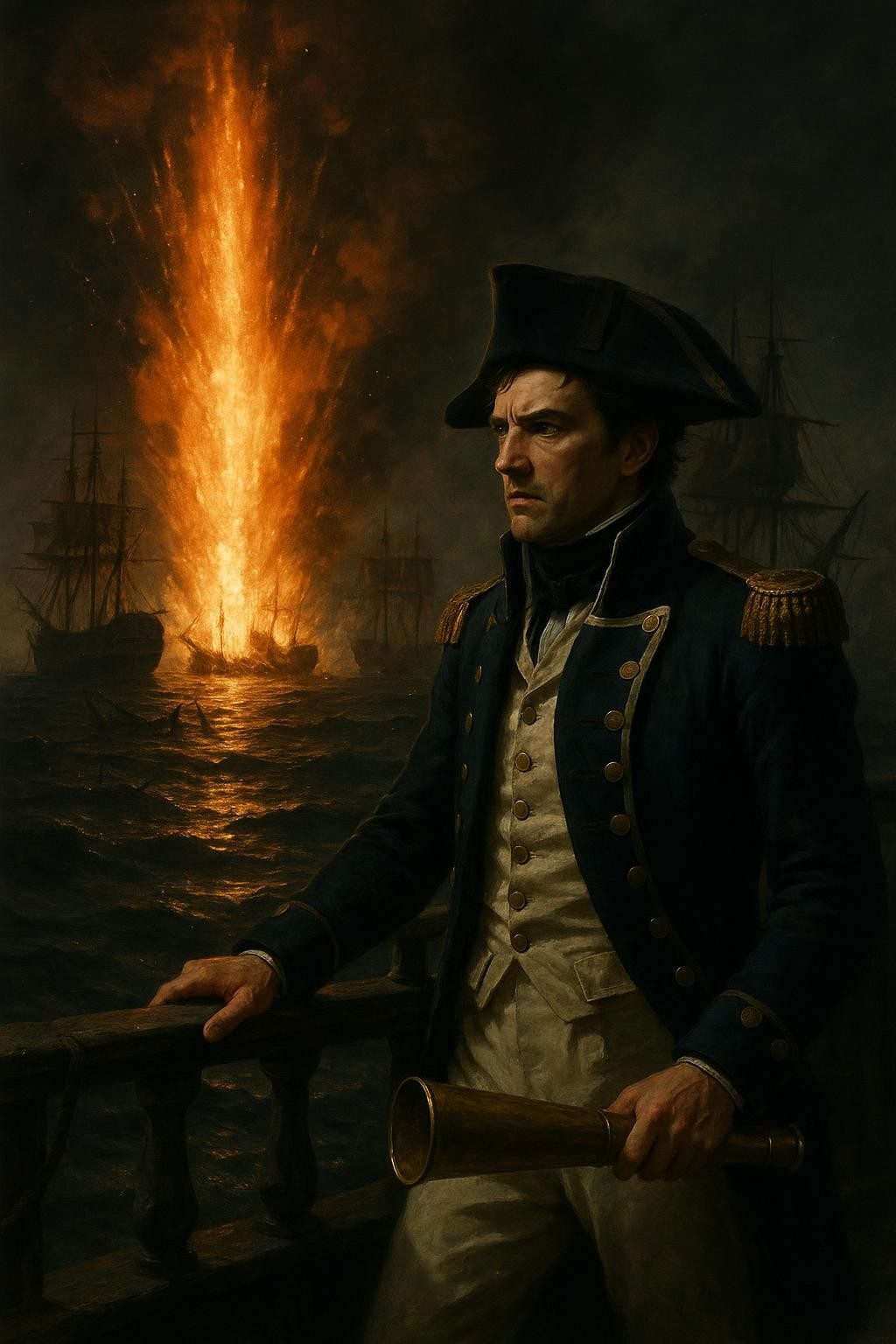
April 1809. The night sky over Aix Roads lit up with an unearthly glow.
A Plan Born of Desperation
In the grim, turbulent years of the Napoleonic Wars, the Atlantic was a chessboard of naval power, with Emperor Napoleon's fleet positioned menacingly at Aix Roads, off the coast of France. It was a fleet that posed an existential threat to Britain's naval dominance and its vast empire. The British Admiralty, aware of the threat, needed a bold stroke to cripple Napoleon’s forces. Enter Lord Cochrane, a captain renowned for his audacity and brilliance. His plan was simple if extreme: use fireships laden with explosives to sow chaos amongst the French anchored warships, forcing them aground and into vulnerable positions. His superiors hesitated, dubbing the plan madness, yet none could propose a better alternative.
The Night of Fire
As dusk fell on that fateful April night, three vessels under Cochrane's command crept towards the French fleet. These were not ordinary ships but fireships, floating bombs designed to unleash chaos upon impact. Cochrane, aboard one of the lead fireships, carefully directed his small armada into the dense cluster of French ships. The nerves of the British crews were visibly taut, knowing they embarked on a near-suicide mission. When the fireships were finally set ablaze, the sparks ignited a chain of explosions, the likes of which had never been seen on those waters.
The calm night erupted into an inferno. Massive flames engulfed the ships, lighting up the coastline. Panic spread quickly through the French ranks. The disorder was amplified by confused orders and the horrors unfolding in the dark. The fireship tactic, centuries-old, was brutally effective, scattering well-trained naval soldiers as if they were rookies facing their first cannonade.
Chaos and Catastrophe
The sight of ghostly flames reflected on the water turned the night into chaos. French sailors, driven by fear, made the fateful decision to cut anchor, hoping a quick retreat into shallow waters would spare their vessels from the blaze. Yet, in the hasty retreat, eleven proud warships found themselves aground, stuck, and vulnerable, a scene that captured the strategic brilliance of Cochrane’s risk. The officer’s gamble had paid off spectacularly. Cries mixed with the thunder of detonating ammunition, giving birth to a cacophony that resonated for miles.
While the French floundered, Cochrane observed from a distance, a vigilant overseer amidst the chaos he had wrought. The fireship attack, often dismissed as a desperate measure, now seemed destined to redefine naval warfare tactics.
The Aftermath of a Tactical Masterstroke
By dawn, the smoky air revealed a sight that would etch itself into maritime legend. Broken and beached warships dotted the coastline, seemingly apologetic shadows of their former majesty. The once-feared fleet lay in ruins, morale shattered, with Napoleon’s Atlantic ambitions dealt a crippling blow. The operation had not claimed new territories or plundered riches but achieved something far greater: strategic control and psychological supremacy.
For Britain, it was a turning point. Unbeknownst to many at the time, the victory at Aix Roads had relieved pressure on the English Channel and played a significant role in maintaining superiority at sea. Cochrane’s unorthodox methods spotlighted the value of ingenuity in warfare, a lesson not lost on the Admiralty back in London.
The Lasting Echo of Cochrane’s Exploit
Why does this story matter today? Because it teaches us that sometimes audacity and imagination trump brute strength. Cochrane's attack at Aix Roads remains an emblematic tale of risk-taking and unconventional thinking, transcending its era. It shows that a single seed of an idea, even if deemed 'madness' by contemporaries, has the power to reshape the future.
As the echoes of those April explosions settled in history, Lord Cochrane’s name resounded as a daring tactician, forever associated with the incendiary night that broke Napoleon's fleet. Even today, his actions inspire military strategists, inviting them to balance daring risks with the promise of great rewards. The events of 1809 remind us not only of the specific outcomes of warfare but also of the enduring importance of innovation in the face of insurmountable odds.