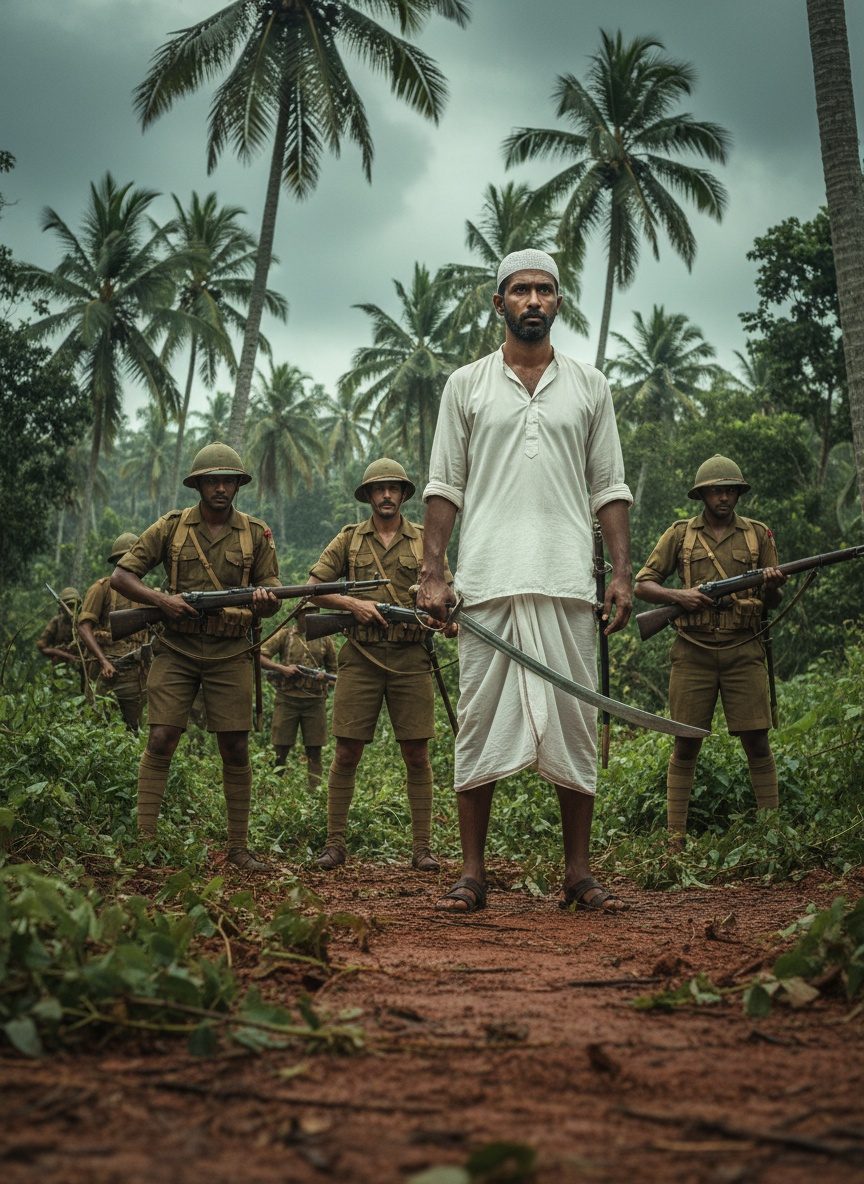
He was in the heart of the British establishment. He had never seen anything like the forces gathered against him at Rorke's Drift.
The Clash of the Unseen
The night of January 22, 1879, was a sleepless one for both British and Zulu forces, as a conflict that had erupted from colonial tensions refused to relent under the shroud of darkness. As the sun rose on the morning of January 23, a picture of exhaustion and endurance emerged in the harsh African landscape. The British column under Lieutenant General Lord Chelmsford had met its foe. Though their paths had been woven into a tapestry of imperial objectives, few expected the human complexities that morning would reveal.
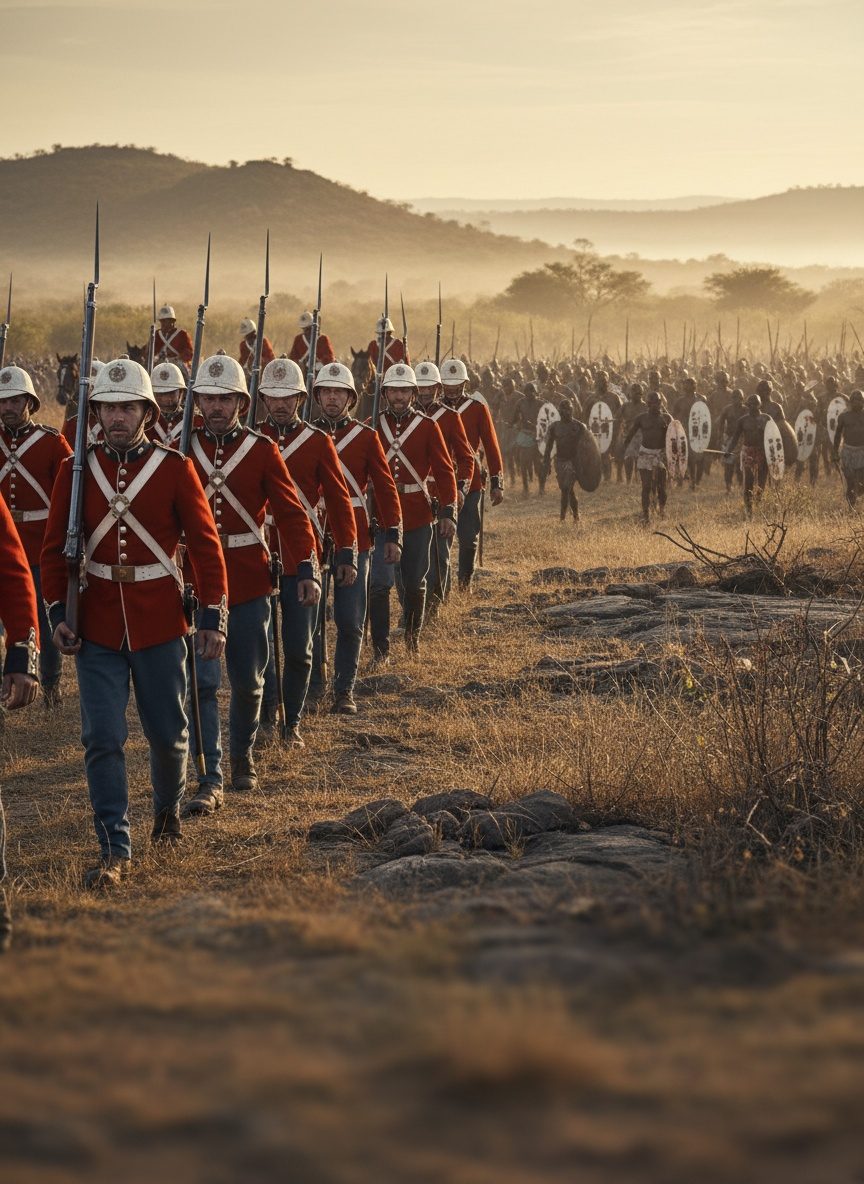
Rorke's Drift, a former mission station turned military outpost on the Buffalo River, had withstood a relentless twelve-hour barrage orchestrated by the Zulu impi. These warriors, moving like whispers between blades of grass, had approached the fortified station with silent tenacity. Their aim was simple yet formidable: to breach the walls maintained by biscuit tins and sacks of meal—a makeshift but mighty resistance by the beleaguered defenders inside. As dawn broke, revealing the scorched earth and battle-laden air, Chelmsford's column, returning from an ill-fated diversion, found themselves mere 400 meters from the tribe that had battled fiercely through the night.
These opposing troops, drained and battered, faced a poignant standoff. On one hand, the Zulu warriors, an embodiment of military prowess and national determination; on the other, the disciplined British soldiers led by a commander seeking redemption for earlier strategic blunders. It is said that neither side dared unleash another volley. Exhaustion was one factor, perhaps, but there, on the cusp of direct engagement, lay a moment of shared humanity—two formidable forces realizing the futility of further immediate conflict.
Echoes of Western Ambition
This meeting by the Buffalo River was not merely a geographical juncture; it was the collision of vastly different worlds. Lord Chelmsford's escapade into Zulu heartlands was born from the Victorian desire to expand, control, and civilize—ideals deeply entrenched in the British Empire's march across continents. The drive stretched across oceans, infused with the arrogant belief in Western superiority, administered through the barrel of a gun.
Yet, these lofty ambitions often met grounded reality. The soldiers, freshly arrived from the industrial comforts of Europe, were unprepared for the guerilla tactics of the Zulu—a civilization they had underestimated. Zulu warriors, whom the British deemed primitive, were masters of their land, commanding both terrain and time. Their strategies drawn from ancient martial traditions stood as a haunting testament to the empire's miscalculations.
Chelmsford's decisions had often been shrouded in criticism, his strategic movements questioned through the lens of hindsight. The near-catastrophe for the British forces at Isandlwana, only days before, had painted him into a corner he'd struggle to escape. The battle there had shocked an empire, compounded by the heroic—but unexpected—defense at Rorke's Drift. For the Zulu, every engagement could harness the narrative of unyielding resistance against foreign invasions—a tireless tide pushing back against overwhelming odds.
Unspoken Truce at Dawn
The dawn encounter between Chelmsford's column and the weary Zulu impi was more than a pause in a military campaign. It was a deep breath taken by history itself. The Zulu, whose forces were formidable even in defeat, and the British soldiers, driven by a complex mix of fear, respect, and imperial duty, found a brief peace through silence.
This truce, though unsanctioned, needed no parchment approval. It was understood in the weariness of eyes that cast over bodies numb with fatigue. It existed in the held breaths of men who had seen too many brothers fall to the ground, claimed by causes not their own. War, as often stated, is hell, and that January morning was its quiet, personal reminder.
The encounter carried with it ripples of human stories. It was a moment when both sides grasped the fragility of life amidst the constructs of war. The lines of engagement had not changed the outcome expected by either leader in charge, yet neither side fired—the air, instead, filled with the soft rhythm of human endurance.
In the end, this encounter by the Buffalo River stands as a salient reminder of the entwined destinies shaped by imperial ambitions and indigenous resolve. The silence left a mark as indelibly as ink on treaty paper, prompting us to reflect on the enduring nature of conflict and the slumbering kinship hiding within the human spirit, ever so present even in times of war.