Most history textbooks skip over the tale of Caroline Chisholm. This oversight ignores a defining moment when one woman single-handedly altered Australia's fortunes.
The Arrival: An Overwhelming Tide
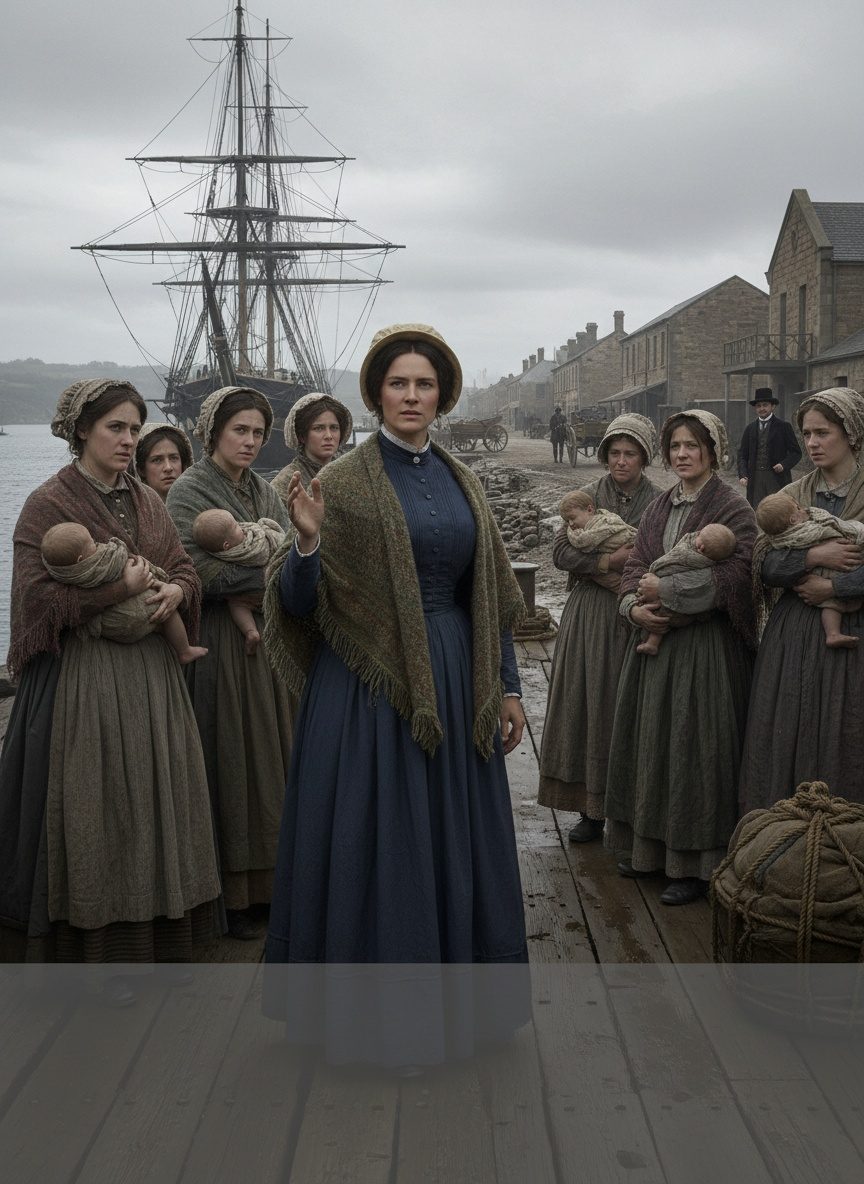
In 1841, the smell of salt and sweat choked the air at Sydney's bustling docks. Wooden ships creaked in the harbor, unloading their human cargo — a relentless tide of women. These were the hopeful immigrants, lured by the promise of prosperity in the untamed colony of New South Wales. Yet, as they stepped onto the worn planks of the wharf, many found themselves adrift in despair. No jobs. No shelter. No family waiting to welcome them. They were as stranded as shipwreck survivors on a desolate shore.
The colonial authorities, spearheaded by Governor George Gipps, chose inaction as waves of destitution crashed upon his city. With resources stretched thin, Gipps viewed these women not just as a logistical burden but as a challenge to his colonial governance. Left to fend for themselves, the women faced a dire winter of hunger and homelessness, their dreams of a new life at risk of extinguishment.
Caroline Chisholm: A Beacon Among the Waves
Amid this chaos emerged Caroline Chisholm, an Englishwoman driven less by duty and more by a fire of moral conviction. Unlike those who walked past the desperate scenes with eyes averted, Caroline paused. She saw young women sitting on their luggage, eyes hollow with fear and uncertainty. Despite having no formal authority, she made a vow — not to skirt the problems of her new homeland but to embrace them.
The steep, spartan hills of Sydney had never seemed more daunting than when Caroline opened her compact home to the homeless. Calling it a ‘home’ is generous — it was perhaps little more than a refuge, but from these scant beginnings, she orchestrated a rescue operation that was nothing short of miraculous. Over a thousand lives would be touched by her compassion and resolve. It was no small feat considering the oppressive limitations of the time.
Into the Bush: The Quest for Hope
Caroline was no administrator sitting comfortably behind a desk. Equipped with determination and a touch of stubbornness, she ventured into the bush. Her mission: find work in a territory known for its untamed dangers and sparse population. Armed only with her word, she forged paths into the unforgiving terrain surrounding Sydney, connecting landowners with hands eager to work.
Her journeys took her into rugged lands, yet she seemed undeterred by the treacherous conditions. Stories circulated of a lone woman traversing rough tracks, her clothes stained by the red dust of the outback, bargaining tirelessly in remote settler camps. Each new job placement was a beacon of possibility, pulling women away from destitution.
The Colonial Challenge: A Fight for Recognition
While her efforts garnered praise from the women whose dignity she restored, Caroline’s actions often drew a skeptical eye from institutionally bound officials. Governor Gipps, ensconced in the perceived stability of policy and protocol, offered no support. Yet, Caroline’s calls for systemic change were fervent and unyielding. She introduced the radical idea that the social fabric of a young colony relied equally on supporting its most vulnerable members.
In the face of indifference, Caroline dared to challenge the status quo, proposing comprehensive immigration policies focusing on family reunification and women’s welfare. Her ideas were a century ahead, sparking conversations that rippled through the corridors of power long after her work concluded.
The Quiet Legacy: A Nation Transformed
As the sun set on the dusty plains of New South Wales, it illuminated the burgeoning change Caroline ignited — a resplendence seen not in structures or monuments but in thriving communities. Those women she ushered to safety did more than survive; they shaped the colony with families, businesses, and revitalized resolve. Caroline realized something profound: the strength of a nation is measured by the compassion it shows to its weakest members.
Her story, often relegated to footnotes, carries an enduring lesson. It is a clarion call to remember the quieter, less heralded acts of heroism that prove transformative. In the annals of colonial history, Caroline Chisholm's defiance and empathy bridged gaps bureaucracies left wide open. Her bravery serves as a poignant reminder that radical empathy and determination can steer the course of history.