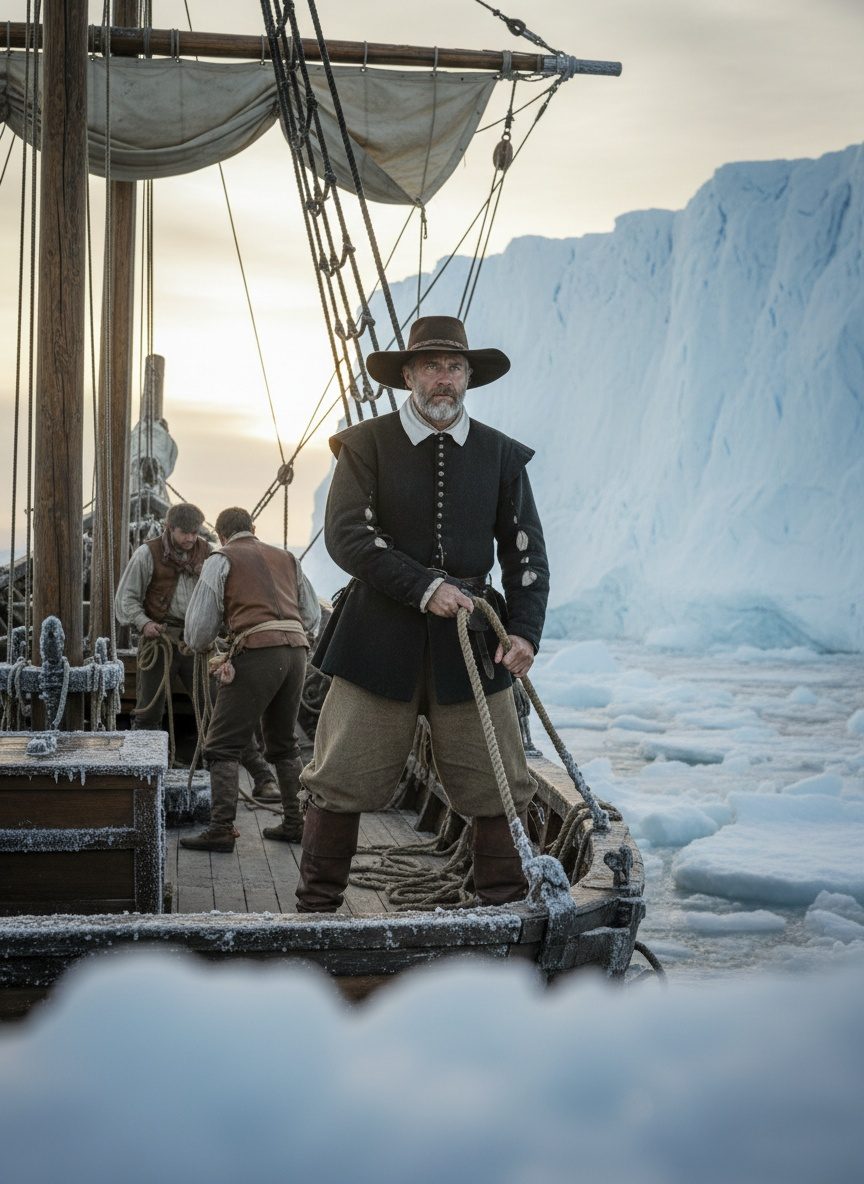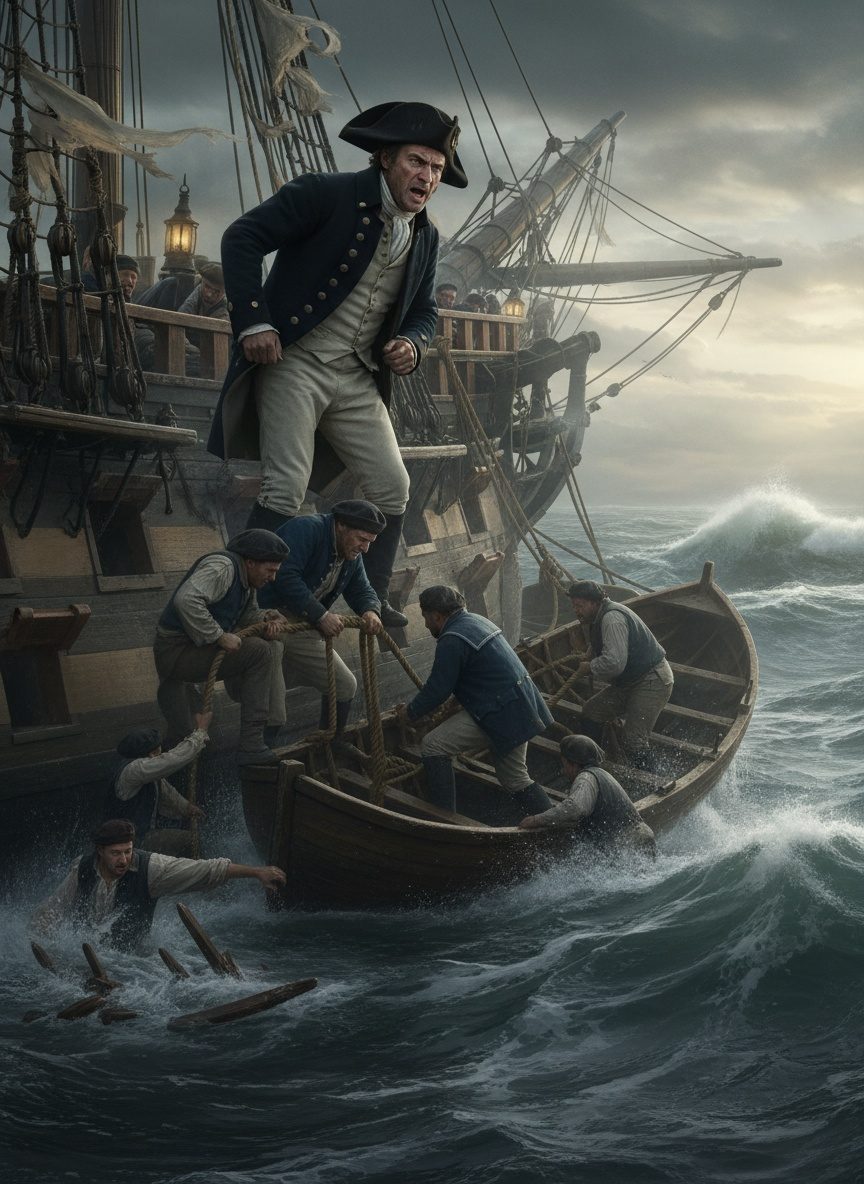
February 1797. The wind whipped fiercely over the dark, frigid waves of the Atlantic, each gust carrying the salty tang of survival across the deck of HMS Indefatigable. The British frigate was battered, its sails torn like the memories of the night’s fierce battle against the French frigate Droits de l'Homme. On the seething ocean off the Breton coast, Captain Edward Pellew stood resolute, silhouetted against the breaking dawn, his mind grappling with the precarious balance between duty and humanity.
Pellew had made a name for himself through sheer audacity and tactical brilliance, commands that seemed effortlessly to him as breathing. Renowned as a master of maritime warfare, his reputation was formidable. Yet, on that cold February night, he faced a different challenge, one that no naval manual could adequately address—issuing an order that would secure not just a strategic victory but something far rarer: a moral triumph.
The night had been a tempest of violence. Only hours before, the cacophony of cannon fire and the shrill cries of sailors filled the air. Pellew, commanding Indefatigable alongside HMS Amazon, had engaged the French vessel with relentless precision. As the battle wore on, the Droits de l'Homme, a ship carrying not just troops but the promise of European ambition, found itself overwhelmed. Dismasted and at the mercy of the treacherous waters, the French frigate surrendered to the ocean, her once-proud form collapsing into the abyss, drawing nearly 400 sailors and soldiers into the icy depths with her.
Amid the wreckage and the increasing roar of the sea, Pellew made a decision that would etch his name into the annals of history for an entirely different reason. He ordered every available boat to be lowered, his voice steady but urgent, the iron resolve behind his words leaving no room for objection. In those days of ferocious national enmity, such an order was as unorthodox as it was perilous. These men his crews were to rescue were the same men who had moments before been hell-bent on sending the British sailors to their graves.
The rescue operation was perilous, with currents deceiving and tides treacherous. On the wind-swept ocean, nature paid no heed to allegiance or battle line; it sought only to reclaim its own. The British sailors, sensing the magnitude of what was unfolding, worked with fervor that revealed not just a sense of duty but an undercurrent of respect—ironically, perhaps, for the adversaries they had so recently combated.
As the hours crept by, they pulled 278 bedraggled but breathing French sailors from the merciless Atlantic, teeth chattering and eyes wide with disbelief and gratitude. The scene, surreal under the dawning light, brought with it a hushed reverence, a poignant silence that spoke volumes. In saving their foes, Pellew and his men transcended the typical boundaries of wartime conduct, demonstrating a humanity that stood in staggering contrast to the brutality of the era.
Edward Pellew’s actions on that fateful February night dictated not just the course of a single engagement but also influenced the broader ethos surrounding naval warfare in the Napoleonic Era. In an age that too often celebrated the hubris and despotic promise of commanders, Pellew’s quiet decision to rescue rather than eliminate, to extend a hand rather than a blade, offered an extraordinary insight into the complexities of honor and humanity.
The Indefatigable's story did not end at the Breton coast. News of Pellew’s mercy spread quickly, crossing channels and infiltrating the salons and offices of those who waged war at a distance. His refusal to abandon the French sailors to their watery graves became a story that resonated far beyond military circles, challenging engrained perceptions and offering a glimmer of hope and dignity in an otherwise grim saga.
For the men aboard both defeated vessels, Pellew had laid bare a universal truth—one that the empire builders would have rarely acknowledged—the common bond of survival. It was an understanding without the need for words, a shared recognition that within the breast of every adversary beats the heart of a fellow man.
The echoes of that February dawn reverberate still, a vivid reminder espousing a legacy of honor and compassion during one of Europe's sail-strewn conflicts. Though the seas on which Pellew's command once cruised are silent now, the moral courage he exemplified continues to ripple through time, inspiring an enduring hope that even amid humanity's darkest hours, the light of empathy and gallantry can pierce through and illuminate a path forward.