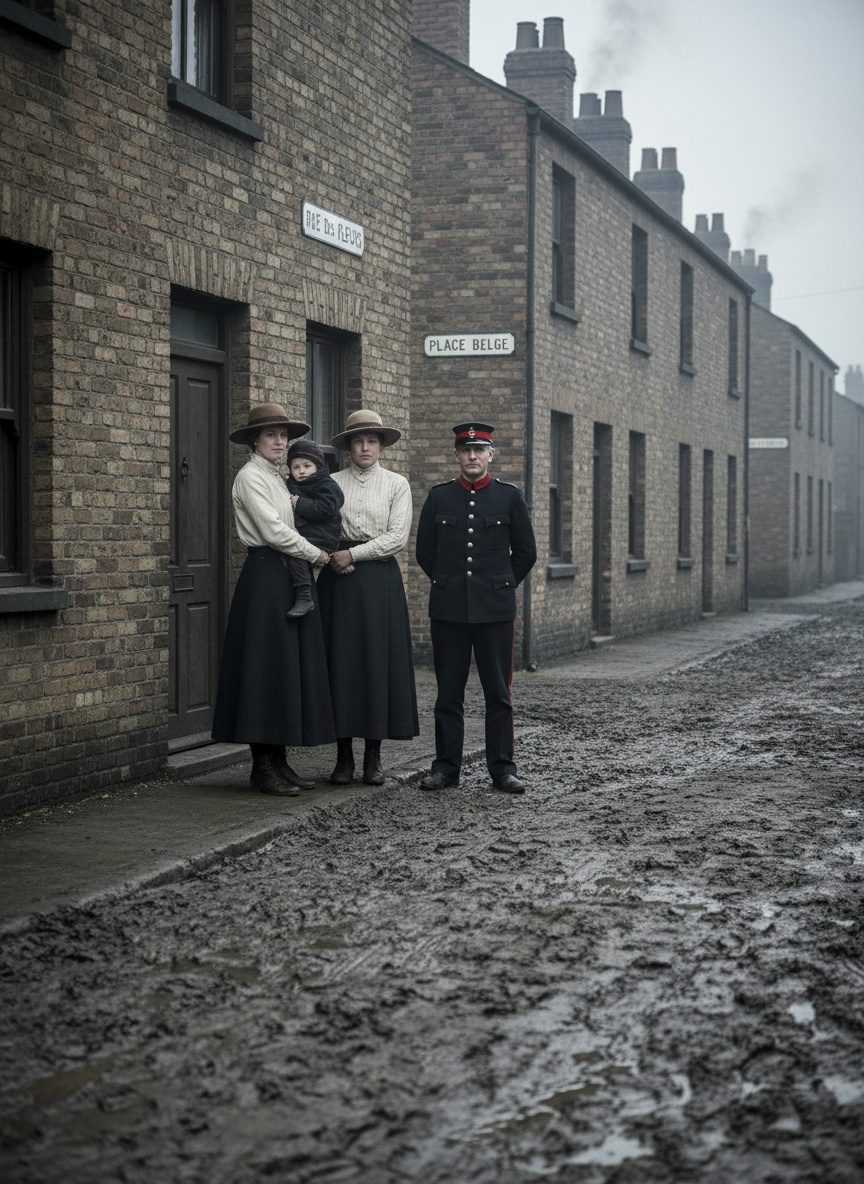
The wind swept across the fields of County Durham, rustling the leaves of the sturdy oaks that dotted the landscape. The English sky, shrouded in a layer of gray clouds, cast a silvery light over the newly built brick houses. In 1916, these otherwise unassuming constructions held profound significance, for they were the backdrop to an extraordinary chapter in World War I history. As German forces ravaged Belgium, a desperate exodus led a quarter of a million Belgian civilians to seek refuge across the English Channel. But rather than merely providing temporary havens, Britain went further, creating a town where Belgian flags fluttered freely while echoes of home resounded — governed by Belgian law, with Belgian streets and customs.
A Town Born from Necessity
As the German Army rolled into Belgium in August 1914, millions of Belgians were caught in the maelstrom of war. Among them were skilled munitions workers whose expertise was crucial not only to the survival of their homeland but also to the Allied war effort. While many Belgian refugees found temporary accommodation with British families, the demand for munitions during this brutal conflict meant something transformative for nearly 6,000 of them. In 1916, the British government embarked on an unparalleled mission, constructing a village in County Durham designed specifically for these Belgian workers and their families.
The aptly named "Elisabethville," after Queen Elisabeth of Belgium, rose from the English soil like a beacon of refuge. The town's architecture, consisting of prefabricated houses reminiscent of Belgian suburbs, provided a familiar sight to its inhabitants. Streets bore names like "Rue de Louvain" and "Avenue Albert," echoing their homeland. This was not an ordinary act of wartime hospitality; it was a meticulous replication of Belgian life transplanted into English land.
The Belgian Enclave
Elisabethville was not a mere refugium; it was an authentic Belgian enclave. Within the boundaries of this peculiar setup, Belgian laws applied. Justice was administered by Belgian officials, and the community maintained its own Belgian police force, recruited from former Belgian gendarmes who had also fled their besieged country. The streets and homes echoed with the soft cadences of Flemish and French, a comforting reminder of home even amid the surrounding English countryside.
This unique autonomy was crucial for the inhabitants' morale. Shielded from direct wartime destruction but acutely aware of its proximity, the residents of Elisabethville continued to contribute to the war effort. They labored in nearby munitions factories, their skilled hands indispensable to Britain’s military production, ensuring that the war machines did not go silent. This sense of purpose, paired with the familiar governing structures, created a semblance of normalcy in exceptional times.
Life Under the Belgian Sun — in Britain
Despite the dreadful circumstances that led to its creation, life in Elisabethville flourished. The town had its own school, where Belgian teachers educated the children in their native tongue, maintaining their cultural roots. Shops sprang up, stocked with Belgian goods imported freshly across the Channel, safeguarding culinary tastes from home. Belgian festivals and religious practices continued unabated, each event serving as a defiant assertion of identity against the tide of war.
The camaraderie within the community was palpable. Gatherings in local assembly halls were regular, their fervor heightened by the shared ordeal and common hope of an eventual return home. The residents cultivated gardens in the rich English soil, intertwining native flora with Belgian varieties, creating peaceful oases amid the strife of global conflict.
This microcosm was not without its challenges, however. Interactions with the locals brought about cultural exchanges as well as occasional misunderstandings. Yet, remarkably, the British hosts largely embraced Elisabethville’s residents, with many locals employed in the town or participating in its vibrant cultural life. Such understanding and cooperation underscored the unity of purpose that transcended national boundaries in this global confrontation.
A Legacy of Refuge and Resilience
As the war drew to a close in November 1918, the bonds of this improvised Belgian community began to unwind. Most workers returned to a war-ravaged Belgium to aid with reconstruction, carrying with them tales of their peculiar sanctuary. Elisabethville slowly dissolved into memory, its buildings repurposed, its cultural imprint fading like footprints in the sand.
The story of Elisabethville is a testament to human ingenuity and solidarity. It stands as a quiet yet profound reminder that even in the darkest times of human history, nations can forge unexpected alliances and acts of kindness. The endurance of its inhabitants through hardship, sustained by a strong sense of identity and community, offers an enduring lesson about the power of collective resolve. This legacy lingers, though little remains of Elisabethville today. It is woven into the lifeblood of refugees everywhere, a reminder that home can be reimagined, even in foreign lands, and that resilience can flourish under any sky.