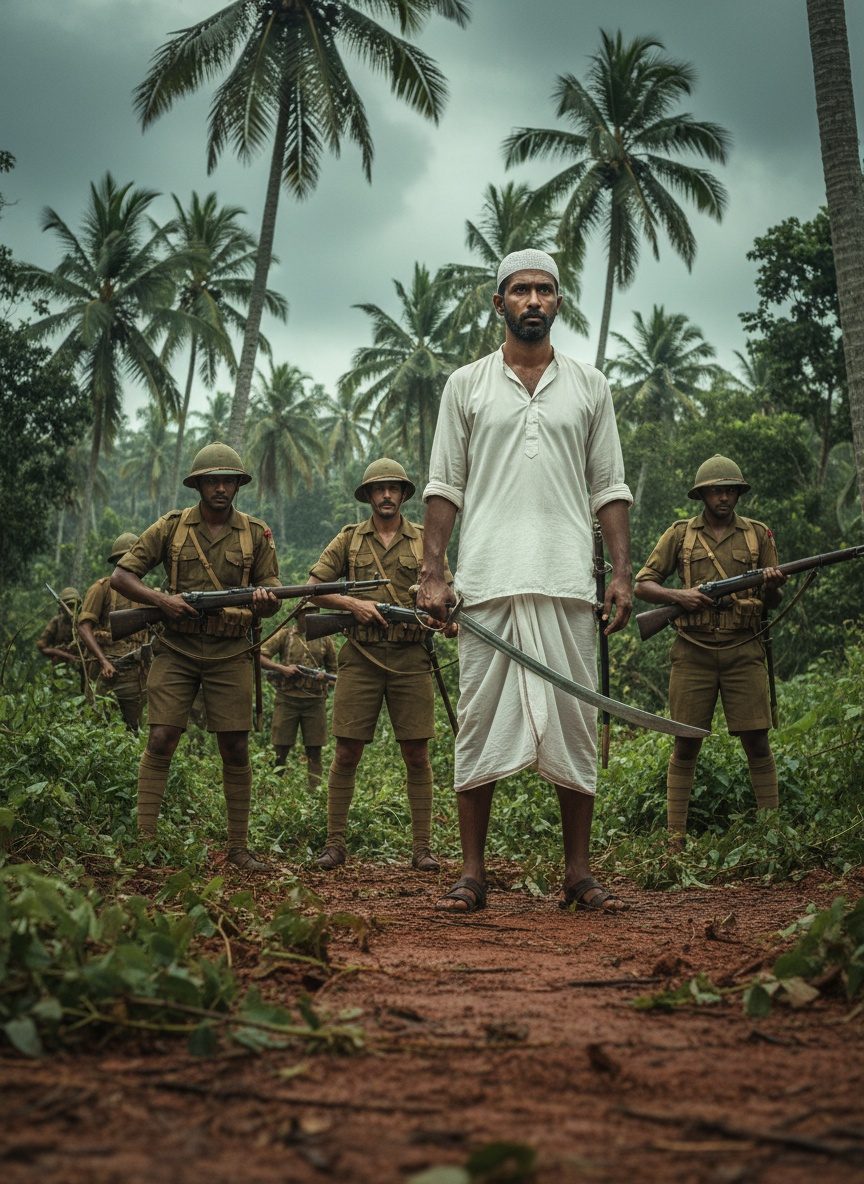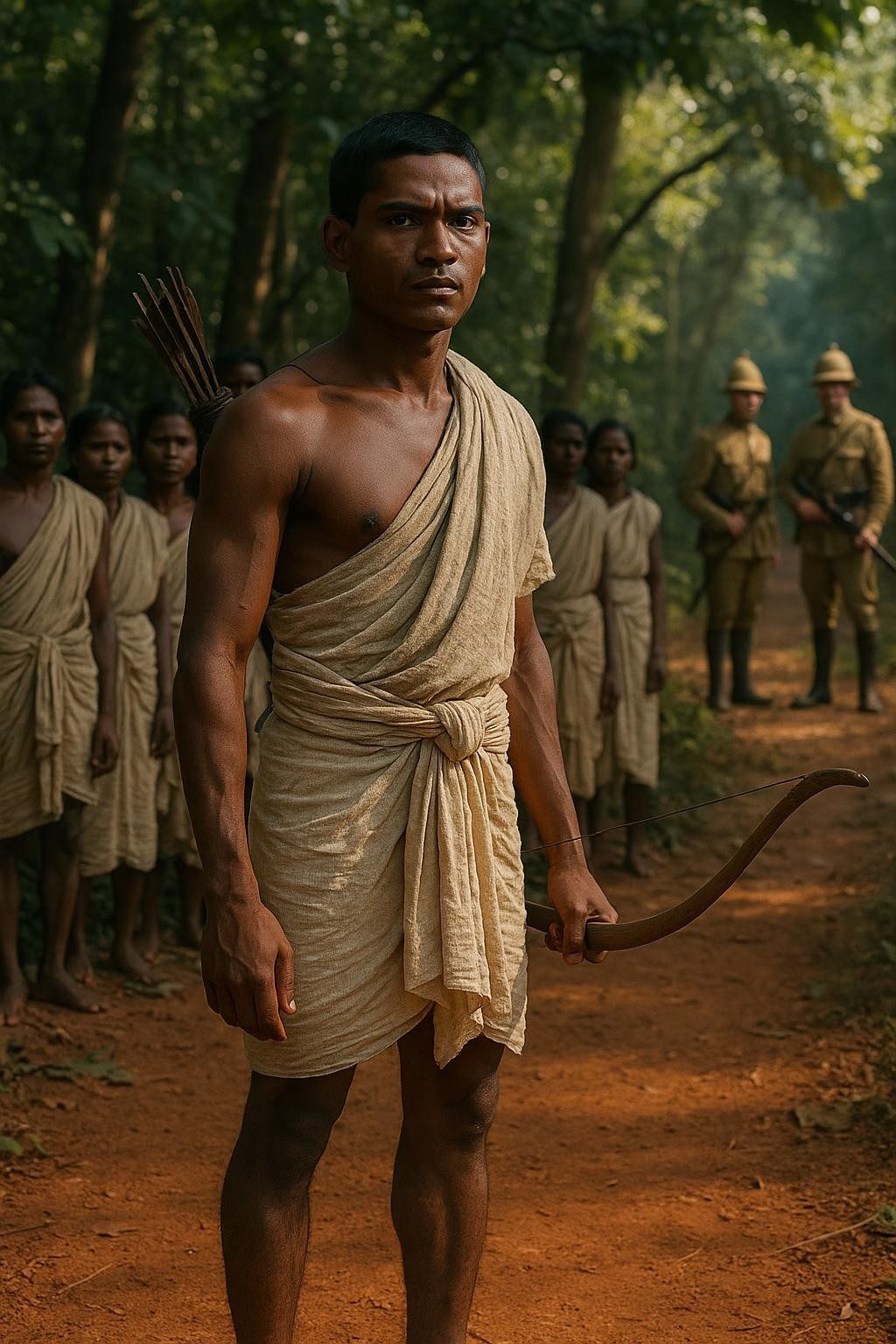
In the march of the British Empire, some names are emblazoned in the annals of history; others are whispered by the winds of forgotten forests. Birsa Munda belongs to the latter.
The Boy From Chota Nagpur
The dense forests of Chota Nagpur, rugged and teeming with life, are not the usual setting for the birth of legends. Hidden within them, however, was a young man named Birsa Munda. A member of the Munda tribe, his early life offered little to suggest the path he was destined to walk—a path leading directly into the jaws of the British Raj. Born in the latter half of the 19th century, at a time when disenchantment pulsed through Indian tribal lands, Birsa absorbed the whispers of his ancestors. His people had suffered under the yoke of exploitation, their sacred lands and tradition-rich existence trampled beneath the boots of colonial rule and oppressive landlords.
Birsa’s family, like many others, struggled for basic survival. The British system of dikus, or outsiders, placed crushing tax burdens on the Adivasis, forcing them to work on lands that had been theirs for generations. This systemic exploitation galvanized a young Birsa, igniting within him a fervent desire for change. The son of Chota Nagpur began to speak, and his words resonated like the ringing of an ancient bell. “We owe the empire nothing,” he proclaimed, a stance that defied the harsh winds of colonial authority.
In 1895, Birsa's teachings began to evolve from mere sermons to a major tribal uprising, known as the Ulgulan, or the "Great Tumult." Birsa called upon the Munda people to recognize their own sovereignty and to cease payments to the landlords and the British. Envisioning a world where his people could live with dignity and preserve their sacred connection to the land, he quickly became a figure of immense influence. Followers called him "Dharti Abba," or "Father of the Earth," and believed he possessed divine powers. As Birsa’s influence grew, he stood at the heart of a swelling storm—a storm armed only with bows and arrows against the rifles of the British army.
Resistance Against an Empire
The late 19th and early 20th centuries were a time of expansion and consolidation for the British Empire, whose mechanisms of control extended into every corner of its global territories. To the colonizers, Birsa Munda was a disruption, an anomaly that needed to be eradicated. Unlike many revolts that had been swiftly quelled, Birsa’s movement was deeply rooted in spiritual beliefs and a collective cultural identity, giving it a resilience the British underestimated.
The core of Birsa's resistance lay not in the might of arms but in an unyielding faith in his people’s traditions and rights. As tales of his resistance and charisma spread, the British dispatched forces to suppress the uprising. These forces were skilled and well-equipped, yet found themselves facing an unconventional enemy. The Munda warriors, under Birsa’s inspiration, moved with the agility and cunning that only the deepest familiarity with the land could afford, engaging in guerrilla tactics that frustrated their opponents.
Yet, for all their spirit, bows fared poorly against bullets. Each skirmish with the British forces was a brutal reminder of the technological gap. Still, the Mundas’ fight was not in vain. Birsa’s vision had planted seeds of awareness and unity that could not be easily rooted out by ordinance. His exhortation to reject the oppressive systems, to give up alcohol (often used by the British to pacify the tribes), and to embrace a revival of cultural practices, created an indelible legacy. He was a beacon, and his movement a testament to the resistance not just against imperial control but against cultural erasure.
The Final Stand and the Unfading Legacy
Despite the ferocity of the Munda resistance, the British closed in on Birsa. The young leader was captured in 1900, and the harsh clanking of the Ranchi jail gates marked the end of his direct involvement in the struggle. At just twenty-five years old, Birsa Munda’s life was extinguished under mysterious circumstances in the confines of the colonial prison. Yet, where the British Empire saw the quelling of another rebellion, the Mundas saw a martyrdom that only stoked the fires of liberation stronger.
Birsa’s death did little to quench the spirit he had infused in his people. His teachings continued to ripple through the communities of Chota Nagpur, whispering through the forests he once traversed. Generations would carry forth his legacy, even if mostly through oral traditions, preserving the stories of his defiance as acts of sacred remembrance. The Indian government would eventually recognize Birsa's contributions long after independence had been won, with countless places, institutions, and even a university being named in his honor.
The story of Birsa Munda remains vital in its lesson, reminding us of the enduring power of cultural identity and resistance against domination. It illustrates that, even in the face of overwhelming odds, the spirit of a people, guided by a compelling vision, can leave an indelible mark far outlasting their oppressor's rule. Far from the firing mechanisms of guns, Birsa Munda's arrows found their mark in the hearts of his people, echoing the belief that something as elemental as a shared history can be more resilient than an empire's might. His tale, untold in many textbooks, stands as a symbol of defiance and resilience that resounds into the present.