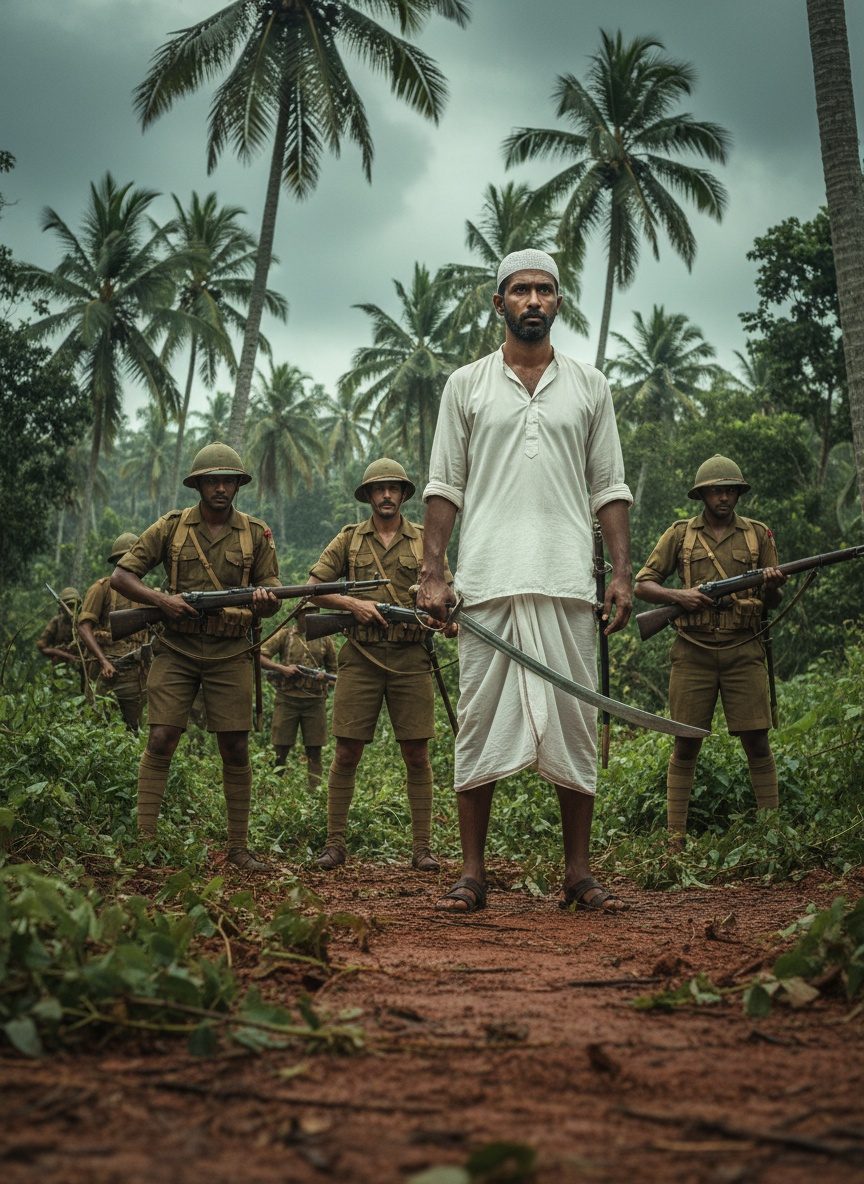
Fort William seemed impenetrable. It fell in a matter of days.
In June 1756, the air in Calcutta was thick and oppressive, both with the humidity of the approaching monsoon and the mounting tensions between the local Nawab and the British encroachers. Young, impetuous, and passionate, Nawab Siraj ud-Daulah was not one to take lightly the increasing meddling of the East India Company in his realm. His ascension to power at a tender age was met with skepticism by many, but Siraj was determined to assert his authority. The swagger of the British infuriated him, the encroachments on his sovereignty grating against the legacy he'd inherited. His patience stretched thin, he watched as the East India Company's arrogance ballooned with each fort wall they raised, each treaty they bent to their convenience.
The breaking point arrived with the Company's decision to fortify Fort William without his approval. Siraj ud-Daulah saw this not just as an insult, but a blatant declaration of defiance against his rulership. In his eyes, the British were not mere traders and allies, but cunning adversaries who conspired to whittle away at the very ground beneath his authority. Despite the young Nawab’s numerous protests, the East India Company's envoys were dismissive, perhaps underestimating the ferocity that simmered behind Siraj's youthful visage.
In an act deeply symbolic of the contempt he harbored, Siraj ut-Daulah reportedly spat at a British envoy. This was not merely a physical gesture; it was a manifestation of a festering grievance, an insult meant for an empire that had begun to see its interests in India solidify into something akin to ownership. To the Nawab, his was a land growing weary of foreign presence and exploitation, the rich soil of Bengal becoming the stage for what he increasingly saw as a struggle for its soul.
The takeover of Fort William was sudden and brutal. Siraj’s forces stormed Calcutta with purpose and audacity. British soldiers and officials, unprepared for the vigor of the Nawab's assault, found themselves quickly overwhelmed. While some were able to flee to the relative safety of ships moored along the Hooghly River, others were not so lucky. For these unfortunates, their future turned bleaker than any monsoon cloud smothering the afternoon sky.
What followed next would become infamously known as the incident of the Black Hole of Calcutta. Packed into a small, stuffy room designed to hold no more than a handful of prisoners, over a hundred British captives were left to suffer the stifling heat of a Bengal night. The dimensions of the room—cruelly confined to the size of a stable—offered no respite. As the night dragged on, cries for water echoed within walls that gave nothing back. The vitality of life seemed to evaporate from the air, and by morning, scores lay dead.
This monstrous event would soon ripple across continents, a chilling herald to a world about to witness an imperial counterstrike. The death of so many, trapped like caged animals in those conditions, sent shockwaves of outrage through the corridors of British power. The Empire’s pulse quickened, its resolve hardening into rage-fueled determination. Here was the spark that would set in motion a chain of events dismantling Siraj’s grip and ushering in a new chapter of colonial dominance in India.
It is easy to depict Siraj ud-Daulah as a reckless and brutal ruler, scorned for his perceived actions, but to do so is to oversimplify a narrative deeply rooted in resistance. The British sought to paint him as a tyrant, a caricature of Eastern despots to justify their own expanding ambitions. However, to Bengal's Nawab, it was a desperate gesture to push back against imperial overreach, to safeguard the sovereignty of a land steeped in history and one that nurtured the affluence which both parties coveted.
The fall of Fort William was a catalyst, not a climax, thrusting the players into positions that would dramatically reshape not just the map but the ethos of empire-building. The British response came swiftly, military might personified by the likes of Robert Clive, who would later participate in turning the tide during the Battle of Plassey. That battle decisively tilted power and control in favor of the East India Company, ushering in a regime that would weave British industry, politics, and culture into the Indian tapestry for generations.
In this encounter of equal parts arrogance and boldness, there lay a grim irony. The Nawab’s move was bold enough to compel an empire to action, yet too brash to foresee the long shadow it would cast. In the annals of history, the Black Hole of Calcutta became more than an incident of despair; it was a turning point, a compressed tragedy of imperial ambition versus sovereign dignity, a prelude to complete domination wrapped in the guise of retribution.
The legend of Siraj ud-Daulah and the 1756 takeover serves not merely as a tale of defiance but as a reflection on the complex interplay between imperial forces and native rulers, one that resonates with echoes of similar struggles across the globe. This forgotten chapter not only recalls a fierce young Nawab’s fight against encroachment but also forces us to confront the often brutal calculus of empire that was laid bare in the stifling heat of a Bengalian night.