He was not a soldier but a journalist. Bal Gangadhar Tilak’s pen wielded more power than many swords.
The Lion in Chains
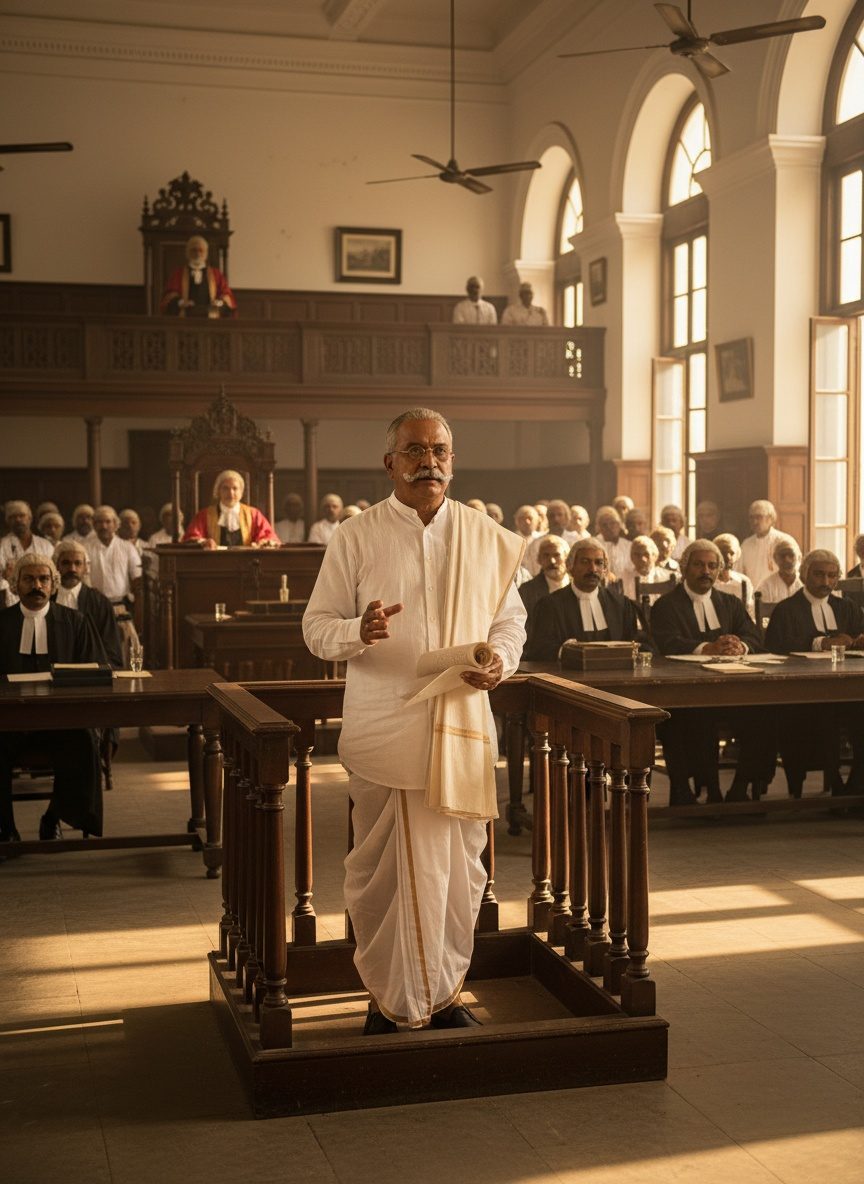
In the sweltering heat of a Bombay courtroom in 1908, the air itself seemed to crackle with tension. Bal Gangadhar Tilak, an undeniable force of the Indian independence movement, stood in the dock charged with sedition. His crime? Giving voice, unapologetically and with fiery determination, to the growing murmur for self-rule that permeated the streets of India. British colonial authorities, keen to silence this stirring, zeroed in on his writings, accusing them of inciting rebellion. But what they couldn’t anticipate was that their heavy-handed action would instead amplify his message to echo even louder. The trial itself was a stage, and Tilak, ever the masterful orator, turned this stage into a pulpit, captivating his listeners, breaking down not as the British might have hoped, but rising as a symbol of resistance.
Tilak, often called "the father of the Indian unrest," was acutely aware of the stakes. He wasn't just defending himself; he was defending the very idea that India deserved its freedom. His speech was calculated, his words chosen with masterful precision — each sentence a dagger aimed at the heart of colonial oppression. In the brittle dry air of the courtroom, he challenged the moral and legal authority of the Empire over his homeland. The British may have sought to humble Tilak but found themselves faced with the stoic resolve of a man convinced that his cause was just, even if it led him to a grim fate. And indeed, it did — to six long years in a Burmese jail. Yet, imprisoned, he remained unbroken. His writings, smuggled and distributed, continued to ignite the fires of independence far beyond those prison walls.
Turning Words into Weapons
For Tilak, words were both an anchor and a weapon. To understand why the colonial government viewed him as such a formidable threat, one must peek into the inflammatory power of his journalism. As editor of the newspapers Kesari and The Mahratta, Tilak wielded the press not just to report news, but to rouse a nation from its slumber. He penned editorials that seethed with a righteous anger and called for Swaraj — self-rule. These words resonated with millions who felt the weight of colonial subjugation in their daily lives, inspiring them to dream of a life in which Indian voices would chart their own destinies.
The reach of Tilak’s words extended far beyond the educated elite; they pierced into the soul of ordinary citizens. His ability to communicate complex political ideas in the vernacular turned the abstract notion of independence into a tangible goal. The British recognized the threat posed by a populace empowered by such notions and reacted with their most effective countermeasure: the sedition laws. However, by dragging Tilak into court, they unwittingly guaranteed that his ideas would gain further legitimacy and attention. His trial, meant to squelch dissent, instead fanned the flames of resistance, giving rise to greater support for the independence movement. Across India, people stood with Tilak, developing a unified voice against the might of the Raj.
A Sentence That Sparked a Revolution
As the colonial judges pronounced the six-year prison sentence, the courtroom didn’t quiet the roar of rebellion — it amplified it. Britain had sentenced him to silence, but Tilak’s words had already spun into a web that ensnared the collective consciousness of India. Many factors contributed to Tilak's enduring appeal and influence, but it was his unyielding spirit in the face of relentless adversity that struck a chord with Indians nationwide. In fact, his imprisonment only served as a rallying cry, transforming him into a martyr for the cause, someone willing to sacrifice his freedom for the promise of a free India.
His time in the Burmese cell did anything but diminish his resolve. Far from quieting him, it became an incubation period for his ideas, a testament to his indomitable spirit and intellectual vigor. Upon his release, the storm he had begun to brew in 1908 had only grown more formidable. India was now a land of stirring ambitions, and Tilak’s dream of Swaraj found thousands of new messengers. His legacy was no longer just bound to pages of newsprint but was personified in the hearts of all who yearned for freedom.
The trial of Bal Gangadhar Tilak in 1908 remains a pivotal moment in the tapestry of Indian resistance against colonial rule. It's a reminder that when a cause is just, the truth can swell against even the most imposing of empires. Tilak not only defied the British from the dock but used his imprisonment to seed a revolution. In the end, the man they sought to bind with chains only found flights of freedom, and his indomitable spirit soared well beyond the limitations of any prison walls.