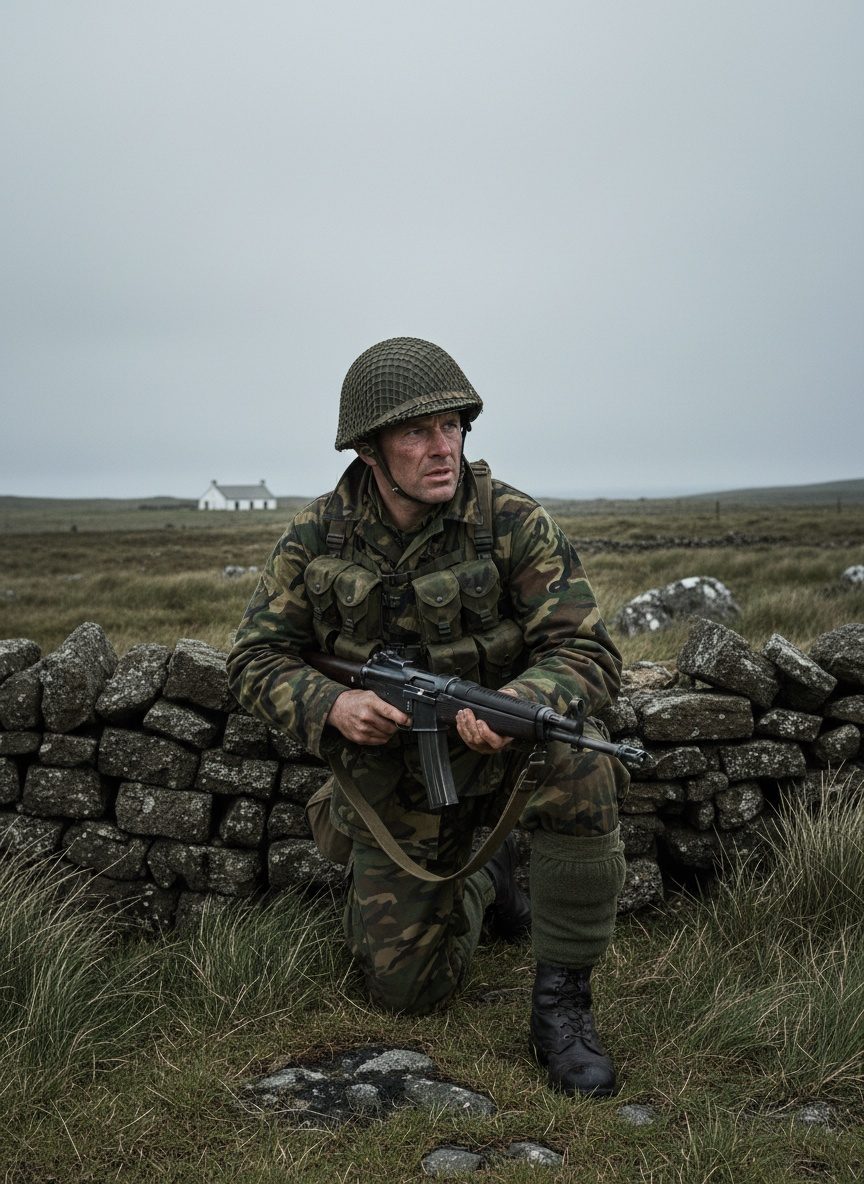
The South Atlantic waters were choppy that April day, the wind carving relentless grooves into the greying sea, as if nature herself was uneasy about what approached. The distant horizon blurred with the dusky sky, a singular theater stage before the storm. Yet, unbeknownst to the world at that moment, this remote part of the world simmered as the latest flashpoint in a geopolitical conflict whose roots stretched back over a century. The stakes were no less than a crisis between two sovereign states: the Falkland Islands, bearing loyalty to Britain, and the military junta of Argentina, desperately grasping for legitimacy.
The Winds of War
On April 2, 1982, a day that would mark the unraveling threads of history, Argentina's military dictatorship invaded the Falkland Islands, a British Overseas Territory. The invaders called it a liberation, a righteous claim based on geographical proximity and historical assertions. Yet, the islanders, steeped in their heritage, knew it by another name: an invasion. For the locals, many of whose families had called the islands home for generations, their British identity was not a matter of colonial imposition but of choice — a choice that had been made clear in their overwhelming preference to remain tied to Britain.
As Argentine forces descended upon the islands, the winds of disquiet that had long rustled through Argentine society began to roar. The junta, desperate to rally nationalist fervor and shift attention away from domestic turmoil, found in the Falklands — Las Malvinas as they called them — the perfect distraction. But even as front-page headlines in Buenos Aires heralded victory and cries of jubilation filled the streets, beneath the surface lay the junta's dark paradox: a regime that so brazenly spoke of liberation ran concentration camps and led a horrific campaign of internal terror at home, responsible for the cumulative misery and forced disappearances of at least 30,000 Argentine citizens.
The Calculated Gambit
Understanding why the junta dared such an audacious act requires delving into the shadowy practices of military rule. The late 1970s and early 1980s in Argentina were years marked by the infamous Dirty War. Armed with ruthless determination, the junta launched adeptly tailored propaganda to galvanize public opinion and secure for themselves the cloak of patriotic legitimacy. The Falklands ploy, therefore, was concocted as both a foreign policy gamble and a domestic necessity.
On the ground, every eruption of jubilant national sentiment was tethered by the concrete realities of martial law. The junta's brutal repression was omnipresent. Behind closed doors, voices of dissent were muzzled, replaced by whispered fears and coded exchanges. Organized by the state itself, night raids were transacted not to liberate but to eliminate. As Argentina's military generals sent young conscripts nearly 800 kilometers across frigid waters on flimsy pretexts, the chilling echoes of torture chambers filled with the cries of the disappeared remained a somber undertone.
A World Reacts
The world watched in a precarious silence, while diplomatic channels buzzed with fervor. Britain, with iron-willed determination underlined by Prime Minister Margaret Thatcher's staunch resolve, declared military action to reclaim the islands. A colonial remnant, yes, but in this case a population wishing to remain British and a stark contrast to Argentina's narrative of an oppressed people yearning for liberation. The British task force — heroically dispatched and spearheaded by naval might — steamed ahead, marking the beginning of the swiftly escalating conflict now known as the Falklands War.
Internationally, Britain received overwhelming support in the United Nations, a rare consensus against aggression at the twilight of the Cold War. Meanwhile, Latin American nations exhibited a complex duality: pragmatically cautious of siding with the junta's motives while still sympathetic to anti-colonial sentiments. Hearing of impending international consequences did not stop the junta's pursuit. For the Argentine generals, this international show of defiance only reinforced their resolve — the Falklands had become more than an island, more than political capital; they symbolized mythological hope in a polity fallen hostage to its rulers' ambition.
The Uneven Echo of Legacy
The conflict reached its nadir by mid-June, just months after those stormy April winds first carried Argentine ambitions to the archipelago's shores. A swift British military victory punctuated the harsh realities of invasion with the irrevocable passage of Argentine forces into submission. Yet, the echoes of war travelled back to Buenos Aires with hurried solemnity. Far from exculpating the junta, the defeat hastened their downfall, accountability for their crimes belatedly pursued by a people once blinded by their spectacle of liberation.
Today, the Falkland Islands stand as a testimony to enduring sovereignty, their community's indelible identity affiliated with Britain, resilient against the ill-conceived invasion forty years prior. Meanwhile, a visit to Buenos Aires stirs the shadows of memory, where the voices of the desaparecidos still echo in the white scarves of mourning mothers protesting in Plaza de Mayo. The self-imposed collapse of Argentina's junta implores us to reconsider the costs of authoritarian ambition masked as liberation.
As history reveals, the manipulating allure of nationalistic fervor can never fully obscure the truths of tyranny, nor liberate a society from the weights of injustice. In looking back, both the seismic contests over the Falklands and the silent cries of Argentine suffering remain a poignant reminder of the oft-unspoken legends existing on the fringes of official history, eternally urging us to listen beyond the grand narratives.