He was twenty years old. He had already ruled two kingdoms and planned a crusade against a colossal empire.
The Lion-Hearted King
Władysław III of Poland, known to history as Władysław Warneńczyk, was an extraordinary figure hidden in the mists of medieval Europe. Born into the royal house in 1424, from an early age, he bore the weight of grand titles and vast responsibilities. Despite his youth, Władysław became the king of both Poland and Hungary—a political union intended to secure the borders against the creeping influence of the Ottoman Empire. Boys as young as Władysław served as pages or squires, learning the chivalric life. Władysław was not only leading nations but preparing to confront one of the most formidable powers of the medieval world.
In an age dominated by hardened warriors and politicians, he was unafraid to take up the mantle of a crusader-king. The rising tension between Christian Europe and the Muslim Ottoman Empire set the stage for what became known as the Crusade of Varna. The pope, the princes, and common folk alike looked to Władysław as a beacon of hope. Yet, the weight of such expectations often brings turbulent storms, and for Władysław, the storm was on the horizon.
The Betrayal at Varna
On a day that would change history, the young king stood ready at the plains of Varna in 1444. What was expected to be a decisive battle turned into a crucible forged by treachery. The crusade was a desperate gamble orchestrated by a coalition of European powers and blessed by Pope Eugenius IV, who saw it as a chance to stem the Ottoman tide once and for all. However, unbeknownst to the assembled army, vital allies had already negotiated a shocking peace treaty with Sultan Murad II. This crucial act of duplicity left Władysław and his forces isolated against a more formidable enemy.
Outnumbered, facing an opponent superior in numbers and resources, the young king was advised to hold the line, to wait for reinforcements that were never arriving. The air was thick with fear and uncertainty, yet Władysław chose defiance. He spurred his horse, hurtling toward the heart of the Ottoman army. It was a decision not born of carelessness but perhaps the furious energy of youth—a last stand for a greater cause. It is said that on that day, Władysław carried with him not only the hopes of his men but the weighty expectations of an entire religious world thirsting for a champion.
The Charge and the Fall
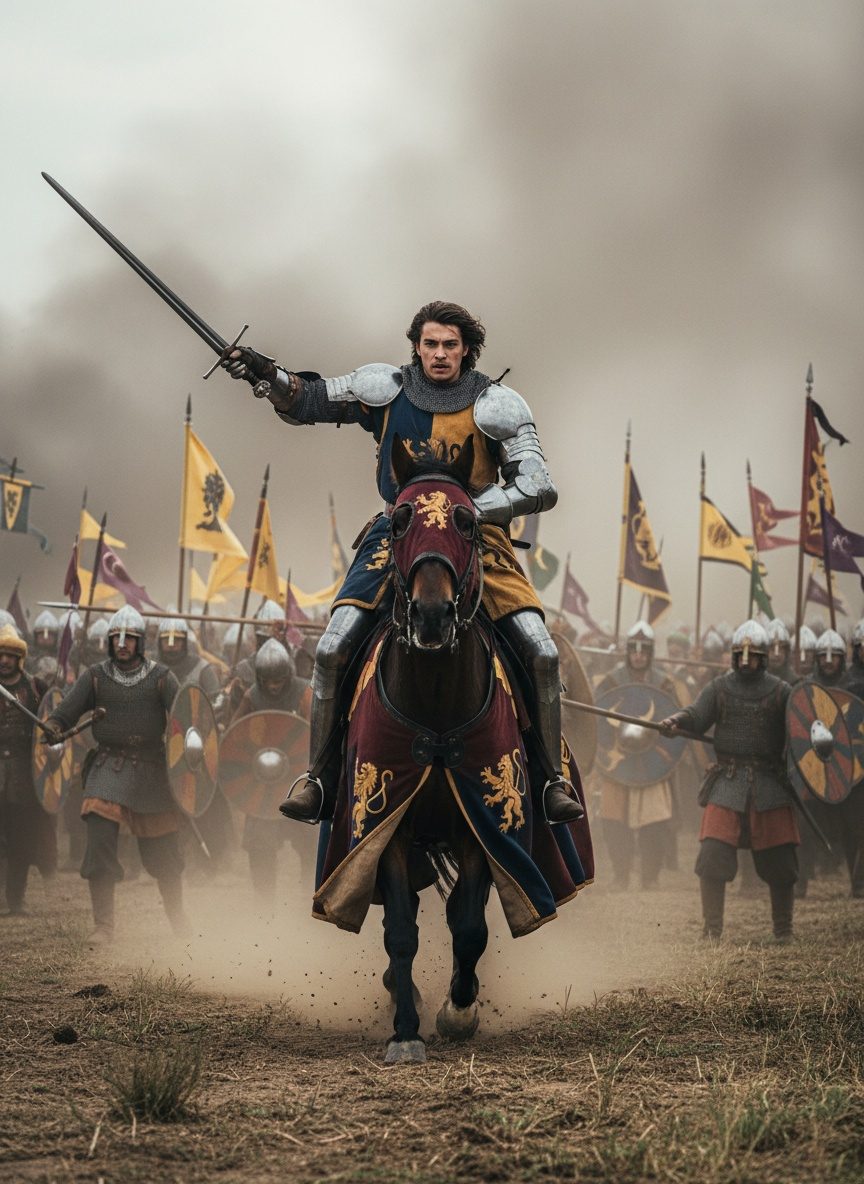
With a dust-choked sky blocking out the sun, Władysław charged into the thundering wave of ten thousand Ottoman soldiers. His courage was palpable—a young king poised at the forefront, clad in the ornate armor that symbolized his sovereignty. As he wielded his sword, the clamor of battle resounded: the clash of steel, the cries of warriors, the visceral symphony of clashing civilizations. The charge was a magnificent display of valor, but in the turmoil of medieval warfare, bravery alone was not always enough.
The king's initial momentum carried him deep into the enemy’s ranks, a whirlwind amid the melee. But the numerical superiority quickly overwhelmed him, encircling the young king and sealing his fate. Władysław disappeared into the churning chaos, never to be seen again. His head, reportedly severed and displayed on a pike, was paraded before the Christian army—a brutal and haunting symbol of defeat. The Pope is said to have wept at the news, lamenting the loss of Christendom's shining star.
The Echoes of a Lost Crusader
The ill-fated battle at Varna left a deep scar on the collective memory of medieval Europe. It marked the decline of unified crusader efforts against the Ottomans, who would continue to expand their reach across Eastern Europe. The tragedy of a young king meeting an untimely end became enshrined in legend, a poignant reminder of the fragility of human endeavors in the face of overwhelming odds. For Poland and Hungary, the loss weighed heavily as they struggled politically and militarily without their courageous leader.
Yet, the story of Władysław Warneńczyk persists beyond the shadow of his defeat. It embodies the themes of youthful ambition, the tragic hero's narrative, and the eternal clash of cultures. In the annals of history, it serves as a testament to the complexities of leadership and the monumental heft of decisions made under pressure. In the fields of Varna, a young king charged into ten thousand men, holding the line even as the ground shifted beneath him. His legacy teaches us the enduring impact of human courage and the sometimes-unbearable weight of leadership in turbulent times. Even as the dust of centuries settles, Władysław Warneńczyk's spirit resonates, a youthful torch extinguished too soon yet blazing eternally in the corridors of time.