One November morning in 1444, on the plains of Varna near the Black Sea, a young king met his fate. Among the mist and chaos of battle, the last sight of Władysław III was his golden curls gleaming in the sun as he charged alone into the heart of the Ottoman line. His body was never found, his fate shrouded in mystery. For more than a decade, an entire kingdom refused to believe their king was gone for good. This is the story of the boy king who vanished from history and the legend he left behind.
The Boy King of Three Nations
In 1434, Władysław III, at just ten years old, ascended the throne as King of Poland. His ascent marked the beginning of a dual monarchy ruling Poland and Lithuania. Barely six years later, the ambitious boy was crowned King of Hungary too, uniting three nations under his youthful leadership. Despite his youth, Władysław III was determined to prove himself a worthy ruler.
The Ottoman Empire under Sultan Murad II was expanding aggressively, a threat to Christian Europe that Władysław felt compelled to counter. Supported by the papacy, he led a Crusade to push back the Muslim forces. By 1444, he was head of an alliance preparing to confront the Ottomans at Varna, a decision that would have irreversible consequences.
The Fatal Charge at Varna
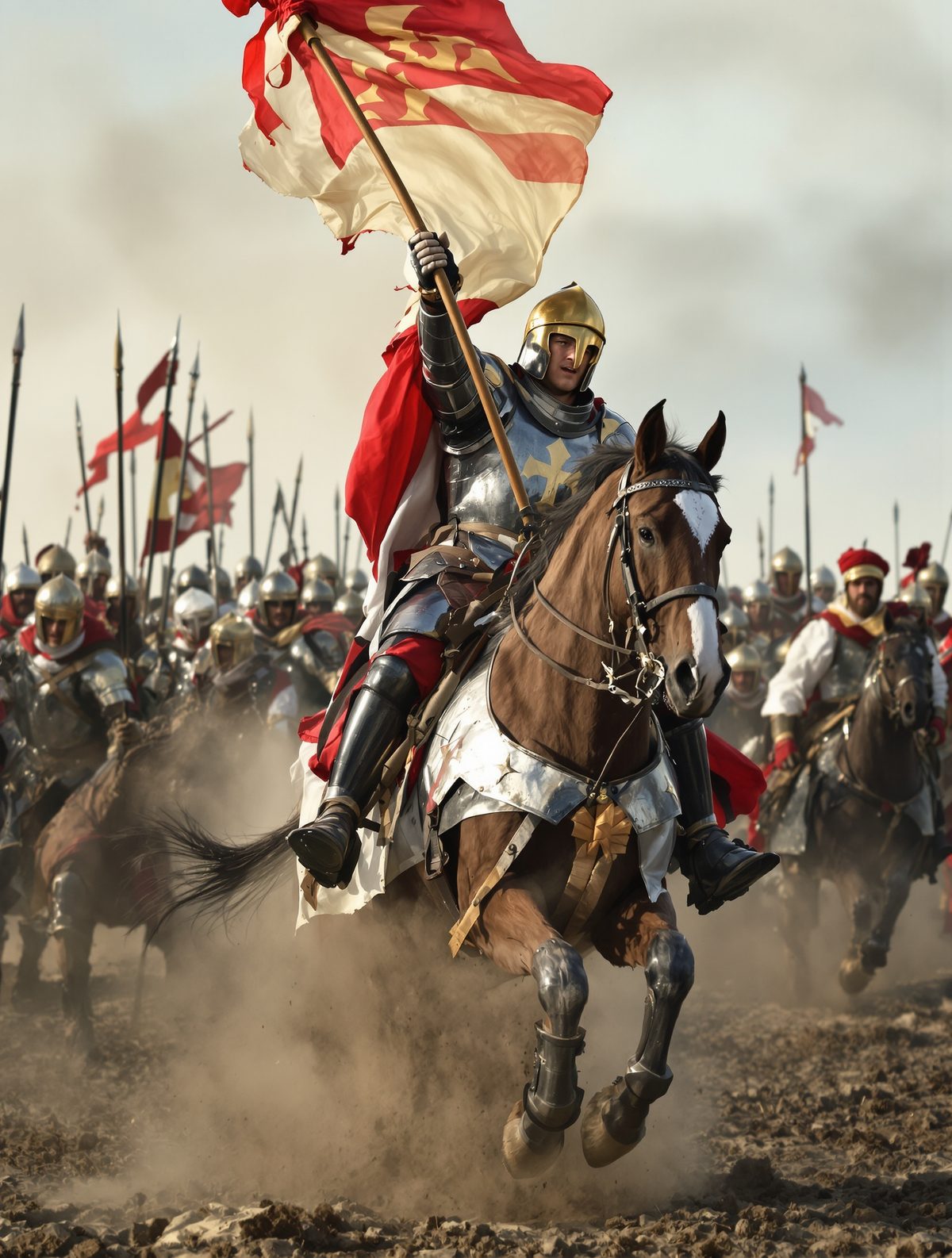
The Battle of Varna, fought on November 10, 1444, was meant to stop the Ottoman advance. With approximately 20,000 men under his command, Władysław faced a formidable Ottoman force almost twice as large. Legend has it that the teenage king, brimming with valor or perhaps impetuosity, disregarded the warnings of seasoned generals like John Hunyadi.
As the battle raged, Władysław reportedly saw an opportunity or perhaps merely the illusion of one. He led a daring cavalry charge aimed directly at Sultan Murad II's position. But rather than slicing through the Turkish ranks, his unit was quickly surrounded. The young king was separated from his men and never seen again. In the aftermath, the Ottomans reportedly displayed the head of a fair-haired youth on a pike, claiming it was Władysław's.
A Kingdom in Denial
Despite the grim trophy and the collapse of their army, the people of Poland refused to accept that their king was dead. Rumors and uncertainty fed a collective hope and denial. The lack of a body cast just enough doubt to inspire stories of escape and survival.
For twelve years, Poland avoided crowning a new king. Various sightings of Władysław across Europe kept the fervor alive. Some saw him as a wandering knight, others claimed he had joined a monastic order. This unresolved fate became folklore, and the vision of their dashing young king lingered in the hearts of the Polish people.
The Shadow of the Past
Władysław's disappearance paralyzed Polish politics. This stasis cemented Lithuania's dominance in the union as Polish leadership was caught in a ghost chase. It wasn't until 1456 that Casimir IV, Władysław's younger brother, accepted the throne, finally breaking the spell of the vanished king.
Ironically, the charisma of the young king in life only grew in his mysterious absence. His story became embedded in Polish culture, a symbol of their resilience and refusal to submit to the threat of the East. This period of waiting speaks to a medieval society deeply rooted in legends and the human need to cling to hope, even against all reason.
The King Who Wouldn't Die
Why did Poland hold onto Władysław III's memory with such tenacity? In part, it reflects the medieval mindset, blending reality with legend. It’s a tale akin to Arthurian myth—a noble ruler off on a quest, destined to return.
But more than myth, it was perhaps Władysław's bravery at Varna that inspired a nobler image. Even in failure, he stood as a symbol of defiance against overwhelming odds. His story embodied the spirit of a people who dreamed of victory and refused to yield to despair.
Today, the legend of Władysław III serves as a reminder of the very human struggle against letting go. It illustrates the yearning for lost leaders and heroes, and the way societies seek closure or build legacies on uncertain truths. In exploring the mysterious fate of a young king lost to history, we gain insight into the resilience of the human spirit and the narratives that bind and move us across centuries.