Picture this: a dusty road bustling with fervor as a mighty entourage of soldiers and courtiers winds its way toward a humble settlement in Corinth. At its head rides Alexander the Great, the triumphant young king who has carved a vast empire from the known world. His conquests are legendary; his greatness all but assured. Today, he seeks an audience—not with rulers or generals, but with a man whose reputation is built on rejection of material wealth: Diogenes of Sinope.
The Rise of a Conqueror
In 336 BC, Alexander ascended to the throne of the Macedonian Empire after the murder of his father, King Philip II. By the age of 20, he had established himself not just as a ruler but as a strategic genius. In a series of lightning-fast campaigns, Alexander subdued rebellious Greek city-states, united them under his rule, and turned his gaze eastward toward the Persian Empire.
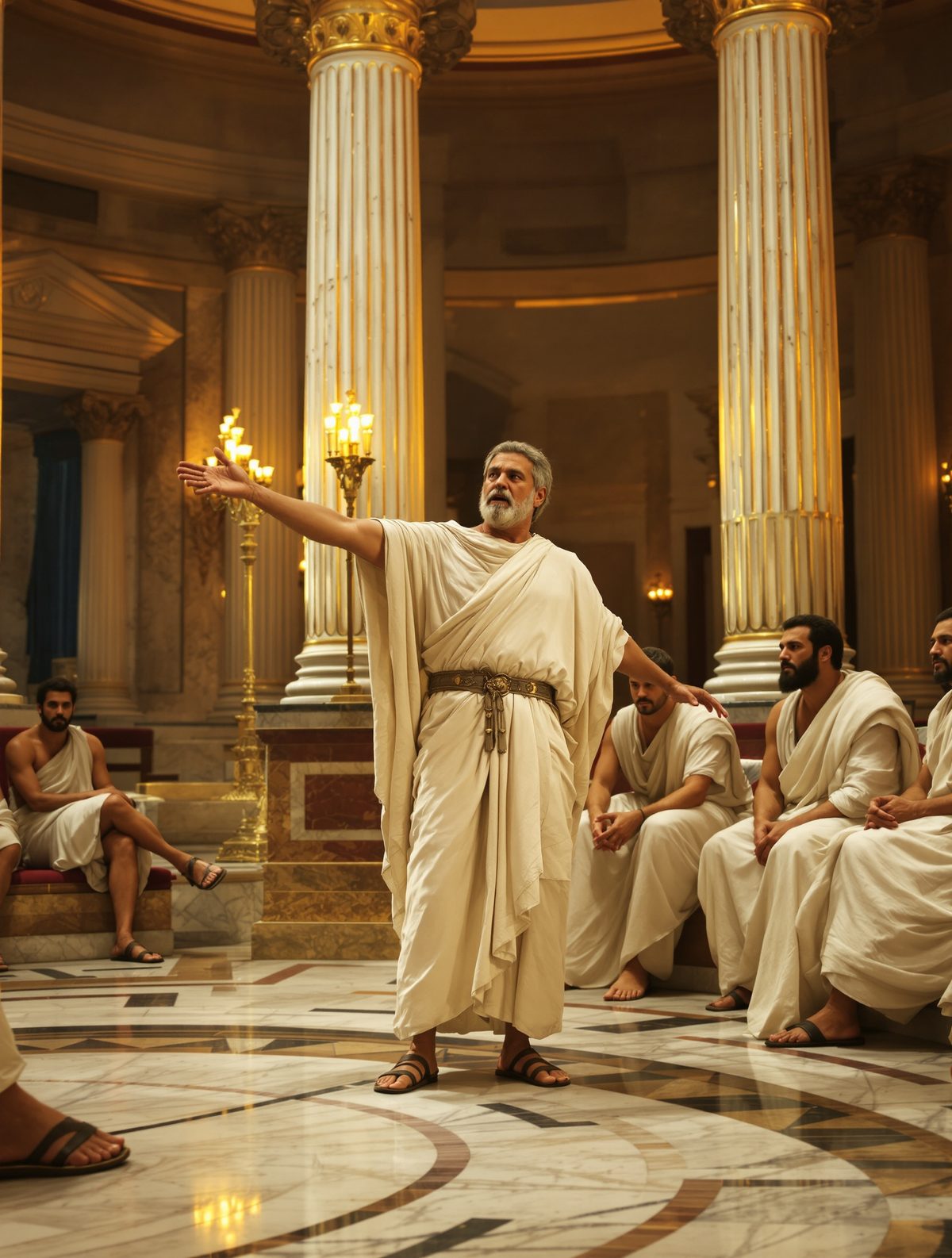
Alexander was not just content with military victories. He sought the endorsement of intellectual luminaries to bolster his image as a cultured and enlightened monarch. Most Greek philosophers deferred to emperors, recognizing their need for patronage. But Diogenes was a different case altogether.
The Eccentric Philosopher
Diogenes of Sinope was an eccentric cynic known for his unconventional lifestyle and disdain for social norms. Born around 412 BC in Sinope (modern-day Sinop, Turkey), Diogenes became a disciple of Antisthenes, the founder of Cynicism. This school of thought advocated a life of virtue in accordance with nature, eschewing the trappings of wealth, power, and social prestige.
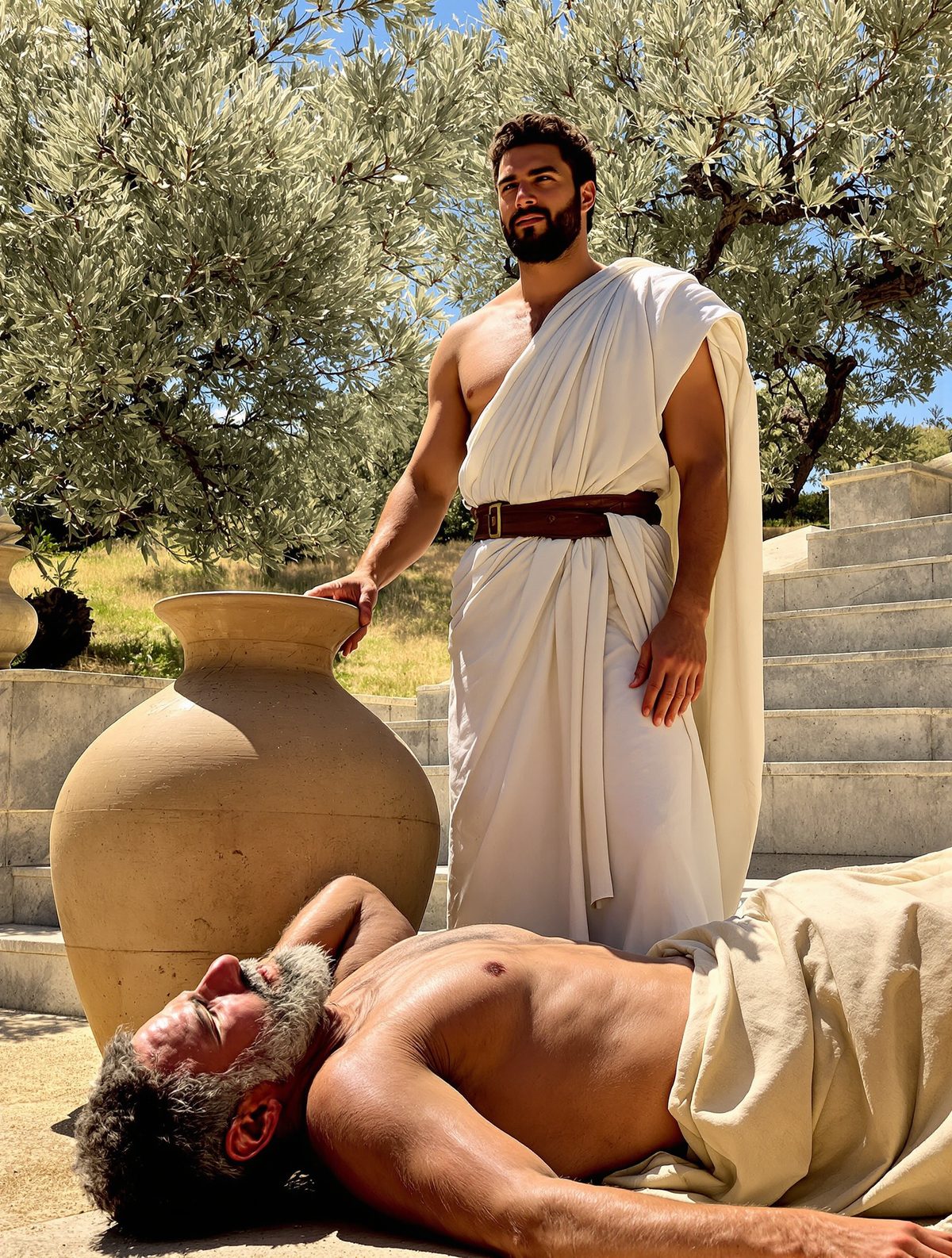
Diogenes took these principles to extremes, living in a large ceramic jar—often mistakenly referred to as a "barrel"— in the streets of Athens. He owned little more than the ragged cloak on his back and a single wooden bowl, which he famously discarded upon observing a boy drink water using cupped hands.
When Worlds Collide
So it was on that fateful day in Corinth that Alexander arrived, eager to meet the philosopher who had garnered a reputation for outspokenness and simplicity. To Alexander, Diogenes was a curiosity. To Diogenes, Alexander was just another in a long line of rulers blinded by their own grandeur.
As the story goes, Alexander approached Diogenes, sprawled out in the sun, and declared, “Ask of me any boon you desire, however great, and I shall grant it." One can imagine the scene: Alexander, resplendent in his armor, flanked by his retinue; Diogenes, unimpressed and possibly amused at the thought of receiving anything from a king.
Diogenes’ response was simple: “Yes, that whatever you are blocking, you will not rob me of.” In essence, he told the most powerful man in the world at that moment to step aside because he was blocking his sunlight. This interaction, renowned for its audacity, encapsulated the essence of Diogenes’ philosophy.
What Made Diogenes So Formidable?
Diogenes’ life choices were often puzzling, but they served as radical acts of social commentary. For instance, he strolled through Athens during daylight holding a lantern, claiming he was looking for an honest man but could find none. In another instance, he visited a banquet, and when chastised for eating in public, he retorted that he felt hungry in public too.
His unwillingness to placate or indulge the powerful made him more alluring to the young Alexander, who was said to have remarked, “If I were not Alexander, I would be Diogenes.” In these words, we find an acknowledgment of the philosopher’s peculiar form of mastery—one over the self, in stark contrast to Alexander’s dominion over entire regions.
A Lesson for the Ages
What can we glean from this peculiar encounter? Diogenes' interaction with Alexander serves as a timeless reminder of the inherent power of simplicity and authenticity. At a moment when all of Greece felt compelled to bow and scrape before their new conqueror, Diogenes stood firm by the virtues he valued. This story illustrates how one’s principles and courage to defy expectations can capture even the most formidable figures’ respect.
Moreover, Diogenes offers a striking critique of our perpetual chase for more—more power, more wealth, more recognition—and invites reflection on the true meaning of fulfillment. In today’s high-paced, consumer-driven society, it is all too easy to forget the inherent value in life’s simpler pleasures. Perhaps our sundrenched philosopher offers a valuable, albeit mythical, perspective on fostering contentment in a world that never stops demanding.
The meeting of Alexander and Diogenes is more than a quirky historical footnote; it is a compelling dialogue between two vastly different perspectives on life, both of which left indelible marks on history. One expanded the geographic boundaries of the known world, while the other expanded the boundaries of human thought and self-awareness. Whether ruling an empire or basking in the sun, we are left to wonder: what truly constitutes greatness?