He was the ruler of the most sprawling empire on earth. Yet Xerxes couldn't silence the voice of an elder whispering warnings. The vast Persian Empire was under his command, stretching from the Indus Valley to the Aegean Sea, yet the concerns of his own uncle, Artabanus, echoed louder than the accolades of his generals.
The Might of a King Unchallenged
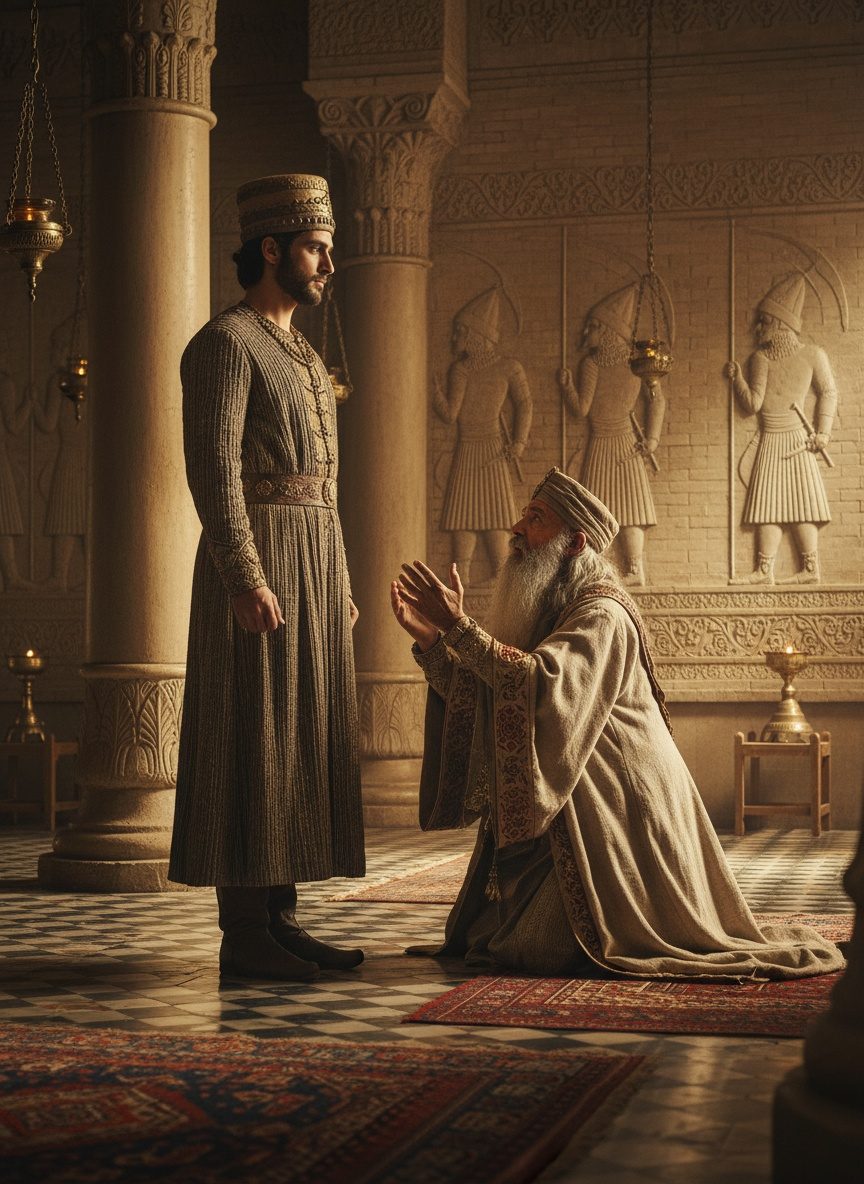
In 480 BC, King Xerxes stood at the precipice of one of history’s most ambitious military endeavors. By then, the Persian Empire had grown to a scale previously unseen, an expanse sustained by an administrative brilliance unmatched by rival civilizations. Yet, in the grand halls of Persepolis, a single defiant voice rose: Artabanus, advisor and uncle to the Great King himself.
Artabanus understood the precariousness of empires. He had been a confidant and a cautious voice during the reign of Darius I, Xerxes' father. Throughout his life, he had seen how ambition often intertwined with disaster, and history provided countless lessons on the prideful, whose overreach marked their doom. Artabanus stood before Xerxes not merely as a man offering counsel, but as a historian reciting a cautionary tale for the ages.
In a dramatic scene that could have swayed the course of history, Artabanus implored Xerxes at the brink of the Hellespont. As the Persian assemblage waited with bated breath, the elder sought courage not from the fervor of loyalty but from a desperate attempt to avert catastrophe. His principles implored Xerxes to see the hubris lying in the grand armada assembled before them. He warned of the wrathful seas and the indomitable spirit of the Greeks, staunch defenders of their rugged terrain.
Yet even as the earth trembled under the feet of an estimated two million men, Xerxes' mind was set, unwavering. Dramatic was the dismissal of Artabanus' fears, a decision driven not by oversight but by a belief that even the gods were on his side. With bridges of boats connecting Asia to Europe at the Hellespont, Xerxes ordered the crossing, a symbolic act of defiance against caution. The grandeur of his empire echoed in the footfalls of his soldiers, drowning the whisper of the tide’s impending judgment.
The Sea, the Storm, the Struggle
The Persian fleet, numbering the greatest ever assembled, embarked upon a mission to subjugate the Greek states, avenging the ignominies of past defeats, and expanding the dominion of Xerxes. The power was palpable, the might unquestioned. Yet the vast expanse of the sea between Asia and Europe proved a treacherous passage for the ambitions of a mortal king.
The Hellespont, a chokepoint separating continents, became both path and predator. Xerxes' engineers constructed floating bridges to ferry his colossal army across the waters — a feat that many regarded as a manifestation of his unparalleled power. But tempests have little regard for the ambitions of emperors. Storms lashed the Hellespont, shattering the construction, a stark omen forewarning the fate that awaited those who defy the balance of the natural order.
This was a lesson taught by winds and waves, a stark reminder of Artabanus's wise counsel. Describing the invincibility of the Persians often overshadowed their vulnerabilities, yet here stood a challenge no spear could pierce, no shield could defend. The heavy investments of men and soul turned burdensome, dragging the empire through a mire of attrition in lands far from their own.
Artabanus had warned against underestimating the Greeks, and indeed, Greek resilience proved formidable. At Thermopylae, they stood in defiance, a small force against a gigantic foe, the resolute will of Leonidas and the Spartans became legendary, a force multiplier in its own right. The battles were fierce, but each Spartan spear that pierced Persian armor was wielded by a hand emboldened by the land they cherished, battling not just for survival but for the very spirit of Greek autonomy.
Lessons Unheeded, Consequences Endured
The great battles of Salamis and Plataea soon followed, brutal meetings where fate turned against Xerxes. At sea, the wily Athenians drew the Persians into narrow straits, negating their numerical advantage, a strategy that turned the pride of the Persian navy against itself. The Greeks navigated the waters with deft precision, their rowers and archers working in concert as instruments of defiance against imperial expansion.
With dwindling resources and growing internal strife, Xerxes faced an empire stretched to its limits, much like the bridge that once buckled under the Hellespont's waves. His hasty retreat to Asia left behind lessons unheeded on the Greek mainland. The ambition for conquest and control now seemed a monumental folly, echoing with the wisdom his uncle Artabanus had shared.
Why does this narrative of hubris and humility resonate through the annals of history? It's because it emphasizes the timelessness of caution and the inevitable consequences that accompany unchecked ambition. While Xerxes epitomized imperial might, Artabanus symbolizes the quiet strength of perspective, a profound reminder that power often demands counsel that might initially sound discomforting. It teaches that empires must listen not just to the roar of their armies, but also the mutterings of cautious voices, lest their grandeur be consumed by the very elements they seek to master.