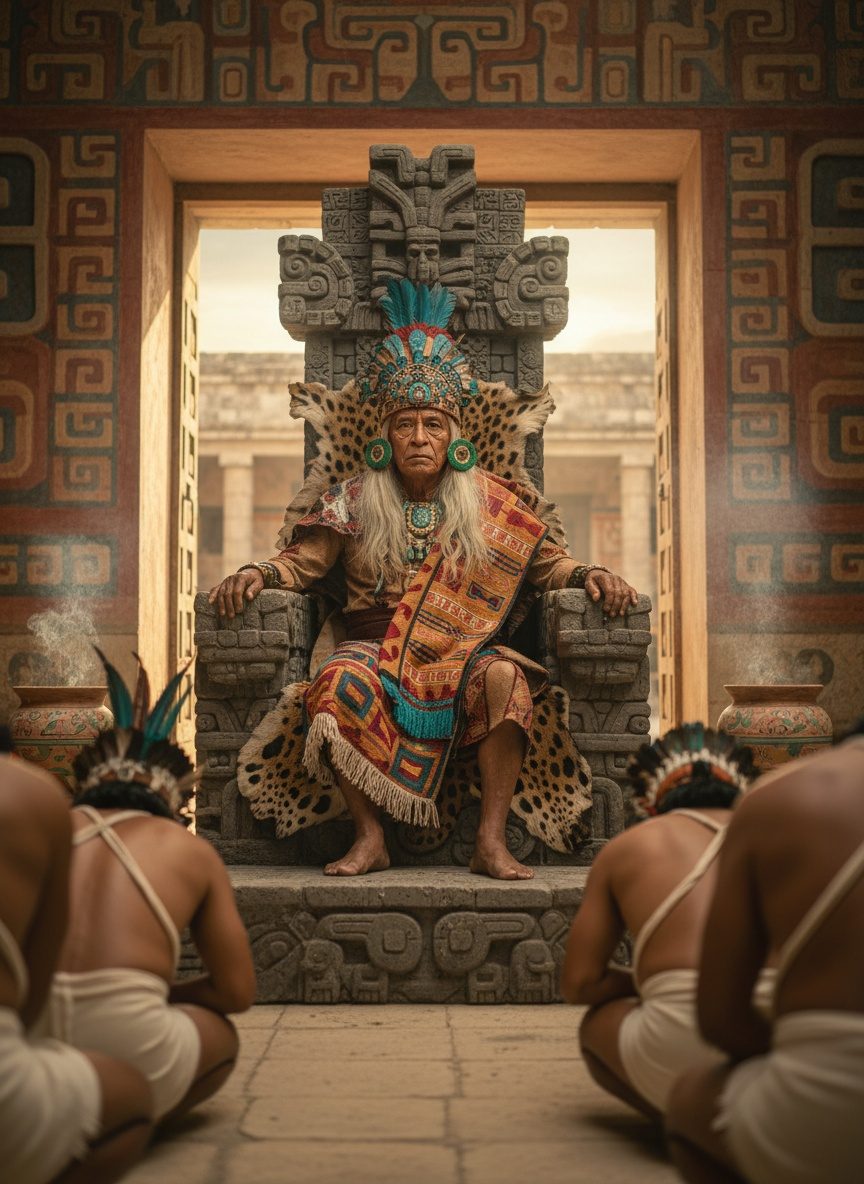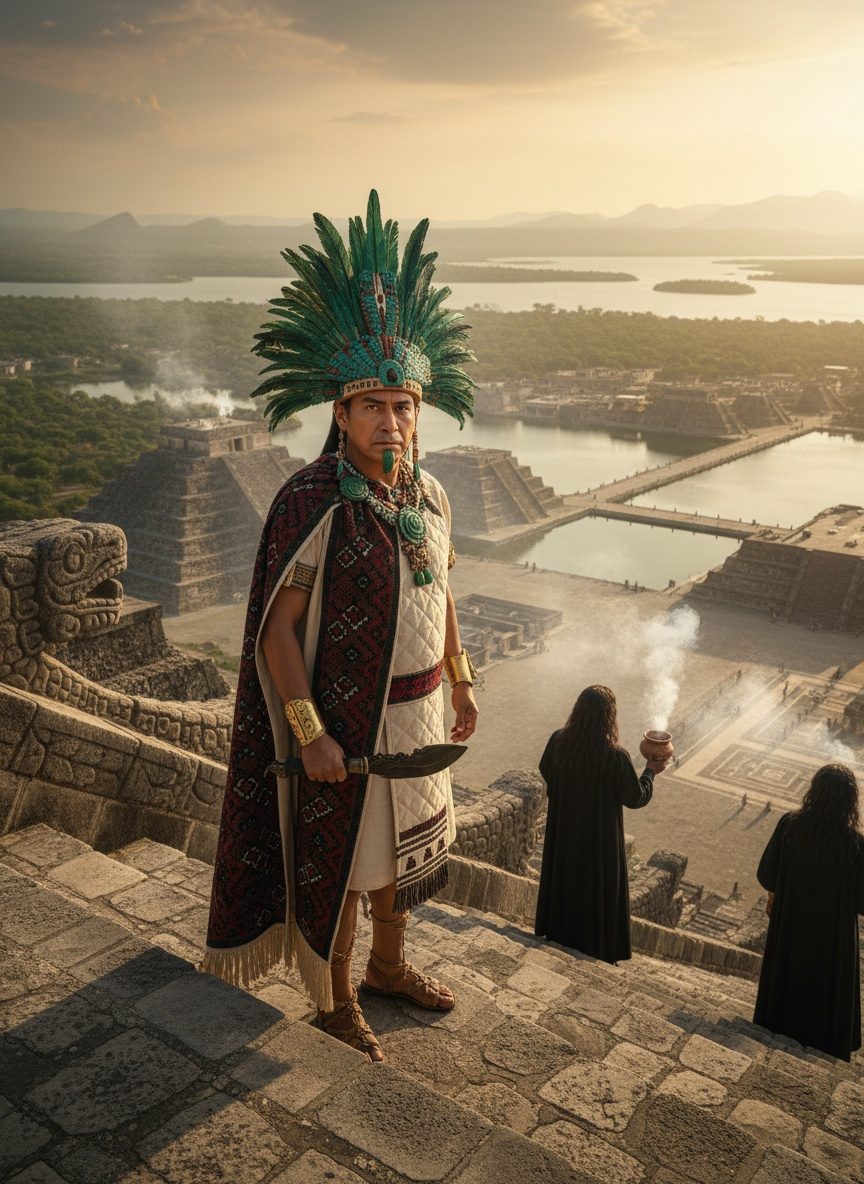
1481. Smoke rose in soft tendrils above the great Templo Mayor, as the scent of incense mixed with the sounds of preparation below. The heart of Tenochtitlán, the jewel of the Aztec Empire, throbbed with anticipation. On this day, a new emperor, Tizoc, ascended to claim the obsidian throne. His eyes surveyed the sea of faces gathered beneath the grand pyres, each aglow with expectation and the fire of belief, a brilliant mirror of the imperial mandate he was to carry.
But the path leading to divine favor was one drenched in blood. To secure the gods’ blessing and affirm his worthiness, Tizoc was duty-bound to engage in the time-honored tradition of the ‘Flower Wars’ — ritualized conflicts intended to capture prisoners for sacrifice. His predecessors before him had secured their place through this tangled web of divine obligation and martial prowess. Yet, it was a foreboding expedition, a trial that would reveal the heart and might of the new ruler.
In the days of Tizoc’s predecessors, such conquests were a demonstration of invincibility; each captive wrested from the hands of the enemy was a testament to Aztec strength, an offering on which the gods feasted. The empire had thrived under this belief, expanding across the Valley of Mexico, its influence stretching like the shadow of the sun at noon. The expectations were not merely set high but strung so tight that any misstep risked unraveling the imperial fabric itself.
Journeying from the capital, Tizoc might have imagined the echoes of his footsteps mingling with the marching feet of his army on the dry, cracked earth. They headed towards neighboring territories to wage his coronation war, his heart bustling with hope and trepidation. Yet, fate’s cruel hand would soon unveil the perils of presumption.
The campaign promised triumph but delivered disaster. The Aztec emperor returned with so few captives that murmurs rippled through the empire, a tide of discontent and disbelief. The sacrifices, carried out before an audience of citizens and priests on the great pyramid steps, were fewer than the demands of tradition required. For the spectators, it was a spectacle that instead of cementing authority, questioned it. Those who hadn’t been brought to the capital for sacrifice represented not only a failure of diplomacy and military might but also a failure in religious fidelity, a dire sin in an empire where secular rule and spiritual dominion were entwined indelibly.
Tizoc’s fortune crumbled publicly but with a rare resolve, he turned to personal penance. As was customary, he performed autosacrifice, drawing his own blood to appease the immortal deities. The sacred cactus spines pierced skin and released the crimson river, a dramatic ritual in itself, queasily mesmerizing to those who beheld it.
In those moments, as blood trickled down Tizoc's arms, perhaps he thought of Huitzilopochtli, the sun and war god, watching judgmentally from his celestial home, his presence demanding always more than the earth could offer. Perhaps, amidst his personal suffering, Tizoc wondered if the gods had turned their backs, dissatisfying his spirit despite his fervent allegiance. The gods were ever hard to please, their needs—endless.
The next four years drifted by, a turbulent river carrying the emperor towards a shadowy fate. The brief reign of Tizoc was marked by intrigue and betrayal, whispers running through the court with the alacrity of vermin. Power plays performed in shadowy chambers, sought desperately to reposition the empire back to its former glory.
In 1485, mystery shrouded Tizoc's death. Many accounts intimate assassination—poison administered subtly yet powerfully; an execution of sorts for a ruler deemed to have forsaken his duties. Yet, the official word from the ruling priests claimed a natural cause taken prematurely. History, however, often tells more than one story, each version demanding to be heard in the same chorus of past echoes.
Tizoc’s death prompted immediate action. His successor, Ahuitzotl, grasped the reins of power with a vigorous hand. Ahuitzotl was the anvil against which Aztec steel would harden. In the fiery aftermath, he sought out territories anew, engaging in a flurry of military campaigns that would restore the Aztec prestige Tizoc had failed to maintain. These campaigns not only revitalized the belief in divine right but also served as a direct response to Tizoc's failures, a resurgent reminder to all of the Aztec land that longevity rested on the empire’s ability to provide endless sacrifices.
The tale of Tizoc reveals, in blistering clarity, the pitfalls of imperial pressure and divine expectation. In a society bound unforgivingly to its gods, where emperors saw the world through the lens of celestial approval and communal judgment, Tizoc's narrative underscores the precariousness of power balanced atop the fragile scaffold of belief. Though history often views Tizoc through the shadow of his inadequacies, the legacy of his rule illuminates critical truths about leadership in a society where divine favor was as essential as military might.
Thinking of Tizoc ultimately forces us to reflect on the timeless dance between power, faith, and legacy—a grim narrative about what it means to lead under the critical watch of many eyes, each hoping to see their fears quieted and their earthly place in the universe affirmed. As Tizoc's blood trickled down the steps of the Templo Mayor, it whispered the stories of a ruler caught in the tides of expectation—echoes of vulnerability from an emperor who dared to meet the gods on their own terms, and fell learning the dangers therein.