Most people think Tiridates submitted to Roman power in AD 63. Instead, he orchestrated one of history’s most remarkable negotiations.
The Road to Rome
By AD 63, the Parthian Empire and Rome had been wrestling over the small yet strategically crucial kingdom of Armenia. Nestled between two towering empires, Armenia was more than just a territorial prize; it was a buffer, a battleground, and a potential ally for whoever held it. The Roman generals had fought to install their preferred leaders, while the Parthians backed their own candidates from the Arsacid line, including Tiridates, a prince of the Parthian royal family. A stalemate ensued—each empire reluctant to fully engage in war, yet unwilling to cede ground.
In an unexpected move, Tiridates agreed to a proposal that would bring him the crown he desired. He would travel to Rome and bow before Emperor Nero, acknowledging Roman overlordship of Armenia. A potential humiliation, perhaps, but Tiridates saw through the façade of submission. For him, the act was carefully calculated; it would keep the throne of Armenia under Parthian influence, while placating Rome’s imperial pride.
A Performance of Diplomacy
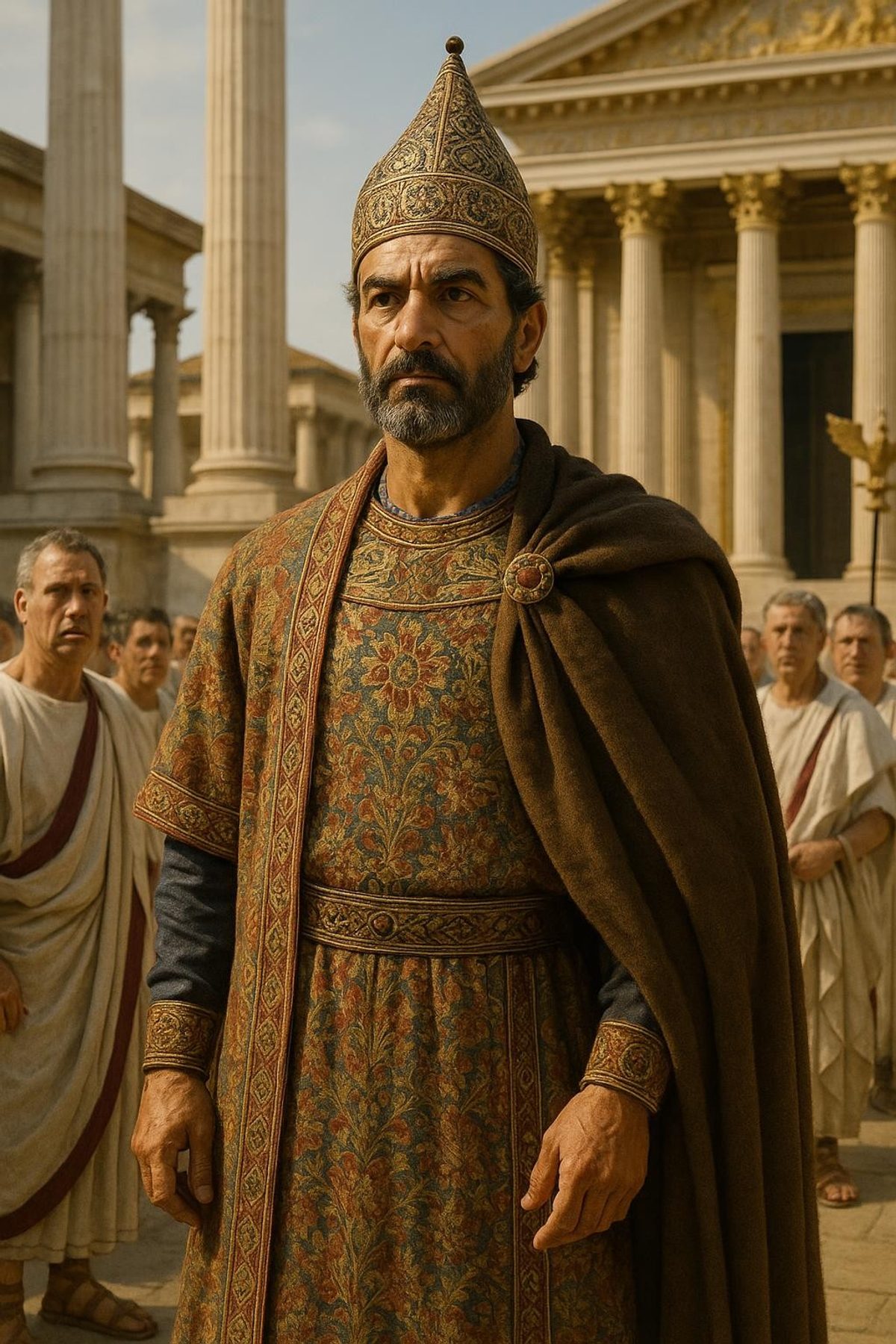
The journey to Rome was an epic in itself. Crossing the vast and often inhospitable landscapes of his homeland and Rome’s Eastern provinces, Tiridates was accompanied by a grand procession of Magi, nobility, and an entourage that evoked the grandeur of a Persian king. The spectacle they presented in every town and city turned a diplomatic necessity into a display of regal poise and majesty. By the time he reached the gates of Rome, anticipation had reached a fever pitch.
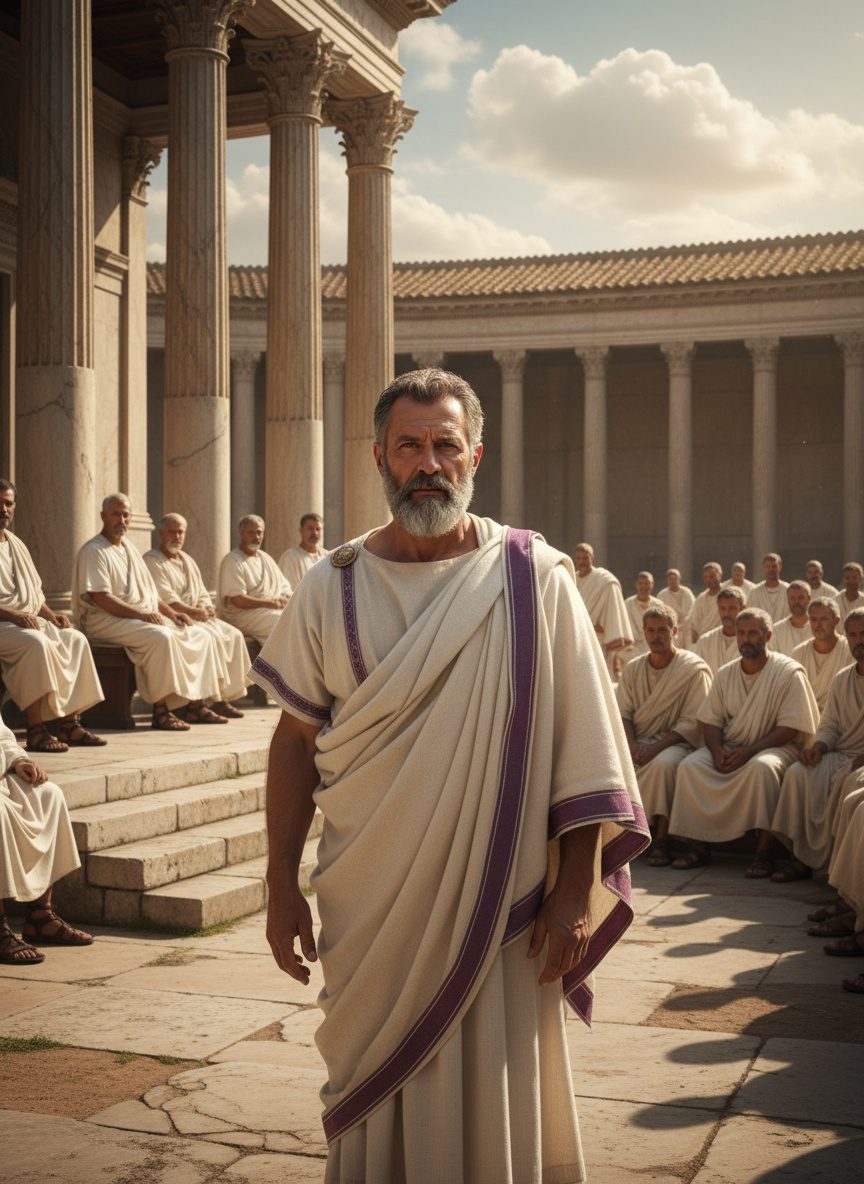
In the heart of the Roman Empire, amidst the grandeur of marble buildings and the roar of excited crowds, Tiridates approached Nero. When he knelt, the Romans prepared to see their emperor’s supremacy flaunted. But as he spoke, he redefined the moment. Tiridates did not bow as a vanquished opponent but as an envoy of friendship. He called the act a gift of honor, freely offered, not begrudgingly surrendered. The crowd—more accustomed to the language of power and conquest—found themselves applauding a king making a gift of his own submission.
The Festival of Kings
The political theatre achieved its aim. Nero, positioned as the magnanimous ruler, granted Tiridates the title of king, allowing him to be crowned with a diadem—a powerful symbol—by Nero’s own hands in a grand ceremony that highlighted both Rome’s influence and Parthia’s resilience. In the eyes of Rome, this was a spectacle of ultimate victory over a fierce rival. For Tiridates and Parthia, it was a masterstroke in diplomacy.
This display was not for Rome alone. Messages sent through the world’s trade networks carried the news to Persia, India, and beyond. The narrative that spread varied depending on the interests of the tellers, but the core remained: Tiridates had retained the Armenian crown without bloodshed, and done so while basking in Rome’s grandeur. By the terms of this arrangement, Armenia stayed within Parthia’s sphere, as much a tribute to Tiridates’ deft diplomacy as any formal agreement signed in the halls of power.
Echoes of Strategy
Historians may debate which empire might have claimed the greater benefit from this encounter, but the strategic prowess of Tiridates is indisputable. Through one act, he protected Armenia from becoming a perpetual battleground and secured its place as a unique cultural bridge, reflecting both Roman and Parthian influences for centuries. His journey, and the manner in which he controlled the narrative of his submission, offers timeless lessons in statecraft.
Amidst the annals of imperial power, Tiridates stands out not for martial victories, but for the savvy with which he wielded dignity as a tool of diplomacy. In an age where warfare often spoke louder than words, his actions proved that sometimes, a kneel could carry the weight of an empire. In the hushed halls of political intrigue, when bravado and armaments could achieve no clear victory, Tiridates rewrote the script and stood once more as king, not just of Armenia but of diplomacy itself.