He was twenty-six years old. He had never commanded a legion in battle before that fateful day.
Confronting an Implacable Foe
The Roman Republic in 209 BCE faced what seemed like a never-ending challenge: the might of Carthage, their powerful rival in the Second Punic War. The war had already brought Rome to its knees on numerous occasions, their armies battered, and the country’s confidence bleeding like an open wound. Into this seemingly dire situation stepped Publius Cornelius Scipio, later known as Scipio Africanus. In a radical departure from his contemporaries, the young Scipio was about to redefine Roman military strategy in ways that were unconventional and surprisingly humane.
New Carthage, in Spain, was a stronghold of immense strategic value, serving as the Carthaginian foothold in the Iberian Peninsula. Capture of this fortress was paramount, as it held a gruesome secret—a vast number of hostages, the bones of contention, who had been taken by Carthage to ensure the loyalty of Spain's various tribes. These hostages were more than just bargaining chips; they were the living chains that kept local leaders in submission, their absence a persistent threat that could bring untold grief to their families back home.
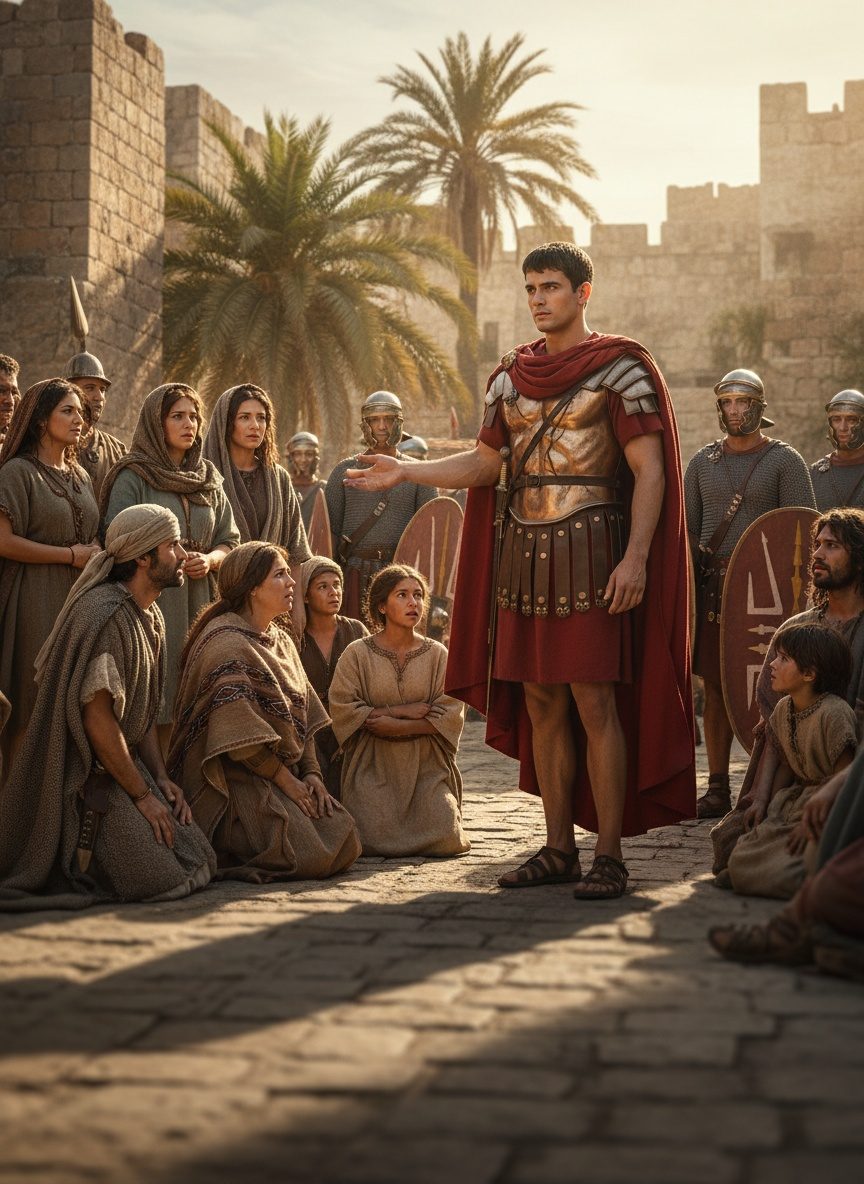
Marching into New Carthage, Scipio’s forces overtook the city with a blend of military acuity and a dash of good fortune. Inside the captured city walls, Scipio was faced with a decision that would have stymied even the most seasoned commander. Previous commanders might have sold these hostages for ransom, securing a temporary monetary gain or leveraging them for a strategic advantage. Scipio, however, made a choice that was at once brave and shrewd: he fed them, clothed them, and, astonishingly, set them free.
Releasing the Dove
The release of the hostages was a political masterstroke, not just an act of humanity. Scipio understood the intricate fabric of alliances that held Spain's tribes together under Carthaginian dominance. By providing food, clothing, and safe passage home, he not only showed a degree of compassion rarely seen in the grim realities of war but also sent a clear message to the Iberian leaders: Rome would not rule through fear.
This strategy blindsided the Carthaginian command, who could not have predicted that a Roman general would eschew the opportunity to leverage their captivity for military benefit. Scipio's act, though seemingly risky, demonstrated a profound understanding of human nature. He knew that such gestures could transform personal gratitude into political loyalty, and he was right.
News of Scipio's act spread like wildfire through the Iberian Peninsula, and soon tribe after tribe began to reconsider their allegiances. They saw Rome not as a conqueror hungry for land and plunder but as a liberator bringing a new social contract—a stark contrast to Carthage's rule by coercion. This morale boost for Rome came at a pivotal moment, as the tide slowly began turning in Rome’s favor.
In addition to winning over Spanish tribes, Scipio’s actions had a ripple effect that reached deep into Carthaginian territories. It posed a psychological challenge to Hannibal himself, straining his resources as the reinforcements from Spain faltered, hamstringed by newfound loyalty to Rome. This moment of strategic brilliance unfurled a new theater in the war, where each act of benevolence turned into cement binding new allies to Rome’s cause.
The Unyielding Memory
The importance of Scipio’s decision reverberated far beyond the immediate battlefield. It marked a shift in Roman military doctrine and a growing understanding of psychological warfare. In the arenas of both politics and military strategy, Scipio’s actions demonstrated something that Carthage had overlooked: the power of respect and diplomacy as tools of empire.
When the war finally ended in a Roman victory, the seeds Scipio planted bore tangible fruit. Not only did his actions contribute directly to Rome's eventual dominance in the Second Punic War, but they also reshaped Rome’s image across the Mediterranean. This young commander had managed to alter the course of events, not through slaughter or subjugation, but through the radical approach of compassion and calculated generosity.
Scipio's legacy was etched into the fabric of Roman military history. His recognition of the efficacy of goodwill in warfare continued to influence Roman interactions with other cultures, leaving a lasting impression on the methodologies of empire building. But for Carthage, the memory of those hostages who walked free became a haunting reminder of their vulnerability—a decisive moment they could never erase from the chronicles of their defeat.
In reflecting on the actions of Scipio Africanus, one finds a profound lesson in the annals of history: true strength often lies not in the power to destroy, but in the courage to choose mercy. As the echoes of New Carthage faded into time, Scipio's example endured—a beacon of tactical wisdom that reminds us even today of the transformative power of humanity amidst the destruction of war.