He was eighteen years old. It had taken five years for Tibor Rubin to weigh more than a broom handle.
A Promise Made in Mauthausen
The unyielding resilience of Tibor Rubin's life began amid the unspeakable horrors of World War II. At just fourteen, the Hungarian boy found himself thrust into the nightmarish confines of Mauthausen concentration camp. Starvation, brutality, and the dark specter of death were relentless company. Teenage dreams warped into silent vows of survival — and a promise. Rubin promised that if he made it out alive, he would become a soldier in the U.S. Army, the force he believed would bring justice to those who suffered.
When General Patton's Third Army breached the gates of Mauthausen in 1945, Rubin was little more than skin and bones. Yet stepping into the light again, he carried the steely resolve forged in the shadow of death. The hardships of his teenage years had not crushed him; rather, they cast the iron framework of determination that would guide him through battles yet unimaginable.
From Holocaust Survivor to American Soldier
The journey from the ravages of a death camp to the ranks of the U.S. military was fraught with challenges that would have deterred less resilient spirits. Rubin moved to the United States, learning a new language and adapting to a world that was indifferent to the shadows of his past. Yet his promise to himself remained unwavering, and in 1950, Rubin proudly donned the uniform of a U.S. Army private, ready to defend the ideals that had saved him.
Rubin was deployed to Korea almost immediately, an unseasoned soldier thrust into the chaos of the Korean War. Amidst the military hierarchy, where decisions were as misaligned as the compasses of inexperienced scouts, Rubin stood out for his bravery and idiosyncratic resolution. Intimidating challenges only seemed to fuel his inner fire, infusing him with the extraordinary courage needed for the coming trials.
The Solitary Guardian of Hill 205
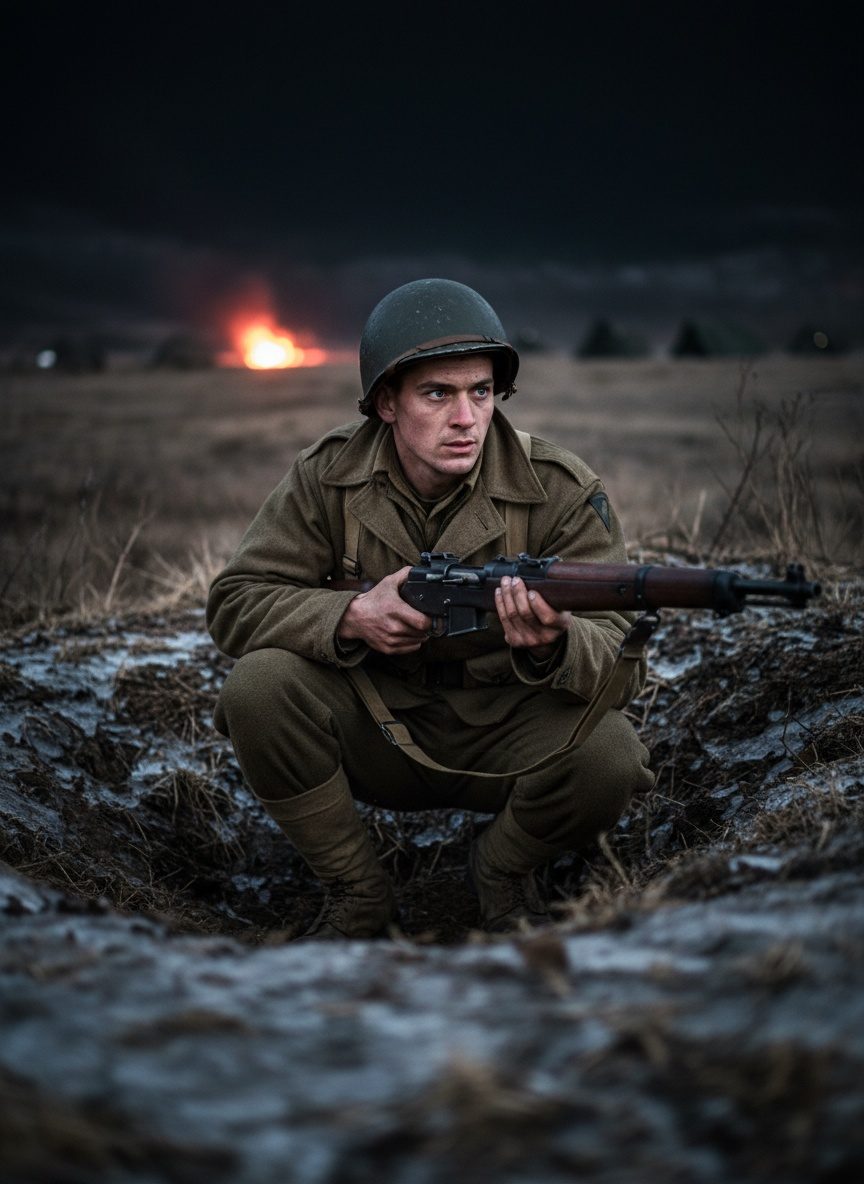
In the chilling autumn of 1950, the Korean landscape transformed from the idyllic into a tableau of warfare. It was here that Rubin faced an enemy force far greater than his own, during an assault on the critical position known as Hill 205. Repeated attacks had whittled away the defenders, yet Rubin's resolve did not waver. Ordinary soldiers might have faltered; Rubin thrived.
With the ferocity of a trickster fox dancing between snares, he flitted from foxhole to foxhole, triggering skirmishes, sustaining the illusion of a full-fledged platoon. For 24 relentless hours, he became a one-man garrison, defying the numerically superior force with conviction and cunning. It was not finesse of weaponry but rigors forged in unseen battles that secured the hill. When reinforcements arrived, they were greeted not by a lost cause, but by a soldier embodying defiance.
Betrayed Valor and the Long Road to Recognition
Despite Rubin's breathtaking bravery, recognition was thwarted by prejudice creeping through military channels. His commanding sergeant, blinded by bigoted inclinations, repeatedly stifled the commendations his courage demanded. Four times, paperwork that could have yielded the Medal of Honor was buried as cavalierly as forgotten scraps in the bottom of a dusty drawer. Yet Rubin's actions, whispered from soldier to soldier across decades, refused to be silenced.
In a testament to the indomitable influence of truth, it took sixty years, a congressional investigation, and an assembly of veterans stepping forward with sworn affidavits, to finally elevate Tibor Rubin’s valor to the honor it deserved. In stark contrast to the injustices he endured, the Medal of Honor, America's highest military decoration, was finally awarded to him in 2005. It was a long, winding journey — but no amount of time could tarnish the luminescence of his heroism.
The Unseen Strands of History
Tibor Rubin's story is not merely a narrative of survival and military valor. It reminds us of history's subtler strands — the interplay of promise and prejudice, resilience and recognition. Rubin’s life is testimony to an indomitable spirit that refused to be defined by the cruelties experienced either in the camps or the corridors of military injustice. At its heart, his journey is a reminder that even in the darkest recesses, individual bravery can light the path forward.
While Rubin's formal acknowledgment came late, it stirred awareness of unrecognized heroism across time and nations. His light kindles the flame of hope and tenacity in all who fight not for reward, but for a testament to humanity's enduring resilience. In the end, it is this selfless courage that whispers through the annals of history, urging us to remember the stories seldom heard — the stories they never taught you in school.