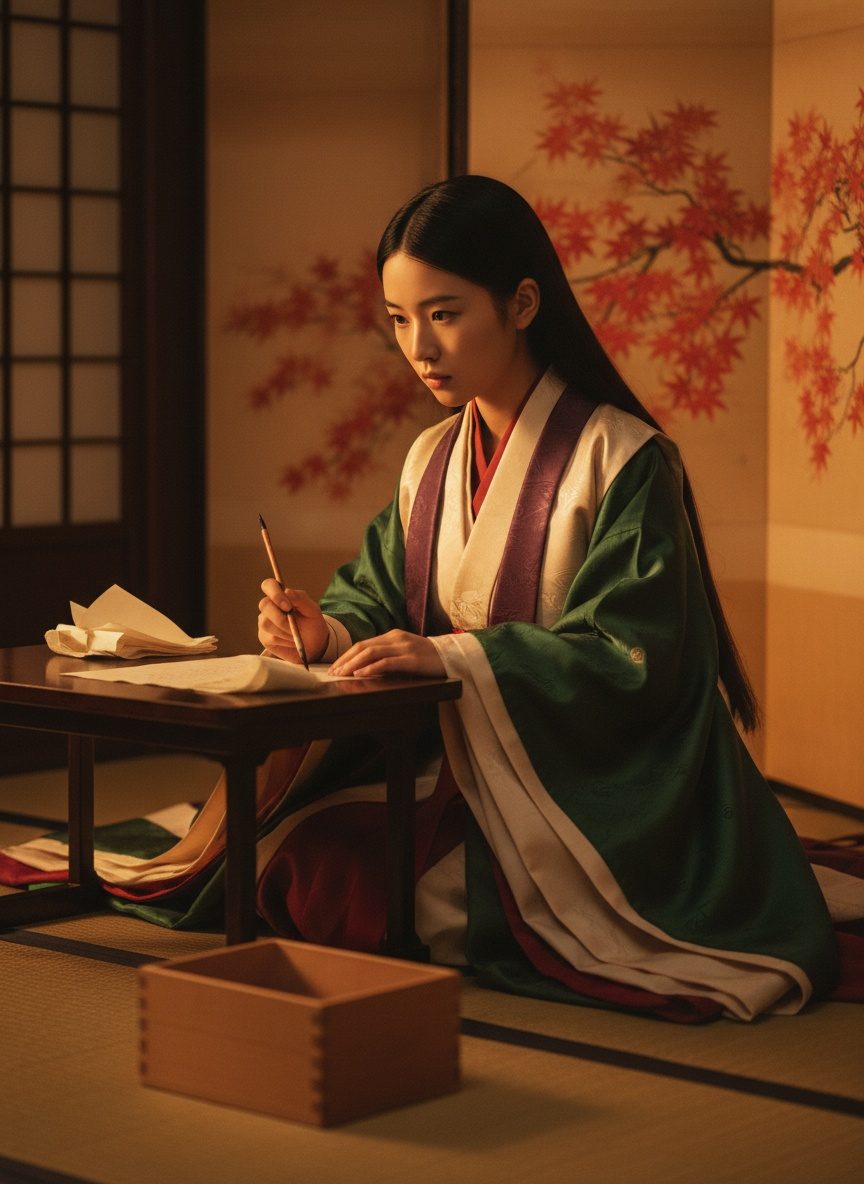
She was a court lady, but she could make the emperor blush with her words. Yet, no one knew of her writing while she was alive. Sei Shōnagon penned her deepest musings in secret, transforming ordinary observations into something unforgettable.
The Court Lady with an Irreverent Ink Pen
The Heian Period in Japan was a time of grandeur and refinement, where poetry flowed as freely as saké in the imperial court. Amidst this, one lady-in-waiting, belonging to the court of Empress Teishi, quietly scribbled away at something rather different from the conventional verse. Sei Shōnagon had a keen eye for detail and a sharp tongue to match. Her writings, secretly tucked beneath her pillow, were neither poetry nor prayers but a collection of jottings so candid they were almost scandalous.
Shōnagon's work, known today as *Makura no Sōshi* or *The Pillow Book*, wasn't originally intended for public consumption. This compilation of essays, lists, anecdotes, and observations recorded everything from the sound of a page being flipped to the elegance of robe sleeves swaying in the court's dim corridors. Her unique perspective allowed readers to peek behind the silken screens into a world seldom revealed. Her aspirations were humble, but her legacy was boundless.
Makura no Sōshi: Whispered Secrets of the Past
Imagine a world where the clacking of a snow-covered shoe could inspire a poetic reflection. Shōnagon's writings embraced the rich tapestry of Heian court life, capturing its sublime beauty and subtle absurdities. What might seem trivial today was rendered into art by her pen. Through her lists such as "Things That Make One's Heart Beat Faster" and "Things That Cannot Be Compared," she revealed the whimsical yet profound nature of human experience.
Her prose was daringly novel for its time, spanning themes from the changing seasons to the perfumed allure of courtly love. Sei Shōnagon’s perspective was one seldom recorded in historical texts: that of an intelligent, witty woman whose inner thoughts contradicted the reserved facade women were expected to embody. It’s not the grand battles or sweeping changes she revealed, but the whispered intimacies of court life which grant us insights into the era’s complexity and charm.
An Unforgiving Mirror to Courtly Intrigues
Behind the vibrant robes and poetic accolades, Sei Shōnagon used her *Pillow Book* to craft the image of a world adorned with both splendor and malice. Her sharp wit cut through the facade of Heian elegance, illuminating moments of comic mischief and sly rivalries. Court life was intricate, simmering with unspoken rules and delicate power plays, yet Shōnagon had a knack for revealing the nuances of this social choreography.
In her anecdotes, like the observation of a servant's clumsy faux pas or the sarcastic recounting of a noble’s awkward encounter, readers discover her talents for humor and irony. She pointed out the pretensions and folly inherent in the courtiers around her, often at great personal risk but never without finesse. It wasn't always the grandeur of imperial ceremonies that captured her curiosity; sometimes a mere hawk's cry stirred her imagination.
Sei Shōnagon’s Enduring Legacy
Despite being stealthily written during the silent hours of night, Sei Shōnagon's *Pillow Book* survived the currents of time to become one of Japan's literary masterpieces. Her detailed observations have given modern readers an unprecedented look into the interior lives of Heian courtiers, making her work invaluable for historians and enthusiasts of Japanese literature alike. Today, her thoughts continue to resonate with those who seek the human stories behind cultural rituals.
In a world where the voices of women were often obscured by tradition, Sei Shōnagon whispered her truths into paper and ink. Her legacy lies not just in the survival of her work, but in its ability to connect us with a past that feels as nuanced and vibrant as the present day. While her surroundings have shifted, the gossamer thread of her words continues to bewitch, reminding us that the core of human experience transcends time and place.